The Upper East Regional leadership of three teacher unions - Ghana National Association of Teachers (GNAT), National Association of Graduate Teachers (NAGRAT), and Pre-Tertiary Teachers Association of Ghana (PRETAG) - has backed the continuation of the nationwide strike. They insist that teachers should not return to classrooms until their outstanding demands are addressed. The strike, which began on September 25, 2026, is over unresolved issues including delayed promotions, non-implementation of the Deprived Area Allowance, and stalled negotiations on a new Collective Agreement.
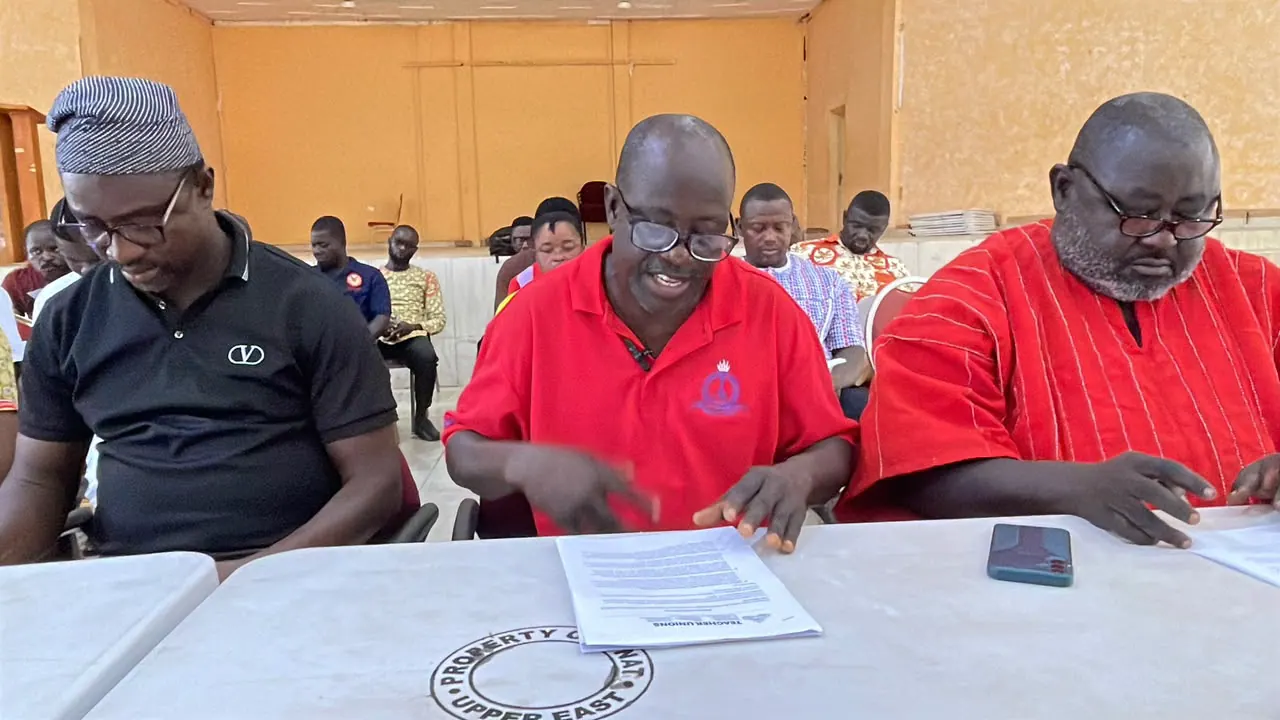
The unions' position was announced at a joint press conference in Bolgatanga addressed by Upper East Regional GNAT Secretary Lare Kitonname, PRETAG Regional Chairman Richard Sunday Yinbil, and NAGRAT Regional Chairman John Akunzebe. They declared their unflinching support for the National Leadership of their mother unions and the industrial action. The unions had earlier agreed with the Ministry of Education, Ghana Education Service, Controller and Accountant-General’s Department, and teacher unions on automatic placement of promoted teachers on their respective salary scales with arrears effective from January 2026.
However, the unions claim that the agreement has not been fully implemented, generating frustration among affected teachers. The Controller and Accountant-General’s Department reported receiving 6,079 out of an expected 58,620 promotion cases from the Ghana Education Service and had processed all valid cases submitted to it. The remaining cases would be processed after necessary documentation had been received and validated. Education Minister Haruna Iddrisu stated that the GES and Controller would work to update and validate the outstanding data, with adjustments expected to be processed subsequently.
The Upper East union leaders also raised concerns about the implementation of the Deprived Area Allowance. They cited Section 17(2) of the 2024 Collective Agreement, which requires the Ministry of Education and GES to review the Deprived Area Report for implementation. The unions would then negotiate the applicable figures with the Fair Wages and Salaries Commission. However, this has not been done, disregarding the stipulation in the Collective Agreement. The proposed payment of 20 per cent of basic salary as an allowance for teachers serving in deprived and hard-to-reach areas is yet to be implemented.
The government has since announced plans to establish a validation committee to examine data relating to the allowance, with implementation targeted for January 2027. The Upper East union leaders also expressed concern about stalled negotiations on a new Collective Agreement. The existing agreement has expired, and negotiations on its replacement should have been completed by June 2026. The unions have raised this concern with the Fair Wages and Salaries Commission several times, but the issue remains outstanding.
The Ghana Education Service has appealed to the unions to call off the strike, warning that a prolonged disruption could affect the academic calendar. The Upper East leadership of GNAT, NAGRAT, and PRETAG maintained that the nationwide industrial action should continue until the outstanding issues are resolved. The unions' demands include the implementation of the Deprived Area Allowance, resolution of delayed promotions, and a new Collective Agreement.
The strike has caused concerns among stakeholders, with the Ghana Education Service warning of potential disruptions to the academic calendar. The government has made efforts to address the unions' concerns, including plans to validate data for the Deprived Area Allowance and process outstanding promotions. However, the unions remain committed to their demands, insisting that their concerns must be addressed before they return to the classroom.
Key points
- The Upper East Regional teacher unions have backed the nationwide strike, citing unresolved issues including delayed promotions and unpaid allowances.
- The strike, which began on September 25, 2026, has caused concerns among stakeholders, including potential disruptions to the academic calendar.
- The unions have made several demands, including the implementation of the Deprived Area Allowance and a new Collective Agreement.