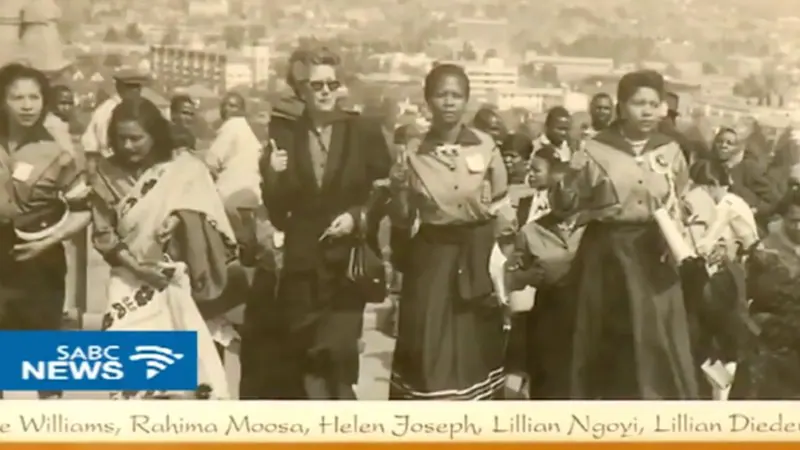
A familiar photograph has long symbolized the 1956 women's march against apartheid in South Africa, featuring Lilian Ngoyi, Rahima Moosa, Helen Joseph, and Sophie de Bruyn. However, this image only tells part of the story. A lesser-known photograph reveals that a fifth woman, Lillian Diedericks, was also part of the march's leadership. Diedericks played a crucial role in organizing the event, which drew 20,000 women from various backgrounds to protest against the government's pass laws.
Born in 1925 in Gqeberha's Red Location, Lillian Diedericks grew up in a time of significant social change. Her family was forcibly removed from their home in 1940, and she left school with only a Standard 3 education. However, she developed fluency in English, Afrikaans, and Xhosa, which later became essential skills in her activism. Diedericks was recruited into the South African Communist Party's underground movement in the 1950s and became a shop steward in the Food and Canning Workers' Union.
Diedericks was a founding member of the Federation of South African Women (FEDSAW) in 1954, alongside prominent activists such as Lilian Ngoyi and Frances Baard. She worked tirelessly across various organizations, mobilizing workers and communities to protest against their conditions. In 1955, a delegation of 2,000 women delivered petitions to the Union Buildings in Pretoria, and a year later, the 9 August 1956 march took place, with Diedericks playing a key role in its organization.
The 1956 march was a remarkable achievement, considering the limited communication tools available at the time. Women like Diedericks built and moved between networks, organizing through word of mouth and union structures. Many women from around the country could not attend the march but had signed petitions and handed them over to their proxies. Diedericks' contributions to the liberation struggle were significant, and she continued to speak out on various causes, including gender-based violence, throughout her life.
Despite her achievements, Diedericks faced persecution from the apartheid state. She was arrested and charged with treason in 1956, remaining in custody until 1961. A banning order was imposed on her from 1963 to 1969, and in 1971, her sister was murdered in a case of mistaken identity. Diedericks passed away on 21 December 2021, at the age of 96, leaving behind a legacy that is only now being fully recognized.
In recent years, efforts have been made to acknowledge Diedericks' contributions. In 1996, President Mandela presented her with an award recognizing her activism. Her local municipality and the provincial government renamed their headquarters after her in 2009 and 2021, respectively. In 2018, President Ramaphosa awarded Diedericks the Order of Luthuli in Silver for her role in the liberation struggle and the 1956 march.
Despite these recognitions, Diedericks felt invisible, stating in an SABC interview in 2018 that she had been "buried alive." The South African government has taken steps to rectify this, including the announcement of a fifth statue to be added to the Women's Living Heritage Monument in Pretoria, although it has yet to be unveiled.
Key points
- Lillian Diedericks played a crucial role in organizing the 1956 women's march against apartheid in South Africa.
- Diedericks faced persecution from the apartheid state, including arrest, banning orders, and the murder of her sister.
- Recent efforts have been made to recognize Diedericks' contributions to the liberation struggle, including awards and the renaming of public buildings in her honor.