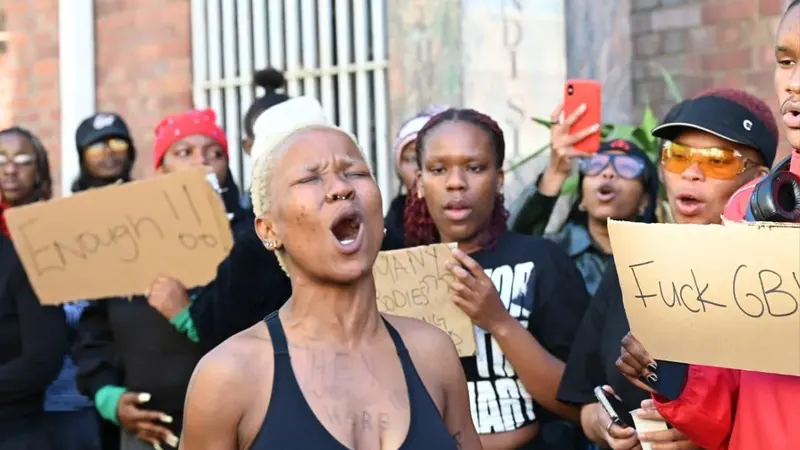
The recent discovery of an eleventh woman's body in Ekurhuleni has brought the reality of femicide into public view, highlighting the urgent need for effective prevention and protection measures. Police are investigating the circumstances of the deaths, but whether these deaths are connected or not, each woman represents a life lost and a family left to grieve. The question is what could have been recognised earlier, what warning signs were missed, and whether institutions acted before violence became fatal.
According to the verified police count, between April and June 2026, 569 women were murdered and 1,052 women were victims of attempted murder in South Africa. During the same quarter, 9,201 rape victims were recorded, of whom 8,814 were women and children. These figures do not capture all violence that remains unreported, making clear the scale and urgency of the crisis. The government has formally recognised the seriousness of the issue, classifying gender-based violence and femicide as a national disaster in November 2025.
The National Council on Gender-Based Violence and Femicide, established under the National Council on Gender-Based Violence and Femicide Act of 2024, has been constituted with members appointed for a three-year term beginning in August 2026. The Council is mandated to provide strategic leadership and coordinate a multi-sectoral and inter-sectoral response to GBVF. The framework, institutions, and policies exist, but the question is whether they are working early enough and effectively enough to prevent the next woman from becoming a victim.
A woman who reports a threat must not disappear into a system, and a protection order must mean protection. A repeated threat must be treated as a warning, not simply another incident. A survivor must be able to reach help before violence escalates, and where an institution fails to act, that failure must have consequences. The challenge is converting recognition into prevention, protection, justice, and measurable results.
Femicide does not begin when a woman is killed; the final act may be murder, but the pathway towards it can include control, intimidation, stalking, threats, assault, isolation, coercion, and repeated abuse. If we are serious about preventing femicide, we must become serious about interrupting that pathway. Prevention means identifying risk early, taking threats seriously, connecting survivors to appropriate services, following up, and ensuring that institutions do what they are responsible for doing.
The home is where prevention begins, as serious GBVF can occur within relationships and places that should provide safety. Children learn by watching the adults around them, and responsible fatherhood and positive male role models are part of the prevention conversation. The 2024 State of South Africa's Fathers report found that 35.6 percent of South African children lived in the same household as their biological father, highlighting the importance of consistent adult presence and guidance in children's lives.
Fatherhood is more than biology and more than sharing an address; it is a continuing responsibility that means caring, listening, guiding, setting boundaries, showing affection, exercising self-control, and taking responsibility for the wellbeing of one's children. It also means treating the mother of one's children with dignity, whether or not the parents remain together. This matters particularly for boys, who need to see men who demonstrate that strength does not mean domination and that violence is never an expression of manhood.
Key points
- The South African government has classified GBVF as a national disaster and established the National Council on Gender-Based Violence and Femicide to coordinate a response.
- The country recorded 569 women murdered and 1,052 women victims of attempted murder between April and June 2026.
- Prevention of femicide requires identifying risk early, taking threats seriously, and connecting survivors to appropriate services.