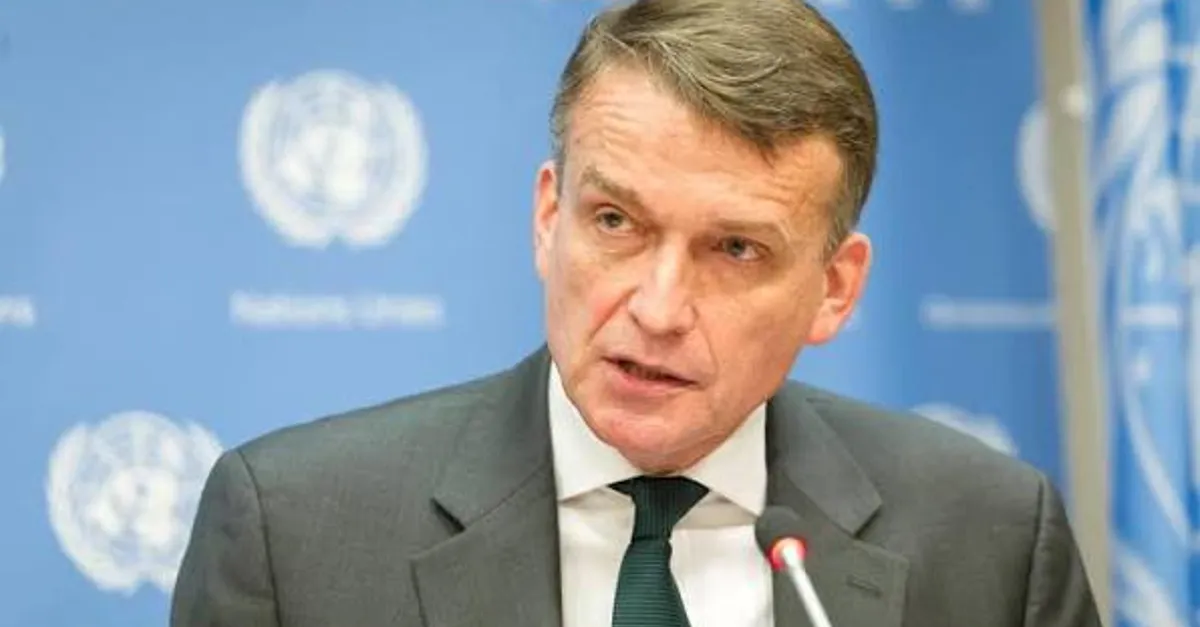
The United Nations Relief and Works Agency for Palestine Refugees in the Near East (UNRWA) is facing an exceptional financial crisis, with a cash flow deficit of approximately $100 million for 2026. This crisis may hinder the agency's ability to continue providing its essential services without additional support. The agency's interim Commissioner-General, Christian Saunders, made this announcement during a ministerial meeting on UNRWA held on the sidelines of the 81st session of the UN General Assembly.
Saunders emphasized that the situation for Palestinian refugees is becoming increasingly difficult, with dwindling hopes for the future. Although a ceasefire in the Gaza Strip has provided some relief, millions of Palestinians still live in deep insecurity. The approaching winter, combined with a severe funding shortage and ongoing restrictions on the entry of essential supplies, poses a significant threat to the humanitarian response in Gaza. He cited that 94% of the population lacks adequate shelter, 90% face recurrent interruptions in access to clean water, and 98% of households live near environmental hazards.
Despite these challenges, UNRWA continues to provide vital services and assistance to approximately 1.7 million people in Gaza. More than 10,000 agency staff members manage over 80 emergency shelters, provide education to hundreds of thousands of children, offer nearly 70,000 weekly medical consultations, and supply water, sanitation, and hygiene services to over a million people. Saunders highlighted that UNRWA's operations in Gaza remain extensive and that the local community's trust in the agency remains strong.
Saunders also expressed concern about the situation in the West Bank, describing it as "disturbing and increasingly difficult." He noted that Palestinian displacement has reached levels not seen since 1967 due to ongoing settler violence, creating unbearable living conditions. Furthermore, measures taken in East Jerusalem to restrict UNRWA's operations, including the seizure of the agency's headquarters, vocational training center, schools, and healthcare infrastructure, do not diminish the rights of Palestinian refugees or contribute to a resolution of the Palestinian issue.
In addition to its work in Gaza and the West Bank, UNRWA continues to play a vital role in Jordan, Lebanon, and Syria. The agency has implemented cost-cutting measures and reduced service hours by 20% due to financial constraints, as well as decreased salaries for most local staff. Saunders reported that UNRWA is addressing concerns about its neutrality, having implemented 41 out of 50 recommendations from an independent review, with most of the remaining recommendations in the process of being implemented.
Saunders emphasized that UNRWA remains committed to protecting the integrity and neutrality of its staff and maintaining the trust of its member states. He noted that efforts to discredit the agency and influence public opinion through misinformation continue, undermining UNRWA's ability to serve Palestinian refugees. The agency is adapting to the evolving political and funding environment by enhancing efficiency, leveraging technology, and strengthening partnerships.
Saunders urged countries to provide strong political and financial support to UNRWA, enabling it to operate in the occupied Palestinian territory according to its mandate and leveraging its expertise, infrastructure, and community trust. He stressed the importance of securing necessary funding to sustain operations, modernize working methods, and continue serving Palestinian refugees.
Key points
- UNRWA faces a $100 million financial crisis that may disrupt its basic services for Palestinian refugees.
- The agency continues to provide vital services in Gaza, the West Bank, Jordan, Lebanon, and Syria despite financial constraints.
- UNRWA is implementing measures to address concerns about its neutrality and adapt to the evolving political and funding environment.