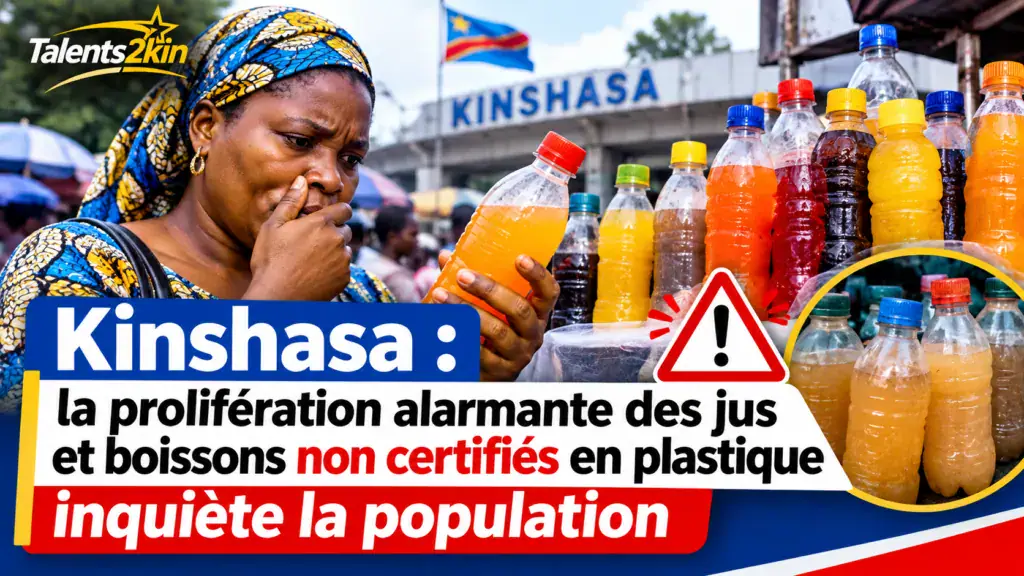
In Kinshasa, Democratic Republic of the Congo, a surge in non-certified drinks packaged in plastic bottles is alarming consumers and authorities alike. These products, often sold without clear labeling, manufacturing dates, or verifiable traceability, are increasingly found in markets across the capital. The lack of transparency regarding their composition, origin, and storage conditions has raised significant concerns about their safety for consumption. This proliferation has prompted urgent action from the government.
The issue was recently highlighted by Deputy Marie Mutinga Kyet, who alerted the National Assembly to the risks associated with "energy drinks" sold in non-recyclable plastic packaging. She emphasized the vulnerability of children to these products and the need for stricter regulations. In response, Industry Minister Justin Kalumba Mwana Ngongo announced plans to conduct inspections at production units, ban the marketing of non-certified products, clean up distribution channels, and impose harsher penalties on violators.
A 2026 study revealed quality concerns in sweetened drinks sold in Kinshasa, including excessive acidity, high sugar content, and the presence of concerning substances. The consumption of non-compliant beverages can lead to intoxication, digestive issues, allergic reactions, and more severe health complications. Furthermore, some artisanal products have been found to contain toxic substances, banned colorants, or unauthorized additives, posing real health risks to consumers.
The problem extends beyond the composition of these drinks to include manufacturing conditions, hygiene practices, and the use of uncertified water. In 2025, the judicial police incinerated over 3,700 bottles of counterfeit drinks seized in Kinshasa, highlighting the potential for severe health consequences. Despite these efforts, consumers and authorities continue to express concerns about the enforcement of regulations and the effectiveness of quality control measures.
The Congolese Office of Control (OCC) is responsible for monitoring the quality, quantity, compliance, and pricing of imported and exported goods. However, overseeing the entire production and distribution chain of local drinks, particularly in Kinshasa's vast and informal market, remains a significant challenge. The government's recent announcements aim to address these issues through measures such as closing non-compliant production units and strengthening sanctions.
To effectively mitigate the risks associated with non-certified drinks, it is crucial that the government's measures are implemented rigorously, transparently, and consistently. This includes ensuring that all production units adhere to quality and safety standards, that distribution channels are sanitized, and that penalties for non-compliance are enforced. The success of these efforts will depend on the government's ability to maintain vigilance and coordination across various agencies.
Ultimately, addressing the proliferation of non-certified drinks in Kinshasa will require a multi-faceted approach that involves not only government action but also consumer awareness and participation. By working together, stakeholders can help ensure that drinks available in the market are safe for consumption and that the health and well-being of Kinshasa's residents are protected.
Key points
- The government has announced plans to ban non-certified drinks, close non-compliant production units, and strengthen sanctions against violators.
- A 2026 study found quality concerns in sweetened drinks sold in Kinshasa, including excessive acidity and high sugar content.
- Over 3,700 bottles of counterfeit drinks were incinerated by the judicial police in Kinshasa in 2025.