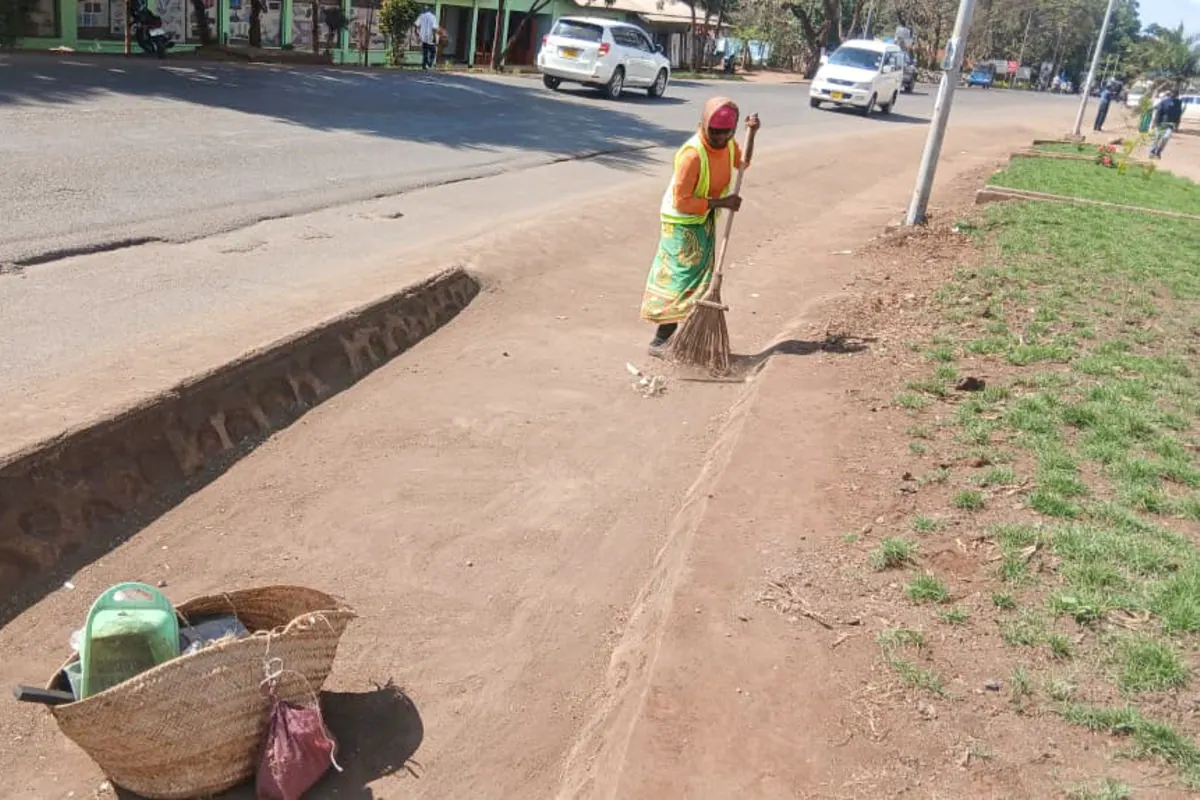
Street sweepers in Tanzania are facing severe health risks due to their working conditions, with many lacking proper protective gear. Hilda, a street sweeper on the Mwanza-Shinyanga road, uses a headscarf to cover her nose and mouth while working, but says the dust causes her cold-like symptoms and discomfort. She is not alone, as an investigation in various areas of Dar es Salaam, Rukwa, Arusha, Mbeya, Mwanza, and Dodoma found that some street sweepers work without face masks, gloves, safety boots, or other specialized protective equipment.
The Occupational Health and Safety Act No 5 of 2003 requires employers to take measures to protect workers from hazardous working conditions, including providing personal protective equipment (PPE) for workers operating in environments where they may be exposed to hazardous substances or conditions. However, many street sweepers say they were provided with equipment when they started working, but it has since deteriorated, or they have been forced to continue working with whatever they can afford or find. This has led to numerous health problems, including respiratory issues, eye problems, and skin irritation.
A study published in February 2024 in the journal PLOS Global Public Health found that street sweepers in Mwanza City were exposed to fine dust and noise levels exceeding reference limits. The study involved 233 street sweepers and examined occupational health risks associated with their work, exposure to particulate matter, and noise levels. It found that 63.1 percent of the sweepers considered their working environments to pose significant health risks, while 61.4 percent said they lacked sufficient knowledge about the use of protective equipment.
The study also found that none of the participants had a complete set of safety equipment as defined by the standards applied in the research. In addition to measuring dust exposure, the researchers asked the sweepers about the challenges they had experienced at work. Some 14.6 percent reported eye problems, 7.3 percent nasal irritation, 3.9 percent breathing difficulties, and 3.4 percent coughing. Road accidents were another major concern, with 79.4 percent of participants saying they had experienced an accident while working.
Respiratory specialists say that fine dust particles entering the airways can travel deep into the lungs and cause harm, particularly among people exposed to such conditions over long periods. Dr. Elisha Osati and Dr. Nelson Mfuko explained that the effects of dust exposure vary depending on the type of dust, the level of exposure, and how long a person has worked in the affected environment. For example, dust can trigger coughing and sneezing in people with allergies, and chest tightness in people with asthma.
Street sweepers themselves are calling for regular medical examinations to identify health problems that may be linked to their working conditions at an early stage. Asha Kweka, who works along Kilwa Road in Dar es Salaam, says that regular health checks would help prevent long-term health problems. This is not a new concern, as a 2012 study by Prisca Stambuli at Muhimbili University of Health and Allied Sciences found similar respiratory symptoms among street sweepers in Ilala Municipality, Dar es Salaam.
The challenges faced by street sweepers in Tanzania highlight the need for improved working conditions and enforcement of occupational health and safety regulations. With many street sweepers lacking access to proper protective gear and medical care, it is essential that employers and policymakers take action to address these issues. By providing proper equipment and regular health checks, the health and well-being of street sweepers can be protected, and the risks associated with their work reduced.
Key points
- Many street sweepers in Tanzania lack proper protective gear, leading to health problems such as respiratory issues and eye problems.
- The Occupational Health and Safety Act requires employers to provide personal protective equipment for workers operating in hazardous environments.
- Street sweepers are calling for regular medical examinations to identify health problems linked to their working conditions at an early stage.