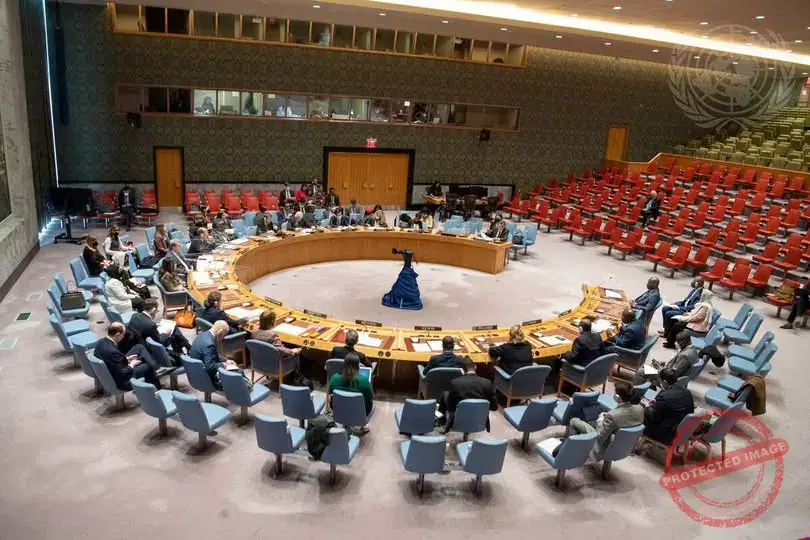
The United Nations Mission in South Sudan (UNMISS) has highlighted growing challenges facing the country's political transition, citing fragile political consensus, unresolved provisions of the peace agreement, security concerns, and questions surrounding preparations for the December 22 elections. In a briefing to the United Nations Security Council, the head of UNMISS, Lasuba Memo, emphasized that elections had dominated political discussions since the previous briefing, while consensus around the transition had become increasingly fragile.
The briefing comes after amendments to the National Elections Act were adopted on September 21, followed by the dissolution of the Transitional Government of National Unity and its replacement with a caretaker administration on September 22. The government has maintained that the changes are intended to facilitate elections and advance the transition. UNMISS chief Lasuba Memo said her engagements with government officials indicated a determination to proceed with the December 22 polls.
However, Lasuba Memo identified several outstanding concerns, including security arrangements, logistics, the capacity of the National Electoral Commission to conduct elections within a compressed timeframe, and the implementation of pending provisions of the peace agreement. Some opposition groups, including the Sudan People's Liberation Movement-in-Opposition (SPLM/A-IO), remained outside the Inter-Party Dialogue, whose outcome is still pending. The SPLM/A-IO has maintained that the release of its leader, Dr. Riek Machar, is a prerequisite for its participation in dialogue.
On women's political representation, Lasuba Memo said recent political changes had fallen short of the 35 per cent quota provided for under the peace agreement. She also observed that the ruling Sudan People's Liberation Movement (SPLM) had begun conducting nationwide party primaries, while electoral activities among other registered political parties remained limited. Emphasising the importance of continued political engagement, she said elections should form part of the transition rather than bring it to an end.
The security situation in South Sudan remains a concern, with a decline in armed confrontations between the principal signatories to the peace agreement but an increase in civilian casualties and displacement during the year. Lasuba Memo attributed the changing security situation to local grievances, factional divisions, and competition over resources, which continue to affect stability in different parts of the country. In Jonglei State, confrontations involving government and opposition-aligned local forces, alongside the mobilization of armed youth, continue to threaten civilians.
The humanitarian situation in South Sudan is also a major concern, with approximately 10 million people requiring some form of humanitarian assistance, while an estimated 7.5 million face food insecurity. Lasuba Memo reported that 1.4 million people had crossed into South Sudan since fighting erupted in neighbouring Sudan. The briefing further cited prolonged dry spells, anticipated El Niño-related flooding, and the regional Ebola outbreak as additional pressures on the country's humanitarian response.
Lasuba Memo concluded by outlining four priorities: ending fighting and protecting civilians, guaranteeing humanitarian access and UNMISS freedom of movement, expanding political dialogue, and supporting the African Union C5+ declaration. She emphasized that the responsibility for determining the country's political direction rested with South Sudanese leaders, calling for renewed dialogue and a credible roadmap to complete outstanding provisions of the Revitalized Peace Agreement.
Key points
- UNMISS chief Lasuba Memo briefs UN Security Council on South Sudan's transition, citing fragile consensus and security concerns.
- Elections scheduled for December 22 amid concerns over security arrangements, logistics, and implementation of pending peace agreement provisions.
- Humanitarian situation in South Sudan remains a major concern, with 10 million people requiring assistance and 7.5 million facing food insecurity.