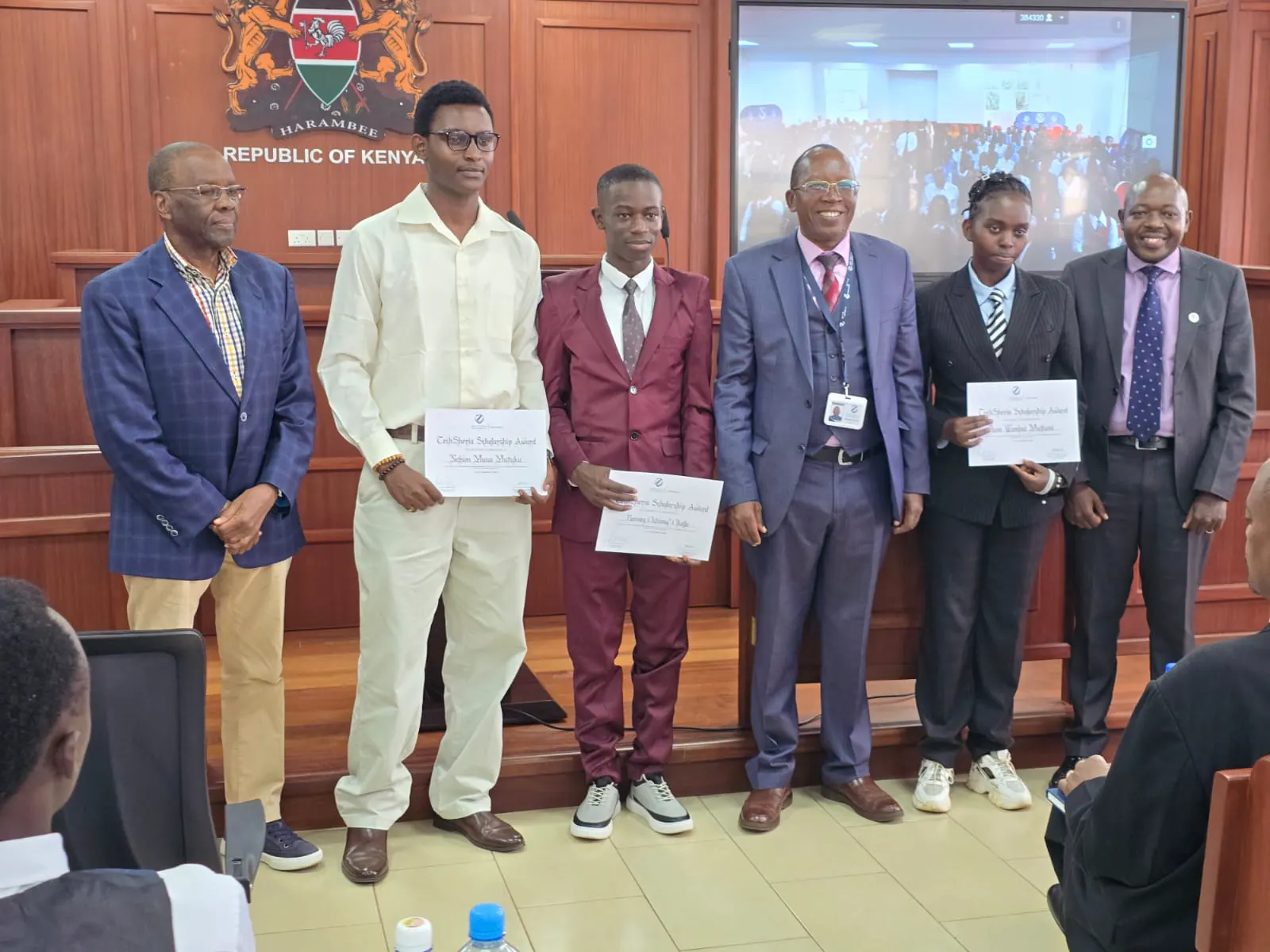
Universities in Kenya have been urged to integrate Artificial Intelligence (AI) into their legal training programs. This call comes as technology continues to reshape the economy and professional practice. Former Chief Justice Willy Mutunga emphasized the importance of embracing AI in learning and professional practice to simplify work and improve efficiency among legal practitioners. He made these remarks at Zetech University during the unveiling of beneficiaries of the TechSheria scholarship programme.
Mutunga highlighted the benefits of using AI in legal practice, citing his personal experience of using the technology to develop written content. He noted that AI had proved useful in assisting him with his work. Zetech University Faculty of Law Dean of Students Dr Eric Kibet also spoke on the matter, stating that AI had become central to the institution's approach to legal education. However, he emphasized that students were being trained to use AI responsibly.
Zetech University has developed guidelines and a policy to ensure students use AI to enhance rather than undermine their learning. Dr Kibet stated that the university's law school programme was oriented towards technology, and therefore AI was very central. He added that students were also taught about the limitations of AI and how to use the technology without compromising their cognitive abilities or professional ethics.
The TechSheria scholarship programme provides full tuition support to selected students pursuing Bachelor of Laws degrees. Zetech University Deputy Vice-Chancellor Prof Alice Njuguna hailed the scholarship as an important investment in expanding access to legal education. She challenged the beneficiaries to make the most of the opportunity by maintaining high academic and administrative standards.
The beneficiaries of the TechSheria scholarship programme, led by Wambui Muthoni, expressed their gratitude for the opportunity. They stated that their decision to pursue law had been influenced by injustices they had witnessed in their communities, including land grabbing, fraud, and deceit. They expressed hope that their legal education would equip them with the knowledge and skills to advocate for justice and better serve society.
Dr Kibet emphasized that the university was not fighting AI, but rather embracing it. He noted that students were trained to use AI and use it ethically in ways that improve and enhance their learning. The university's approach aims to ensure that students use AI to become better lawyers, rather than reducing their cognitive abilities.
The integration of AI in legal training is seen as a way to equip students with the skills needed to remain relevant in a rapidly changing world. Former Chief Justice Mutunga and Zetech University officials agree that embracing AI in legal education will help simplify work and improve efficiency among legal practitioners.
Key points
- Universities in Kenya are urged to integrate AI in legal training.
- AI has become central to Zetech University's approach to legal education.
- The TechSheria scholarship programme provides full tuition support to selected students pursuing Bachelor of Laws degrees.