The Angolan opposition party UNITA has put forward a proposal for a National Stability Pact, which will be discussed and negotiated with different sectors of society before the general elections scheduled for August 2027. According to Adalberto Costa Júnior, President of UNITA, Angola needs a stability pact and a new national commitment. The proposal is part of UNITA's efforts to present an alternative to the ruling party, the Movement for the Popular Liberation of Angola (MPLA), which has been in power since independence.
The proposed pact is not intended to distribute positions, influence, or protect particular interests, but rather to establish fundamental commitments to the country's future. UNITA plans to engage with various stakeholders, including political forces, civil society organizations, churches, youth groups, women's organizations, universities, entrepreneurs, trade unions, and other representative institutions. The goal is to build a broad consensus on key issues that transcend electoral cycles.
Adalberto Costa Júnior outlined five key commitments that will form the basis of the proposed pact. These include peace, reconciliation, and national unity, as well as a commitment to a democratic rule of law and the independence of institutions. The third commitment focuses on economic stability and productive transformation, followed by social justice and the valorization of human capital. The fifth commitment emphasizes decentralization and citizen participation.
The UNITA leader stressed that development should not be overly concentrated in the central organs of the state and that communities should participate in decisions that affect their lives. He also emphasized the need for local authorities to have more autonomy and for citizens to be involved in decision-making processes. According to Costa Júnior, the proposed pact should be an open proposal, without exclusions or requirements for partisan submission.
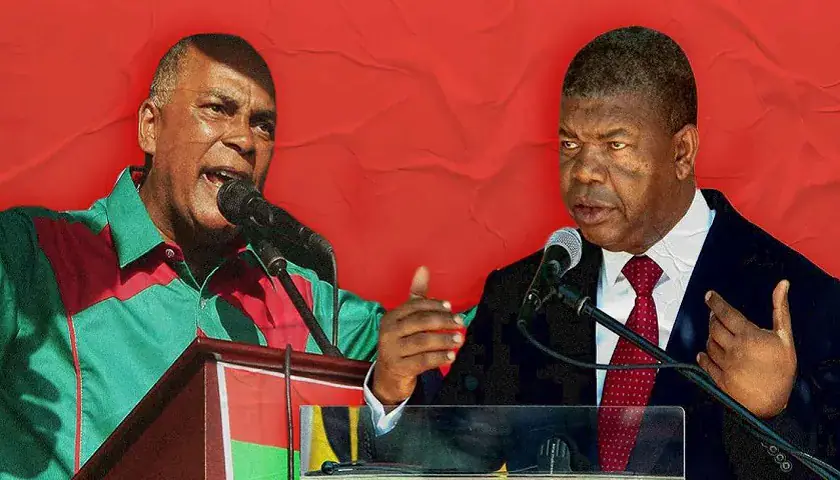
The proposal for a National Stability Pact comes as the ruling MPLA party prepares for its congress, which will choose a new leader and presidential candidate for the upcoming elections. Current President João Lourenço is the sole candidate for his own succession within the MPLA, but is not eligible to run for president again due to constitutional term limits.
Adalberto Costa Júnior described the MPLA as a system of governance, a culture of power, and a group of interests that have taken precedence over the state and the interests of Angolans. He cited examples from other countries, such as Zambia, Senegal, Gambia, and Chile, where opposition parties have won elections after decades of one-party rule. The UNITA leader emphasized that no political system is invincible and that change can occur when society decides to organize and act.
Costa Júnior cautioned UNITA militants against believing that history changes simply because one desires it to. He emphasized that change requires organization, the transformation of ideas into action, and a structured hope that can sustain it. The UNITA leader's proposal for a National Stability Pact is seen as a key part of the party's efforts to bring about change in Angola and to present a viable alternative to the ruling MPLA party.
Key points
- UNITA proposes a National Stability Pact to be discussed with various sectors of society before Angola's general elections in August 2027.