The National Dialogue of Unit Committee Members recently took place in Accra, Ghana, where members and local government stakeholders discussed challenges facing grassroots governance and explored measures to strengthen community development. The dialogue, which lasted for three days, aimed to address the critical role Unit Committee members play in national development. With their direct connection to communities, these members are well-positioned to identify and report challenges requiring government intervention. However, many lack the necessary resources and capacity to perform their functions effectively.
Reverend Augustine Saakuur-Karbo, General Secretary of the National Dialogue of the Unit Committee Members Association, emphasized that Unit Committee members are critical partners in national development. Despite being mandated to serve as the "ears, eyes, legs and hands" of the government at the community level, many members feel neglected due to a lack of resources and capacity. Rev. Saakuur-Karbo called for a review of relevant constitutional and legal provisions to give Unit Committee members greater recognition, resources, and operational capacity.
The lack of resources and capacity has resulted in inadequate coordination among Unit Committee members, Assembly Members, Presiding Members, and Metropolitan, Municipal and District Assemblies (MMDAs). Rev. Saakuur-Karbo stressed that this situation creates gaps and fragmentation in community development, undermining broader national development efforts. He appealed to churches, traditional authorities, opinion leaders, businesses, and other institutions to support the dialogue, describing it as a non-partisan platform for identifying challenges and opportunities at the community level.
The national dialogue will serve as a precursor to similar regional dialogues across all 16 regions, aiming to strengthen grassroots participation and ensure community development is owned by local actors and supported by the central government and other stakeholders. Unit Committee members are well-placed to identify issues such as illegal mining, flooding, and other social and environmental challenges, helping local authorities respond to them. By working together, members can address pressing concerns from their respective communities and bring them to the attention of the appropriate authorities for action.
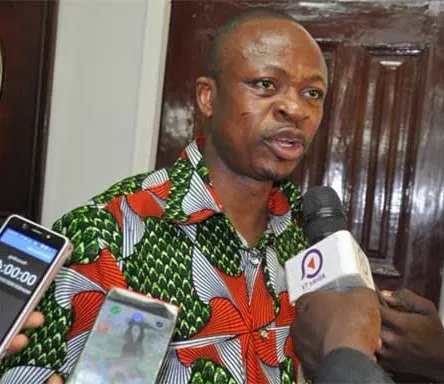
Ayariga Fredrick Apini, a Unit Committee Member for the Gbalonyo Electoral Area in the Bawku West District of the Upper East Region, emphasized the importance of continuous dialogue among local representatives. He said the initiative provides an opportunity for Assembly Members and Unit Committee members to address challenges confronting communities. Although the initiative may face challenges, it has the potential to contribute to positive changes in communities and the wider society.
The initiative is not intended to benefit individuals but to identify and address issues affecting communities. Mr. Apini urged Assembly Members, Unit Committee members, and other local stakeholders to actively participate in the dialogue and contribute ideas towards finding lasting solutions to developmental challenges. Regular meetings will enable members to assess existing challenges, identify gaps, and collectively work towards addressing them.
The National Dialogue of Unit Committee Members has called for urgent reforms to provide Unit Committee members with the necessary resources, capacity, and clear mandate required to effectively drive development at the grassroots. By strengthening grassroots governance structures, Ghana can ensure that community development is owned by local actors and supported by the central government and other stakeholders. This will ultimately contribute to broader national development efforts and improve the lives of citizens in Ghana.
Key points
- Unit Committee members in Ghana are calling for urgent reforms to enhance their role in local development.
- The lack of resources and capacity has resulted in inadequate coordination among Unit Committee members and other local government stakeholders.
- The national dialogue will serve as a precursor to similar regional dialogues across all 16 regions, aiming to strengthen grassroots participation and ensure community development is owned by local actors.