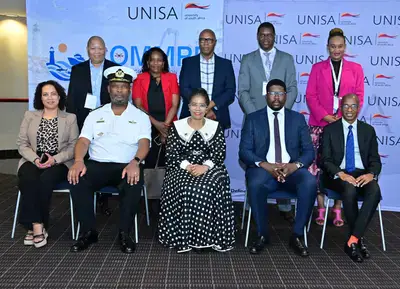
University of South Africa Principal and Vice-Chancellor Prof Puleng LenkaBula has emphasised the need for ocean research to protect marine ecosystems, strengthen coastal livelihoods, and create economic opportunities for communities dependent on the sea. Speaking at the inaugural International Conference on Coastal, Marine and Maritime Research, she reaffirmed Unisa's commitment to positioning African scholarship at the forefront of sustainable ocean governance. The conference, hosted by Unisa in partnership with the Department of Forestry, Fisheries and the Environment, brought together researchers, policymakers, and industry specialists from Africa and beyond.
LenkaBula stressed that scientific progress must translate into practical improvements in people's lives, particularly those living in vulnerable coastal communities. She called for greater recognition of coastal communities and small-scale fishers as knowledge partners whose experiences and insights should inform scientific research and environmental decision-making. The Professor also challenged African universities to assume a stronger leadership role in generating solutions relevant to the continent.
The conference, held under the theme Advancing Science, Innovation, Policy, and Equity within the UN Ocean Decade, provided a platform to explore how research, technological innovation, and policy reform can respond to pressing challenges facing coastal and maritime environments. For Unisa, the conference marked an important step in advancing Marine Studies, one of the university's ten Catalytic Niche Areas, through interdisciplinary research and partnerships.
Deputy Minister of Transport Mkhuleko Hlengwa highlighted the strategic importance of maritime transport to South Africa's economy, with over 90 per cent of the country's trade by volume transported by sea. He argued that realising the country's maritime potential required efficient ports, integrated transport infrastructure, and investment in technological innovation.
Hlengwa identified artificial intelligence, predictive maintenance, and digital twins as technologies capable of improving operational efficiency and strengthening supply-chain reliability. He also emphasised the importance of reducing emissions from ports and shipping, improving coordination between road, rail and maritime transport, and preparing professionals for an increasingly technology-driven industry.
Conference chairperson Prof Godwell Nhamo called for greater recognition of the relationship between marine resources, communities, and sustainable development. He urged delegates to engage more deeply with the "ocean question", arguing that discussions about access to resources, economic development, and social justice must also consider marine and coastal environments.
COMMRE 2026 represents an important contribution to Unisa's Marine Studies Catalytic Niche Area, which prioritises research and innovation in marine conservation, coastal oceanography, the blue economy, and sustainable development. Through this research focus, the university seeks to strengthen interdisciplinary partnerships and develop responses grounded in scientific evidence and local experience.
Key points
- Unisa Principal Prof Puleng LenkaBula emphasises the need for ocean research to benefit coastal communities and protect ecosystems.