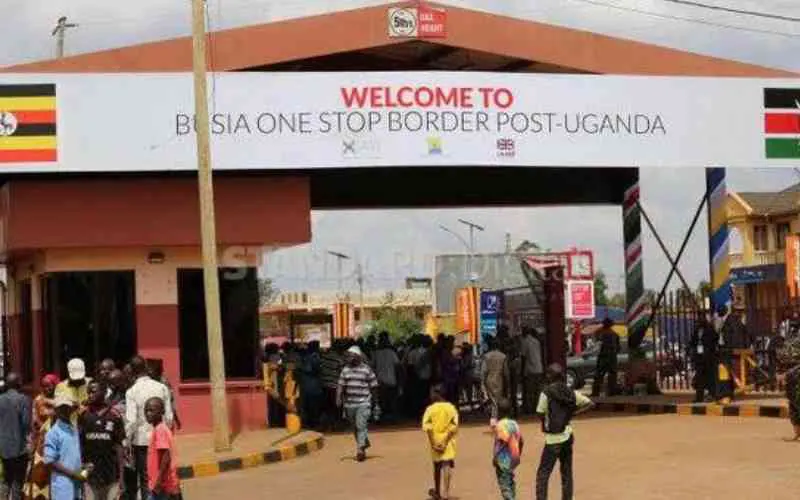
Trade unions in Kenya have demanded urgent reforms at the Busia border, where informal traders face numerous challenges, including extortion, harassment, and arbitrary enforcement. The Central Organisation of Trade Unions (COTU-K) and the African Regional Organisation of the International Trade Union Confederation (ITUC-Africa) are calling for transparent charges, mandatory receipts, and accessible complaints mechanisms to protect informal cross-border traders. This comes as the African Continental Free Trade Area (AfCFTA) aims to increase the movement of goods across borders.
A recent study by the Africa Labour Research and Education Institute found that unofficial payments, discretionary enforcement, sexual harassment, and reliance on personal networks were undermining predictable trade at Busia and other borders. Traders reported multiple charges and unofficial payments that reduced their earnings. Some traders also reported intimidation, threats of arrest, confiscation of goods, theft, and fraud, while slow clearance, congestion, and inadequate facilities disrupted trade. The study highlighted the need for urgent reforms to address these challenges.
The research also found limited awareness among traders of AfCFTA, its Women and Youth Protocol, and mechanisms for lodging complaints. Women and young traders face additional vulnerabilities, including sexual harassment. COTU-K has called on the Ministries of Trade and Labour, the Kenya Revenue Authority, and Busia County Government to engage workers and trader organisations on the findings. The unions want to ensure that women, youth, informal workers, and persons with disabilities participate in decisions on AfCFTA and share fairly in its benefits.
The unions are calling for a simplified trade facilitation regime for informal cross-border traders, arguing that complex procedures can make it harder for small businesses to benefit from expanded markets. They also want trade union representatives included in National Implementation Committees responsible for AfCFTA implementation. Additionally, they are demanding an AfCFTA Labour and Social Protocol, as well as implementation and funding of the AfCFTA Protocol on Women and Youth in Trade.
ITUC-Africa General Secretary Akhator Joel Odigie said the challenges facing traders at Busia demonstrated the need to put workers at the centre of continental trade policies. He emphasised the need for African governments to cooperate more closely on trade facilitation and industrial policies while ensuring that women and young people involved in cross-border trade were not left behind. The unions want to partner with governments to ensure that continental trade benefits workers.
COTU-K Assistant Secretary-General Adams Barasa said that trade liberalisation alone could not transform African economies. He called for AfCFTA to support industrial policy, regional value chains, productive investment, and skills development alongside social protection and environmental sustainability. The unions say AfCFTA's success should not be measured only by the volume of goods traded, but also by its impact on the livelihoods of traders and workers.
The unions are committed to working with governments to ensure that continental trade benefits workers. They want to ensure that trade expansion upholds equality and safe work while protecting workers' rights. The success of AfCFTA, they argue, should translate into decent jobs and stronger productive capacity for workers across Africa.
Key points
- Trade unions demand urgent reforms at Busia border to curb extortion, harassment, and arbitrary enforcement.
- The unions want a simplified trade facilitation regime for informal cross-border traders.
- AfCFTA's success should be measured by its impact on the livelihoods of traders and workers, not just the volume of goods traded.