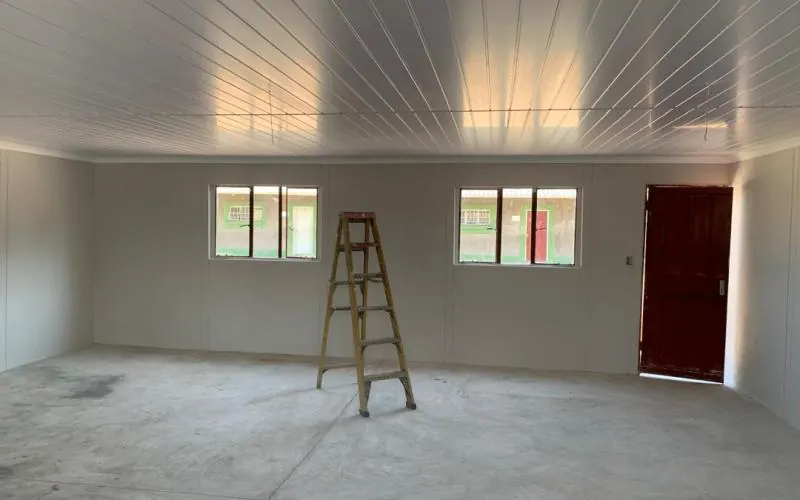
The Revolutionary Union has completed a project to build two classrooms at Limbadungila Combined School in the Ohangwena Region of Namibia. The project, which started in 2025, aimed to address the unsafe learning conditions faced by learners at the school. The classrooms were constructed at a cost of between N$300,000 and N$350,000, and are expected to benefit between 70 and 80 learners. The project included construction work, roofing, plastering, painting, ceilings, and electricity.
The project was initiated after the union visited the school and found learners being taught in makeshift structures built from sticks, with rainwater entering the classrooms and electricity connected to the unsafe buildings. The structures were made from sticks collected from the bush and covered with zinc roofing, leaving learners exposed to rain. The union's central secretary, Julius Natangwe, described the situation as "a confusing environment for kids to be taught under."
The union became concerned about the situation after researching the conditions through social media and visiting the area. Natangwe said the situation was particularly concerning because electricity had also been connected to the makeshift structures, posing a risk to learners. The union then began mobilizing resources to address the situation, engaging with corporate stakeholders to secure funding for the project.
According to Natangwe, the union's project was supported through engagement with corporate stakeholders, although the specific source of funding was not disclosed. The union uses stakeholder engagement and lobbying to secure support for community projects, arguing that businesses have a responsibility to contribute to communities where they operate. The union prioritized Limbadungila Combined School due to the severity of the conditions facing learners.
Natangwe acknowledged that there are other schools across the country facing similar challenges, but said limited resources prevent the union from addressing all the needs at once. He urged businesses operating in different regions to identify challenges within their communities and contribute towards addressing them. Natangwe emphasized that businesses should take responsibility for challenges affecting people in the areas where they operate.
The union's call for community support extends beyond education to issues such as menstrual hygiene. Natangwe noted that girls in some communities continue to miss school because they cannot afford sanitary pads, highlighting the need for businesses and individuals to contribute to improving conditions in underserved communities. He questioned how girls could still be missing school due to their menstrual cycles despite women holding several senior positions in the country.
Natangwe said the union would continue supporting education, sport, sanitation, and other community initiatives where resources allow, while calling on companies and individuals to contribute to improving conditions in underserved communities. He encouraged businesses and individuals to "brighten our small corners, and eventually we will have a brighter Namibia." The union's efforts aim to address inequalities between rural communities and promote community development.
Key points
- The Revolutionary Union completes two classrooms at Limbadungila Combined School in Ohangwena Region.
- The project addresses concerns over learner safety and provides a better learning environment for 70-80 learners.
- The union calls on businesses to contribute to community development initiatives, including education and menstrual hygiene.