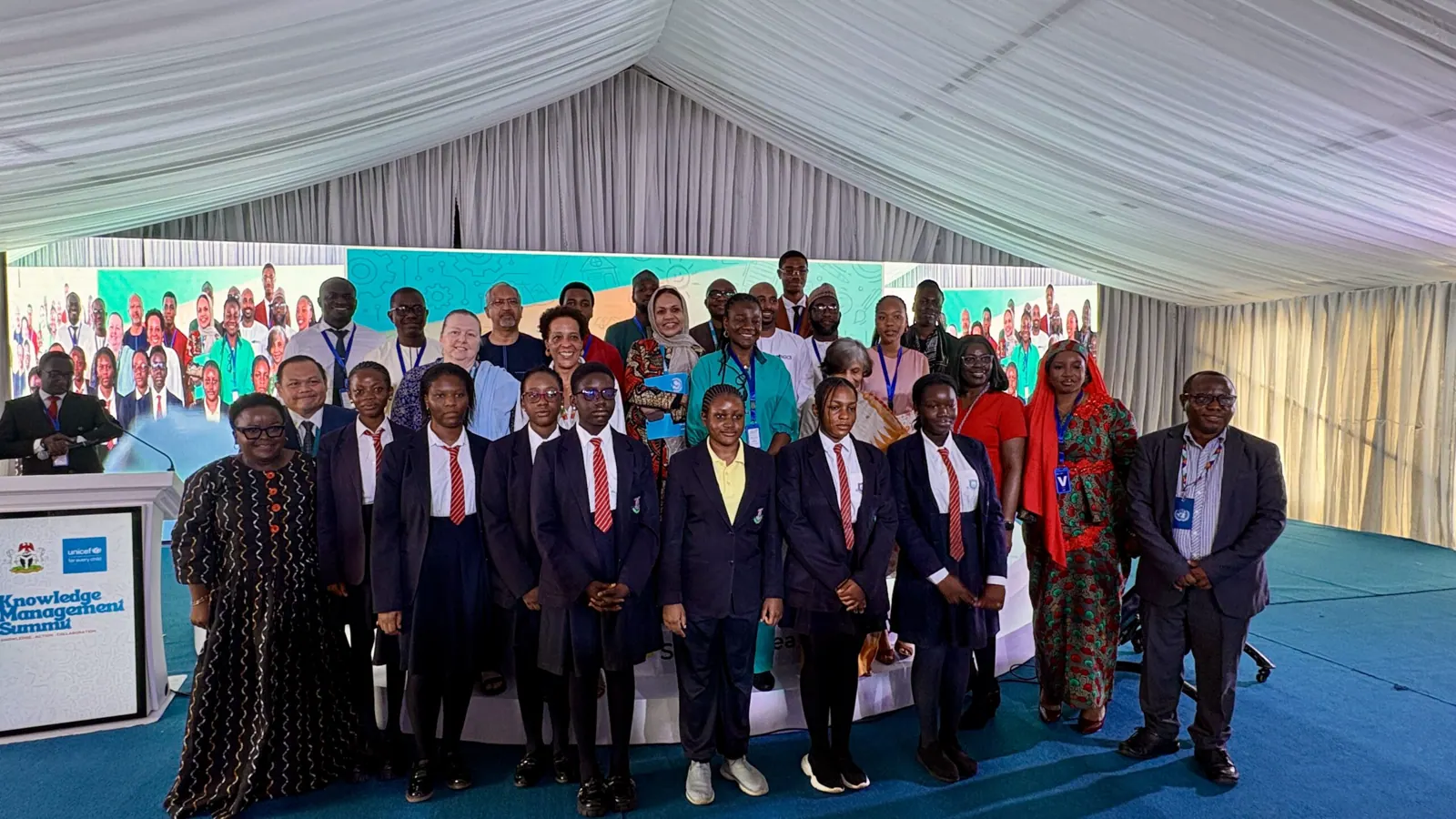
The United Nations Children’s Fund (UNICEF) has urged the Nigerian government to strengthen the use of research, evidence, and learning in shaping policies and programmes aimed at improving the lives of children in the country. This call was made by Wafaa Saeed, UNICEF representative in Nigeria, at the Knowledge Management Summit 2026 in Abuja. The summit, organised by UNICEF in collaboration with the Government of Nigeria, brought together stakeholders to discuss how knowledge and evidence can be translated into action for children.
According to Ms Saeed, knowledge management and learning are crucial tools for ensuring that policies and programmes have a meaningful and sustainable impact, particularly amid the challenges facing children in Nigeria. She stressed the importance of examining what has worked, what has not worked, and what needs to change. Ms Saeed also highlighted the need for greater participation of young people in the knowledge-management process, saying their experiences should inform how knowledge is generated and used.
The summit brought together government officials, development partners, UN agencies, academia, civil society, researchers, young people, media professionals, and other stakeholders. Ms Saeed said one of the key lessons from the summit was that young people wanted to participate in creating knowledge rather than simply receiving feedback from institutions. She emphasized the importance of co-creation, where stakeholders work together from the beginning of research and learning processes.
Suzanne Suh of the United Nations Resident Coordinator’s Office also spoke at the summit, saying knowledge management should serve as a tool for evidence-based decision-making, accountability, and collaboration. She emphasized that research, evaluations, and assessments provide the evidence needed to guide governments and partners towards policies that protect and empower children. Without evidence, decisions could be based on assumptions rather than realities experienced by children and communities.
Ms Suh called for greater investment in systems capable of collecting disaggregated data, while amplifying the voices of children and young people in research. She said digital platforms, open data, and participatory approaches could help make knowledge more accessible and inclusive. The UN Resident Coordinator’s Office is committed to promoting greater coherence across the UN system and ensuring that knowledge can move between agencies, governments, and communities.
Wayne Bacale, chief of planning and monitoring at UNICEF Nigeria, said the summit was designed to share findings from research, evaluations, and assessments, and to examine how such knowledge could be applied to improve outcomes for children and mothers. He emphasized that the discussions should continue beyond the summit, with stakeholders identifying specific actions for translating findings into policy. The ultimate objective is to translate knowledge generated through research into policy actions that improve the protection and wellbeing of children in Nigeria.
The Knowledge Management Summit 2026 is seen as the beginning of a continuing process rather than an isolated event. Stakeholders need to continue creating platforms where those working to improve the situation of children can share knowledge and identify practical actions. The summit has brought together government, academia, UN agencies, and other partners to share knowledge generated through different studies on child rights in Nigeria.
Key points
- UNICEF calls for stronger use of research in shaping policies to improve children's lives in Nigeria
- Greater participation of young people in knowledge-management process emphasized
- Summit aims to translate knowledge generated through research into policy actions that improve child protection and wellbeing