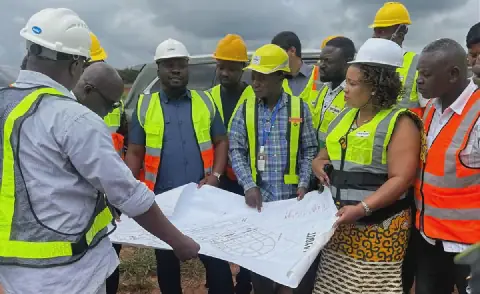
Niger State Governor Umaru Bago recently claimed that a UNICEF report predicted that by 2027, there would be no male children in Grade 7/JSS1 in Shiroro and Munya local government areas of the state. This claim was made during an interview on Channels Television’s Sunday Politics programme. Bago stated that children had left school to engage in artisanal mining, leading to this predicted outcome. The claim has been disputed by UNICEF.
UNICEF Nigeria has denied conducting or commissioning a study on the impact of artisanal mining on children’s school attendance in Shiroro or other Local Government Areas (LGAs) in Niger State. The organisation was contacted by DUBAWA to verify Bago’s claim and clarify the report he referred to. UNICEF Communication Specialist, Samuel Kaalu, stated that they had not conducted such a study.
However, UNICEF did fund a study titled “The Impact of Insecurity on Access to Education in Katsina, Zamfara and Niger State.” This study, published in July 2025, covered Shiroro, Munya, and Rafi LGAs. It examined the effects of insecurity, including banditry, kidnapping, and communal conflict, on school attendance and continuity of learning. The study noted that mining activities had led some families to withdraw children from school and relocate.
The report prepared for the Ministries of Education of Katsina, Zamfara, and Niger states, with funding from UNICEF, discusses mining activities in Niger State in the context of conflict and disruption to education. While it notes that the discovery of mineral deposits has contributed to tensions in some communities, it does not support Bago’s assertion that by 2027, no male child would be in Grade 7/JSS1 due to artisanal mining.
DUBAWA reviewed the report and found no statement supporting the governor’s claim. The report highlights that boys, though affected by violence, are more prone to being recruited by armed groups or forced into child labour when displaced. UNICEF’s Kaalu emphasized that the views expressed in the report are those of the authors and do not necessarily reflect the official policies or positions of UNICEF or the state ministries of education.
The circumstances surrounding Bago’s claim are significant, given the public concern over the deaths of 37 suspected illegal miners who died while in the custody of the Nigeria Security and Civil Defence Corps (NSCDC) in Niger State. The suspected miners were arrested during anti-illegal mining operations in the M.I. Wushishi and Lukoto areas of the state on Sept. 15 and 16, 2026.
In conclusion, Governor Bago’s claim that a UNICEF report predicted no male children in Grade 7/JSS1 by 2027 due to artisanal mining is false. UNICEF has denied conducting or commissioning such a study, and the existing report on the impact of insecurity on education does not support the governor’s assertion.
Key points
- UNICEF did not conduct or commission a study on the impact of artisanal mining on children’s school attendance in Shiroro or other LGAs in Niger State.
- The existing UNICEF-funded study focused on the impact of insecurity on education, not specifically artisanal mining.
- Governor Bago’s claim that no male child will be in Grade 7/JSS1 by 2027 due to artisanal mining is false.