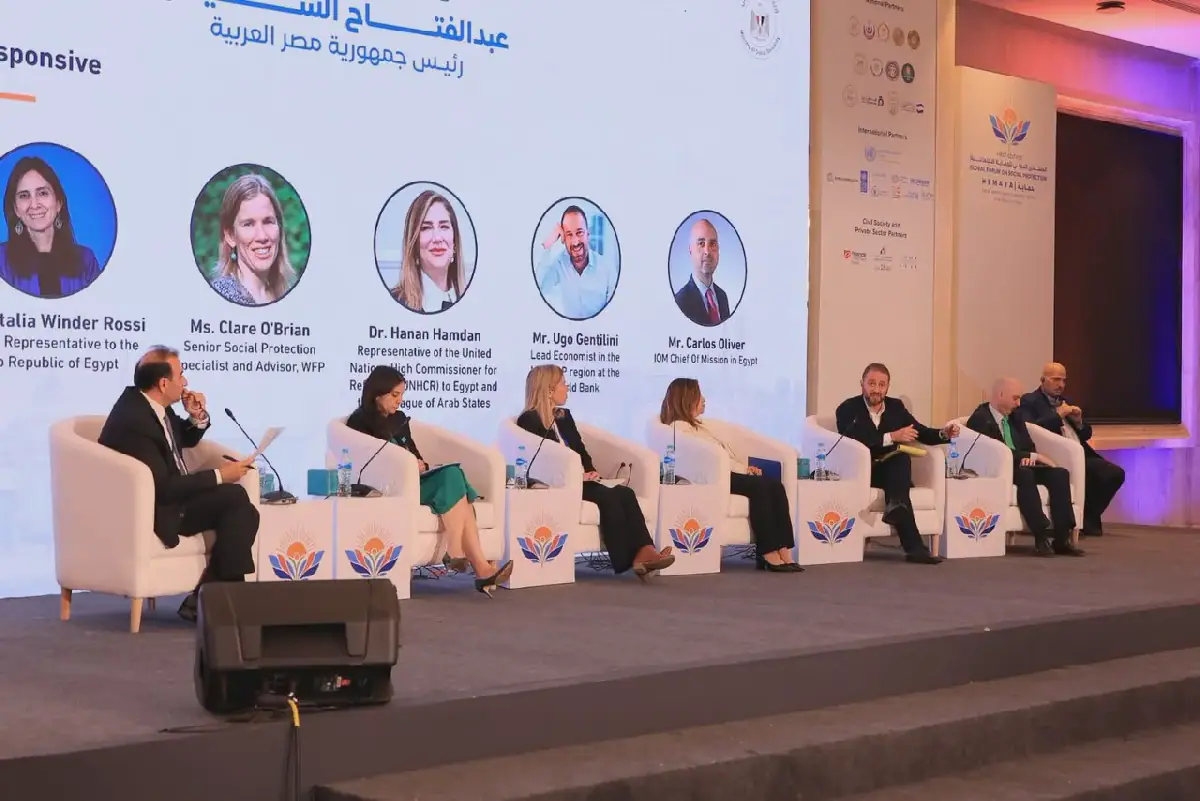
UNICEF representative in Egypt, Natalia Winder Rossi, stressed that crisis preparedness is no longer optional for governments. With increasing overlapping crises, it has become essential to integrate preparedness into social protection systems. This enables swift response mechanisms, leveraging existing structures without needing parallel systems. Egypt's government has adopted a comprehensive approach to developing social protection, enhancing its ability to tackle various risks and shocks.
The COVID-19 pandemic highlighted that social protection is not limited to vulnerable groups but extends to all citizens. Countries that invested in building their systems were better equipped to respond quickly, either by increasing support for current beneficiaries or expanding coverage to new groups. Egypt's approach aligns with this, focusing on a life-cycle perspective and an integrated system.
Children are the most affected during crises, necessitating their needs to be integrated into response plans. This includes ensuring continued access to education, protection, health, and psychosocial support services. Simply providing cash support is insufficient; a holistic approach is required to address children's needs during crises.
Winder Rossi emphasized the importance of diversifying and integrating funding mechanisms to ensure the sustainability of social protection programs. This enables them to effectively face recurring crises. The Egyptian government has been working on enhancing its social protection systems, including programs like the Takaful and Karama cash transfer initiative.
The COVID-19 pandemic demonstrated that well-established social protection systems can be quickly adapted to respond to emerging crises. For instance, some countries expanded their social protection coverage to include informal workers and other vulnerable groups. Egypt has also taken steps to enhance its social protection systems, including increasing the budget allocated to social protection programs.
UNICEF has been working closely with the Egyptian government to support the development of its social protection systems. This includes providing technical assistance and capacity-building programs for government officials. The goal is to ensure that social protection systems are responsive to the needs of all citizens, particularly the most vulnerable groups.
In conclusion, integrating crisis preparedness into social protection systems is crucial for effective response to emerging crises. Egypt's proactive approach to developing its social protection systems serves as a model for other countries. By prioritizing the needs of children and other vulnerable groups, governments can mitigate the impact of crises and ensure a more resilient and equitable society.
Key points
- UNICEF emphasizes the need for crisis preparedness to be integral to social protection systems.
- Children are the most affected during crises and their needs must be integrated into response plans.
- Diversifying and integrating funding mechanisms is crucial for the sustainability of social protection programs.