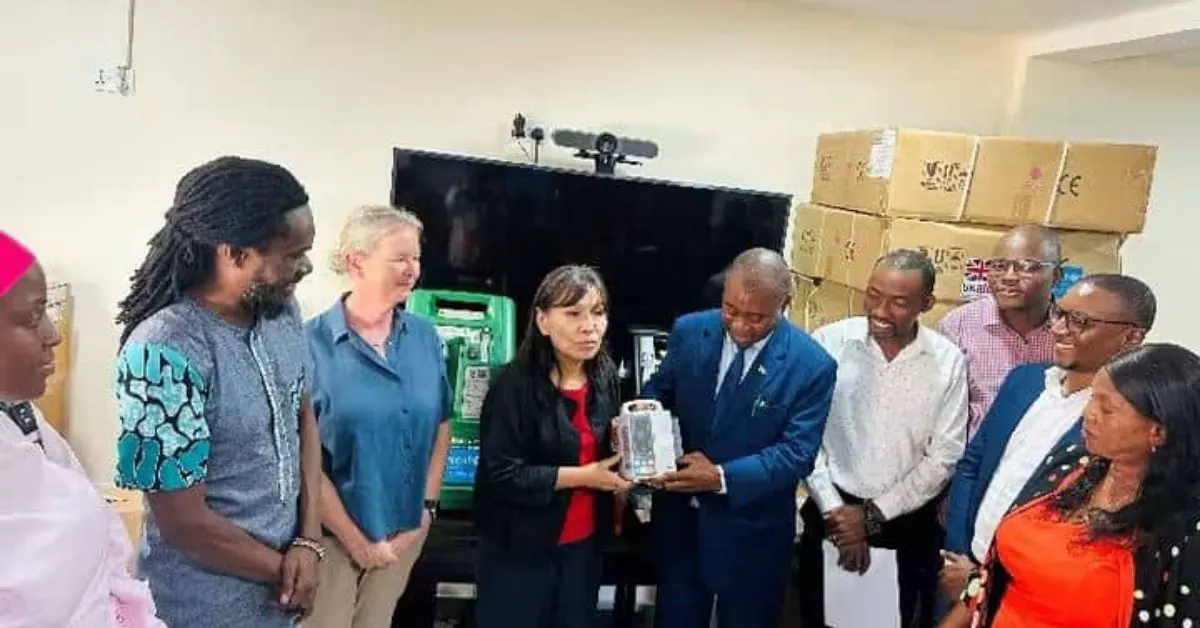
The United Nations Children’s Fund (UNICEF) and the UK Government have provided medical equipment valued at approximately £32,000 to Makeni Regional Hospital in Sierra Leone. The equipment was handed over on September 29, 2026, at the Directorate of Reproductive and Child Health in Freetown. This intervention aims to reinstate critical care services for premature, low-birthweight, and severely ill newborns in the Northern Region of Sierra Leone.
The support from UNICEF and the UK Government is part of efforts to strengthen newborn healthcare systems and expand access to lifesaving services. According to UNICEF Representative Mariko Kagoshima, the intervention marks a significant step toward restoring essential care and ensuring that families can access specialized treatment closer to their communities. The equipment donation is a significant milestone in the partnership between UNICEF and the UK Government.
The UK-supported initiative represents the 17th Special Care Baby Unit established under the UNICEF-UK partnership. This reflects sustained investment in improving neonatal care across Sierra Leone. The number of such facilities has increased from four in 2017 to 17 across 14 districts. There has also been a sharp rise in admissions and improved survival rates among newborns.
Despite the gains made, UNICEF emphasized that the availability of equipment alone is not sufficient to save lives. Trained healthcare workers, reliable oxygen and power supply, essential medicines, proper maintenance systems, and strong clinical leadership are necessary to ensure effective service delivery. UNICEF reaffirmed its commitment to working closely with the Ministry of Health and partners to ensure the rapid deployment and optimal use of the equipment.
The Development Director at the British High Commission, Alex Maclean, noted that the donation forms part of broader UK support to strengthen Sierra Leone’s healthcare system. The partnership extends beyond equipment provision to include training for nurses and other healthcare workers to improve the quality of neonatal care. This comprehensive approach aims to enhance the overall quality of healthcare services in Sierra Leone.
The Makeni SCBU had been a critical facility for treating premature and severely ill newborns before it was destroyed by fire. The gap in specialized care services in the region was significant, and the Ministry of Health welcomed the timely intervention. Deputy Minister of Health I, Dr. Charles Senesie, described the intervention as aligned with national efforts to improve newborn health outcomes and reduce child mortality.
The Ministry of Health continues to implement targeted programmes, including the government’s 300-Day Programme, to accelerate improvements in maternal and child health services. Sustained investment in newborn and child healthcare is essential for saving lives and strengthening human capital development. Improving early-life survival contributes directly to national growth and development, according to Dr. Senesie.
Key points
- UNICEF and the UK Government have provided £32,000 medical equipment to restore neonatal services at Makeni Regional Hospital.
- The intervention is part of efforts to strengthen newborn healthcare systems and expand access to lifesaving services.
- The partnership between UNICEF and the UK Government has established 17 Special Care Baby Units across Sierra Leone.