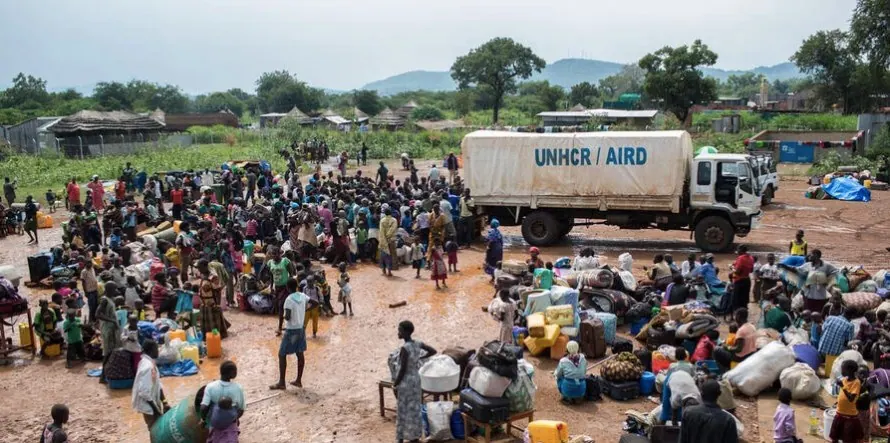
The United Nations High Commissioner for Refugees (UNHCR) has issued a warning that a significant funding shortfall is threatening essential aid to 8.3 million refugees worldwide. According to the agency, only 32% of its $8.5 billion budget for 2026 has been secured, leaving vital services at risk. The UNHCR provides critical assistance to millions of displaced people globally, and the funding gap is already straining core protection services. The agency's ability to deliver aid has been declining, with available resources dropping from $5.2 billion in 2024 to $3.9 billion in 2025.
The UNHCR's funding shortfall is affecting various critical services, including refugee registration, child protection, and support for survivors of sexual violence. Dominique Hyde, the agency's Director of External Relations, emphasized that halting registration or closing safe houses would revive the very risks refugees fled, such as violence, exploitation, and trafficking. The consequences of inaction would be severe, putting vulnerable individuals at risk of further harm. The UNHCR is working to mitigate the effects of the funding gap, but urgent action is needed to address the crisis.
In Chad, the funding shortfall is having a significant impact on refugees, with 319,000 individuals facing delays in documentation. This could leave them without access to essential services and protection. Additionally, up to 200,000 women and girls risk losing access to safe spaces and abuse-prevention programs, while 233,000 children could lose child-protection services. The situation is equally dire in Ethiopia, where the number of safe-house places for gender-based-violence survivors has more than halved in a year.
The UNHCR's livelihood programs are also at risk due to the funding shortfall. In Chad, about 395,000 refugees and host-community members could lose access to vocational training and business opportunities. Similarly, up to 350,000 individuals in Iraq face cuts to their livelihood support. The agency's reintegration grants in Afghanistan have also been significantly reduced, with only 175 households receiving aid in 2026 compared to 5,300 in 2024.
The consequences of the funding shortfall are far-reaching, with vulnerable displaced people returning to Syria facing potential cuts to financial assistance. A total of 162,500 individuals could miss out on critical support, exacerbating their already precarious situation. The UNHCR has already taken steps to reduce and reprioritize its operations to cope with the shortage, but further cuts could render basic services non-functional.
The UNHCR is urging donors to provide flexible funding to respond quickly to evolving crises. The agency's ability to adapt to changing circumstances is critical in ensuring that aid reaches those who need it most. However, without sufficient funding, the UNHCR's capacity to deliver essential services will be severely compromised. The situation is urgent, and immediate action is needed to address the funding gap.
The UNHCR's warning highlights the critical need for international support to address the refugee crisis. With 8.3 million refugees facing the loss of essential aid, the consequences of inaction would be severe. The agency's funding shortfall is a stark reminder of the challenges faced by displaced people worldwide and the need for sustained support to ensure their protection and well-being.
Key points
- UNHCR has secured only 32% of its $8.5 billion budget for 2026.
- 8.3 million refugees worldwide face loss of essential aid due to funding shortfall.
- UNHCR warns that further cuts could render basic services non-functional.