The case of Lee Man-hee, the 95-year-old founder and leader of the Shincheonji Church of Jesus, has been raised before the United Nations Human Rights Council (UNHCR) by CAP Freedom of Conscience. The organization expressed serious concerns regarding Lee's detention on non-violent charges and his current pretrial detention at the Seoul Detention Center in the Republic of Korea.
According to CAP Freedom of Conscience, Lee Man-hee's detention appears to be a politically driven and discriminatory investigation targeting a religious minority. The organization also raised concerns about the conditions of his detention, particularly during Seoul's severe heatwave, where he was held in cells without air conditioning. This has raised grave concerns for the health of the 95-year-old detainee.
The treatment of Lee Man-hee is said to run counter to the Republic of Korea's international obligations. Article 9 of the ICCPR requires detention to be necessary and proportionate, while Article 10 guarantees humane treatment. The Nelson Mandela Rules entitle detainees to healthcare equivalent to that available in the community, and the Tokyo Rules make pretrial detention a measure of last resort.
CAP Freedom of Conscience also emphasized that Lee Man-hee's detention may disregard his right to freedom of religion or belief, as protected under Article 18. The organization has urged the Council to call on the Republic of Korea to honor its treaty obligations. This includes offering alternatives to detention, allowing an independent medical assessment, and ensuring a fair and impartial trial.
Lee Man-hee is a veteran of the Korean War and has been detained despite having a fixed residence and no apparent flight risk. His detention has sparked concerns among human rights organizations, who argue that his age and health conditions make his detention particularly problematic.
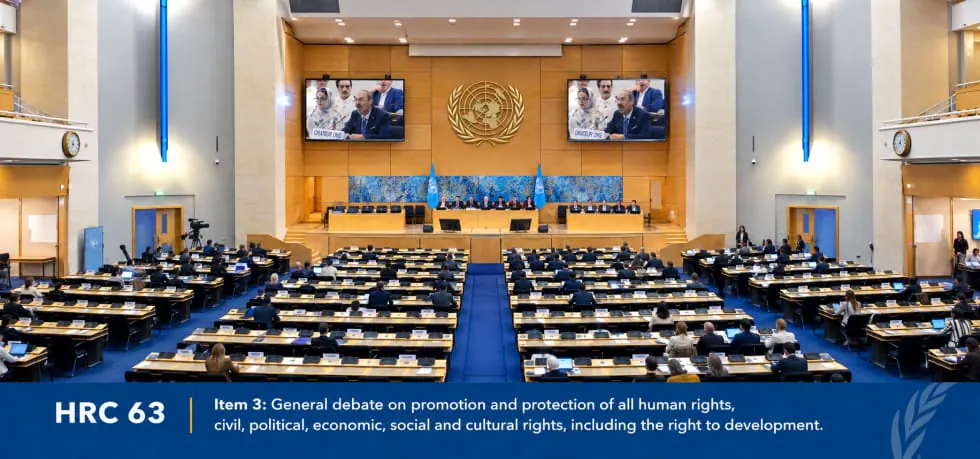
The UNHCR's 63rd session, under Item 3, is devoted to the promotion and protection of all human rights. During the general debate on September 18, 2026, CAP Freedom of Conscience delivered an oral statement highlighting Lee Man-hee's case. The organization hopes that the Council will take action to address the concerns surrounding Lee's detention.
The case of Lee Man-hee has significant implications for human rights in the Republic of Korea. As the country continues to navigate issues of religious freedom and detention, the international community will be watching closely to see how the situation unfolds.
Key points
- The UNHCR has been urged to address concerns over Lee Man-hee's detention.
- Lee Man-hee's detention appears to be politically driven and discriminatory.
- The Republic of Korea's international obligations regarding detention and human rights have been highlighted.