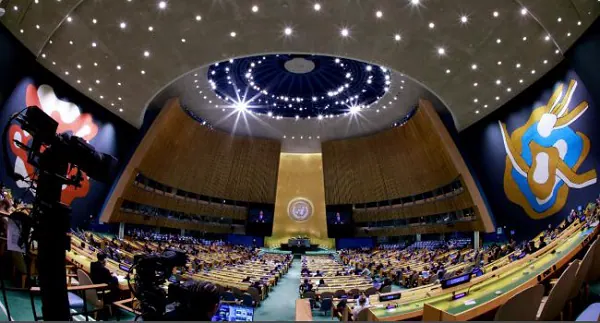
A Nigerian businesswoman, Rosemary Nwakaego Emmanuel, has called on world leaders to move beyond climate declarations and commitments, and instead deliver concrete solutions to communities affected by climate change. Emmanuel, who recently attended the 2026 United Nations General Assembly in New York, emphasized the need for governments and development institutions to turn climate pledges into measurable action. Her comments come as global leaders prepare for COP31.
According to Emmanuel, discussions at the UNGA highlighted an urgent need for action on climate change. She engaged with Presidents, Prime Ministers, Governors, Mayors, development finance institutions, and climate leaders, who deliberated on the next phase of the global climate agenda. The dominant message from these discussions was that the climate debate can no longer be sustained on promises and declarations alone. Instead, the world is demanding tangible action that people can feel.
Emmanuel identified several critical issues that dominated conversations at the UNGA, including climate finance, adaptation, climate justice, clean energy, resilience, and local implementation. She stressed that the growing impact of climate change makes it imperative for climate finance to become faster, easier to access, and more responsive to the needs of vulnerable communities. This is crucial for supporting communities bearing the brunt of climate-related challenges.
The businesswoman also highlighted the demands of Small Island Developing States for climate justice, arguing that their concerns should be treated as issues of fairness rather than charity. Furthermore, she noted that the global conversation on clean energy is evolving, with the issue increasingly linked to emissions reduction, energy security, economic opportunities, resilience, and sustainable development. These shifts in perspective are critical as the world moves towards COP31.
Emmanuel emphasized the importance of cities and subnational governments in implementing climate policies, as they operate closer to the people affected by climate-related challenges. She stated that the approach to COP31 should focus on translating commitments made at international gatherings into practical interventions that produce measurable improvements in people’s lives. This includes improved access to climate finance and increased investment in adaptation.
To achieve success at COP31, Emmanuel listed several areas requiring greater attention, including improved access to climate finance, increased investment in adaptation, stronger communities, greater support for vulnerable countries, practical solutions, and faster implementation. She stressed that the credibility of future climate commitments will depend on whether they produce tangible results for people and communities.
Emmanuel urged stakeholders preparing for COP31 to ensure that the voices and needs of communities most exposed to climate change remain central to the global climate agenda. She emphasized that the conversations matter, but the real work begins when commitments leave conference rooms and start to make a difference in people’s lives. Her call to action underscores the need for a more effective and responsive global approach to climate change.
Key points
- Rosemary Nwakaego Emmanuel emphasizes the need for concrete solutions to climate change.
- Climate finance, adaptation, and clean energy are critical issues that dominated discussions at the UNGA.
- The credibility of future climate commitments depends on tangible results for people and communities.