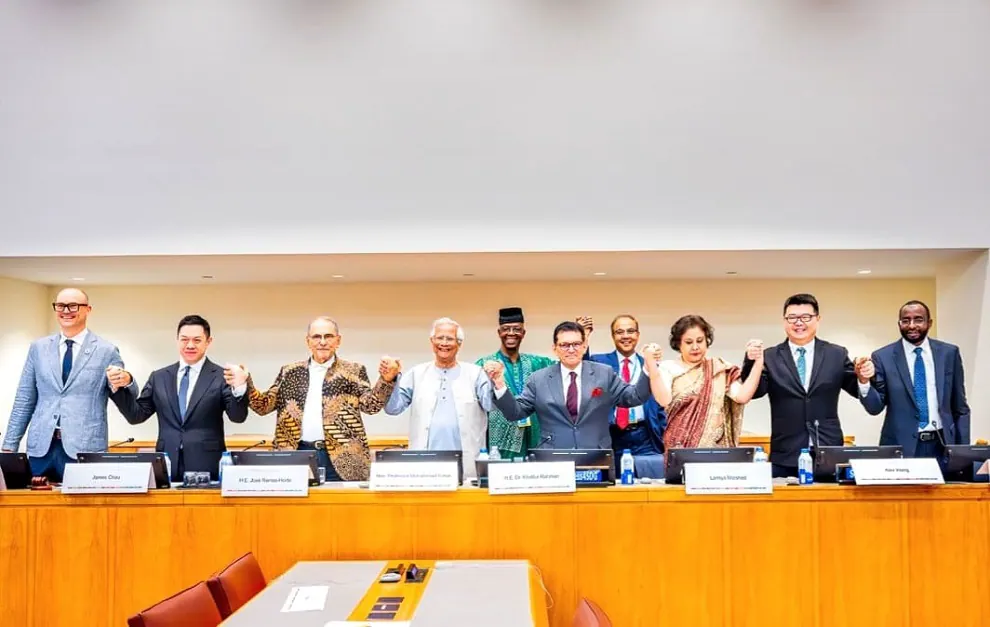
Director-General of the National Information Technology Development Agency (NITDA), Kashifu Inuwa, has urged global leaders to adopt a more inclusive approach to artificial intelligence (AI). Speaking at a UNGA 81 high-level dialogue on technology, innovation, and social business as drivers of sustainable and inclusive development, Inuwa emphasized that emerging technologies must expand human capabilities rather than deepen existing inequalities. The dialogue featured several high-profile attendees, including President of the 81st Session of the United Nations General Assembly, Dr. Khalilur Rahman, and Nobel Peace Laureate, José Ramos-Horta.
Inuwa's keynote address highlighted the need for global conversations on AI to shift from simply expanding access to technology to building systems rooted in representation, access, and agency. He stressed that inclusive AI must reflect the languages, cultures, contexts, and values of the people it is designed to serve, while empowering citizens to understand, shape, and derive value from AI systems. Inuwa noted that "inclusive AI requires representation and access—and access must mean agency, not just consumption." His remarks underscored the importance of ensuring that AI systems are designed to serve diverse populations.
Using agriculture as an example, Inuwa explained that AI could transform the lives of farmers with limited access to expert guidance by placing expert-level assistance within their reach. An AI-enabled agricultural assistant could help farmers interpret weather patterns, understand soil conditions, diagnose crop challenges, and connect with markets. Inuwa emphasized that "the promise of AI is not that every Nigerian becomes an AI expert. It is that AI can put expertise within the reach of every Nigerian." This approach could help bridge the gap in access to expert knowledge for farmers in Nigeria and other countries.
Inuwa outlined four foundational pillars of Nigeria's strategy for an inclusive AI ecosystem: Connect, Skill, Compute, and Create. These pillars aim to expand digital connectivity, enhance digital and technical skills, build sovereign cloud and AI capabilities, and enable entrepreneurs to develop solutions to national challenges. The NITDA chief also emphasized the importance of digital sovereignty, clarifying that Nigeria's goal is not technological isolation but the ability to ensure that AI systems understand Nigerian data, contexts, and nuances.
On digital sovereignty, Inuwa reiterated that Nigeria's goal is to ensure that AI systems operate within Nigerian laws, reflect the country's culture and values, and remain open to international partnerships and investments. He called for shared responsibility among governments, technology companies, and citizens in shaping the global AI ecosystem. Inuwa urged governments to provide infrastructure, policy clarity, and regulatory certainty while protecting citizens. He also encouraged companies to invest in computing infrastructure, knowledge transfer, and talent development in Africa.
Inuwa advised young people to view AI as a tool to augment capabilities and create opportunities, warning that reliance on AI must not erode human accountability, especially in healthcare, livelihoods, rights, and public services. He emphasized that "we can delegate tasks to machines; we cannot delegate accountability." Inuwa challenged policymakers and innovators to consider two fundamental questions when developing AI systems: who is represented in the intelligence being created, and who has the agency to shape and benefit from that intelligence?
Inuwa assured that through NITDA, Nigeria would continue to pursue an AI ecosystem where representation drives relevance, access creates opportunity, and agency empowers citizens to become creators rather than mere consumers of the emerging AI economy. He stressed that "the defining achievement of the AI age should not be that we created machines capable of extraordinary intelligence. It should be that we used that intelligence to unlock extraordinary human possibilities for everyone." Nigeria's efforts to develop an inclusive AI ecosystem could serve as a model for other countries.
Key points
- NITDA DG Kashifu Inuwa calls for inclusive global approach to AI at UNGA 81 high-level dialogue.
- Inuwa outlines four foundational pillars of Nigeria's strategy for an inclusive AI ecosystem.
- Inuwa emphasizes the importance of human accountability in AI development and deployment.