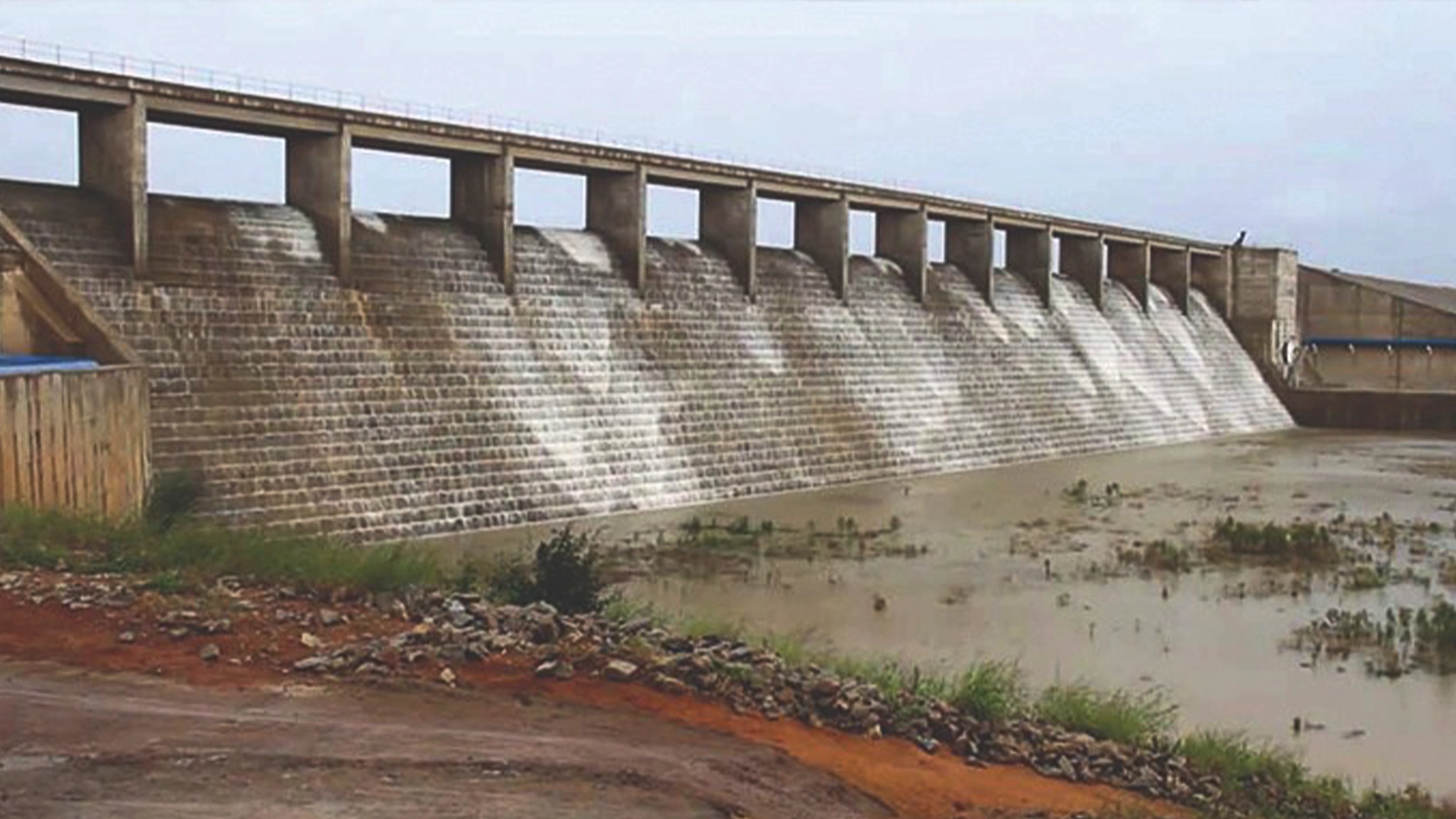
Nigeria's quest for food security is facing significant challenges due to the country's inability to complete strategic dam projects. The federal government has made food security a central focus of its economic agenda, declaring a state of emergency on the issue. However, several dam projects conceived to expand irrigation, provide water, and generate electricity have remained under construction for years, delaying the productive capacity they were designed to unlock.
The Kafin Zaki Dam project in Bauchi State and the Otukpo Dam in Benue State are examples of projects that have been mired in delays. The Kafin Zaki Dam project, launched in the early 1980s, has become one of the country's longest-running uncompleted water projects. Similarly, the Otukpo Dam has outlived successive administrations, leaving communities to endure water scarcity and uncertainty. Records show that about 50 dams have been listed as ongoing or uncompleted, raising concerns about accountability and the billions of naira earmarked for them.
The uncompleted dams include the Mangu Dam in Plateau State, the Adada Dam in Enugu, the Ogbesse Dam in Ondo, and the Farin Ruwa Multipurpose Dam in Nasarawa State. These projects were designed not only as water-retention structures but also as economic infrastructure to support irrigation, potable water supply, hydropower, agricultural production, and rural economic activity. For instance, Ogbesse and Farin Ruwa are designed as multipurpose projects for irrigation, domestic water supply, and power generation.
The costs of these projects have also undergone significant revisions over the years. The Mangu Dam was originally awarded at N5.66 billion but later reviewed upward to N13.2 billion. The Adada River Dam in Enugu State was originally awarded at N2.58 billion, while the Otukpo Multipurpose Dam in Benue State was awarded at N17.18 billion in 2010. The federal government has earmarked billions of naira for these projects over the years, but the funds have not translated into completed projects.
Development experts believe that the debate should move beyond the neglect of individual projects to the wider consequences of prolonged delays. Victor Idaji of Socio-Economic Research and Development Centre (SERDEC) argues that every unfinished dam represents lost irrigation opportunities, unrealised hydropower, interrupted water supply schemes, and billions of naira lost to the economic value chain. Idaji insists that delayed water infrastructure translates directly into lower food production, fewer rural jobs, and slower economic growth.
The Federal Ministry of Water Resources and Sanitation has responded to public concerns, stating that the claim that several dam projects have been abandoned is inaccurate. The ministry admits that work has been slower than originally projected, but blames it on technical, financial, and social challenges. According to the ministry, considerable progress has been made on some strategic projects, including Mangu, Ogbesse, and Farin Ruwa dams.
As food prices rise and farmers face erratic rainfall, insecurity, and climate change, citizens demand accountability for infrastructure projects that have allegedly consumed huge public resources over the years. Water engineer James Alom argues that dam construction requires a diligent, time-consuming process, while agricultural economist Akanu Ude emphasizes the need for a comprehensive approach to address the challenges facing Nigeria's water infrastructure.
Key points
- The Nigerian government has earmarked billions of naira for dam projects, but the funds have not translated into completed projects.
- Unfinished dam projects have hindered Nigeria's food security efforts, leading to lower food production, fewer rural jobs, and slower economic growth.
- The federal government has declared a state of emergency on food security, but the country's inability to complete strategic dam projects continues to pose significant challenges.