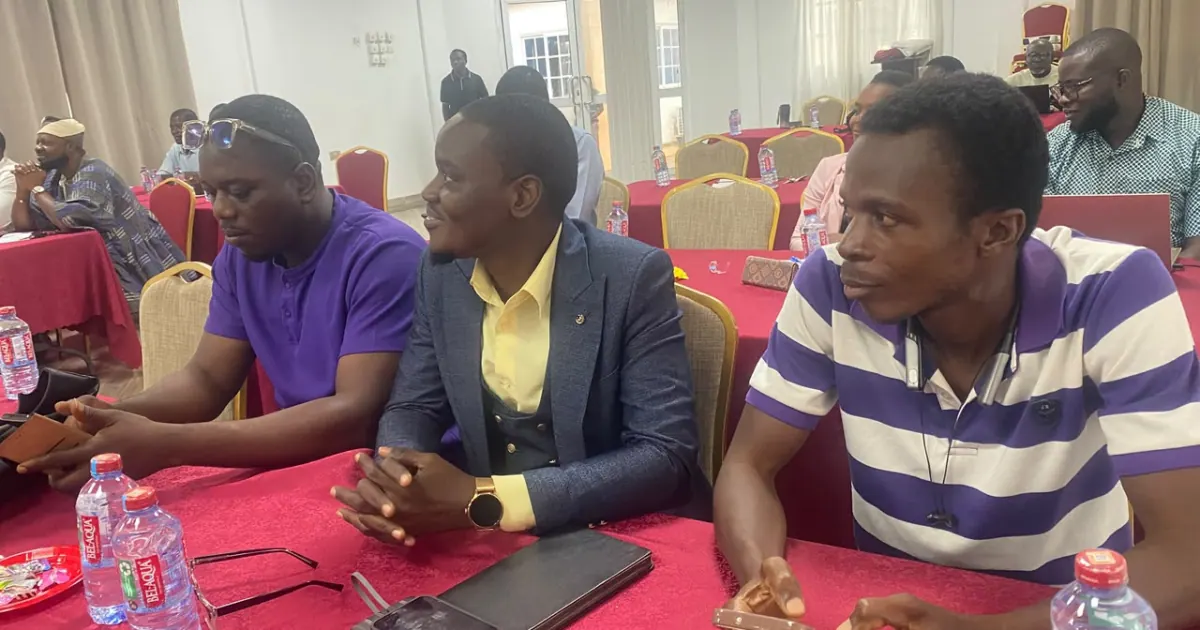
UNESCO has called on Ghanaian journalists to venture beyond press releases and routine interviews, and instead, tap into the country's historical archives to produce deeper and more credible reports. This call was made during a training workshop for journalists in Tamale on September 25, 2026, where participants were introduced to using records preserved in libraries, museums, and other memory institutions to strengthen their work.
Hamid Yakubu, UNESCO Communication and Information Specialist at the Accra Office, emphasized that documentary heritage remains an important but largely underused source for journalists. He noted that these records can help reporters fact-check information, uncover new angles, and place current events in historical context. According to Yakubu, documentary heritage holds vital information about a country's evolution, which is essential for journalists.
Journalists can use historical documents to verify claims and provide context to current developments. For instance, when reporting on Ghana's national budget, reporters can examine previous budgets to identify patterns and trends, enriching their coverage of the new budget. Yakubu cited this example, highlighting the potential of historical documents to add depth and perspective to stories.
Ghana has a rich collection of documentary heritage spanning key periods of its history, including slavery, colonialism, the independence struggle, the post-colonial period, and Pan-Africanism. Institutions such as the George Padmore Library and museums hold valuable information that journalists can use to add historical depth to their stories. Even a single historical document or photograph can provide multiple journalistic angles.
During the Tamale training, an example was shared of how a single photograph was later used to tell a story and influence society. Yakubu expressed enthusiasm for journalists to explore these archives, stating that they can give new perspectives to stories. He cited the upcoming budget presentation by the Minister of Finance as an opportunity for journalists to use historical documents to provide context.
UNESCO plans to continue engaging participants and encouraging them to incorporate documentary heritage into their reporting. The organization will monitor progress and provide support. The next phase of the initiative will involve training journalists in Accra. Additionally, UNESCO plans to engage technicians who manage memory institutions to explore ways for these institutions and journalists to work more closely together.
This collaboration aims to improve access to information and unlock the wealth of knowledge preserved in Ghana's documentary heritage. By working together, journalists and memory institutions can produce richer, more credible reports that provide historical context and depth. Key points from the training include:
Key points
- Journalists should explore historical archives to produce deeper and more credible reports.
- Documentary heritage can help reporters fact-check information and provide context to current developments.
- Collaboration between journalists and memory institutions can improve access to information and unlock the wealth of knowledge preserved in Ghana's documentary heritage.