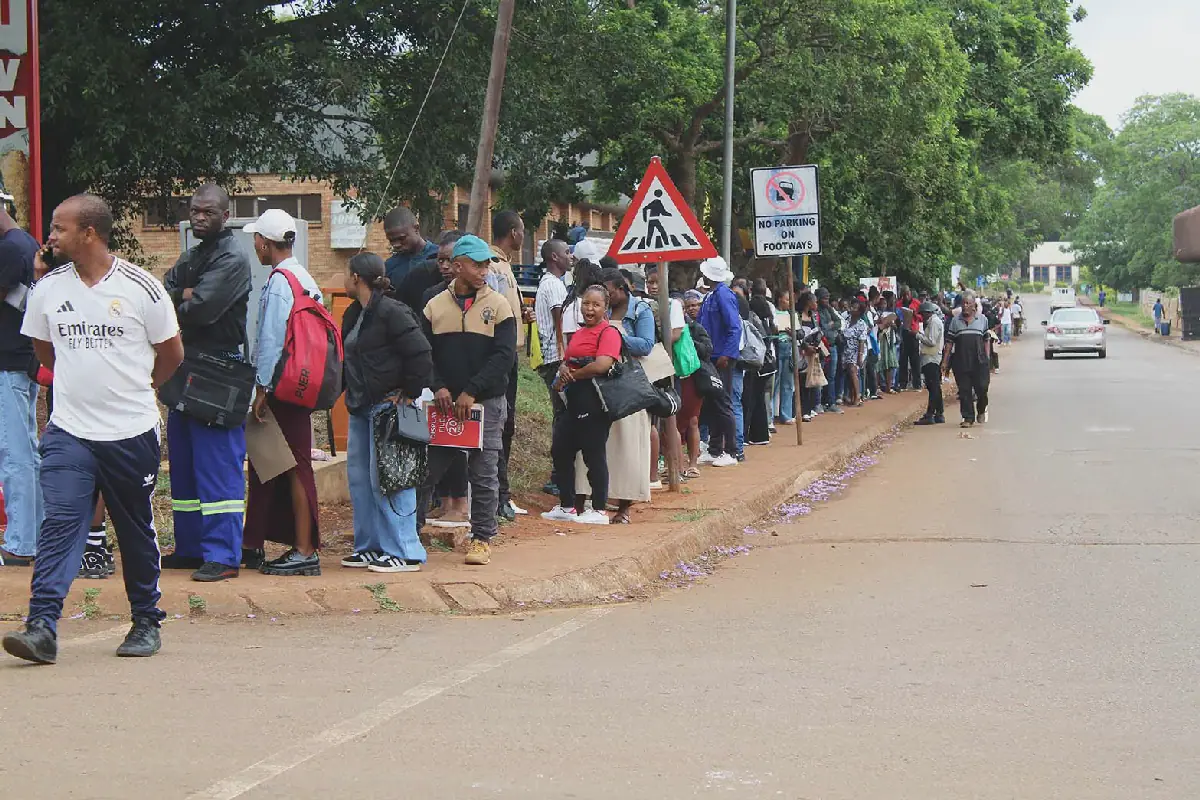
A recent police recruitment exercise in Eswatini has highlighted the country's high youth unemployment rate, with thousands of young people queuing for a chance to secure employment. The exercise, which took place at the Royal Eswatini Police Service headquarters, saw a massive turnout of youth within the 35-year bracket. This phenomenon is a stark reminder of the daily struggles faced by many young people in Eswatini who are desperate for a chance to earn a living.
According to estimates, youth unemployment in Eswatini stands at 52.2 per cent, a staggering figure that raises concerns about the future of the country's young people. Many leave school, colleges, and universities with qualifications but find no place in the economy. The situation is further exacerbated by the fact that some employers demand years of experience from graduates who have never been given an opportunity to gain that experience.
The consequences of prolonged unemployment can be devastating, leading to anxiety, depression, hopelessness, and feelings of worthlessness. For some young people, alcohol and drug abuse become an escape from realities they feel powerless to change. Others withdraw from society, while some struggle silently because mental health support remains inaccessible, unaffordable, or surrounded by stigma.
It is essential to note that unemployment does not necessarily lead to criminality, but economic exclusion, untreated psychological distress, substance abuse, and exposure to violence can create conditions in which social problems become more difficult to address. The growing concerns about gang activity, violent crime, mob justice, and drug-related conflicts should compel authorities to look beyond the immediate incidents and examine the circumstances surrounding them.
To address the issue of youth unemployment, there is a need for a deliberate investment in job creation, skills development, entrepreneurship, and accessible mental health services. The government must engage the private sector to create meaningful pathways for graduates and young people without experience. Internships, apprenticeships, and entry-level opportunities should not remain privileges available to a fortunate few but become practical bridges into employment.
The recent police recruitment exercise and the enthusiasm shown by young people to join the police or army serve as a reminder that, for many, the immediate motivation is survival. They want a paying job, an income to support themselves and their families, and money to put food on the table. The authorities must acknowledge that this is a noble aspiration and work towards providing opportunities for young people to participate in the economy.
Ultimately, the long queues at police headquarters should be treated as a national warning, a sign that something is fundamentally wrong. The country's young people do not need endless speeches reminding them that they are the leaders of tomorrow; they need opportunities to participate in the economy today, to earn, contribute, raise families, and live with dignity.
Key points
- Youth unemployment in Eswatini stands at 52.2 per cent.
- The consequences of prolonged unemployment can be devastating, leading to mental health issues.
- There is a need for investment in job creation, skills development, and accessible mental health services.