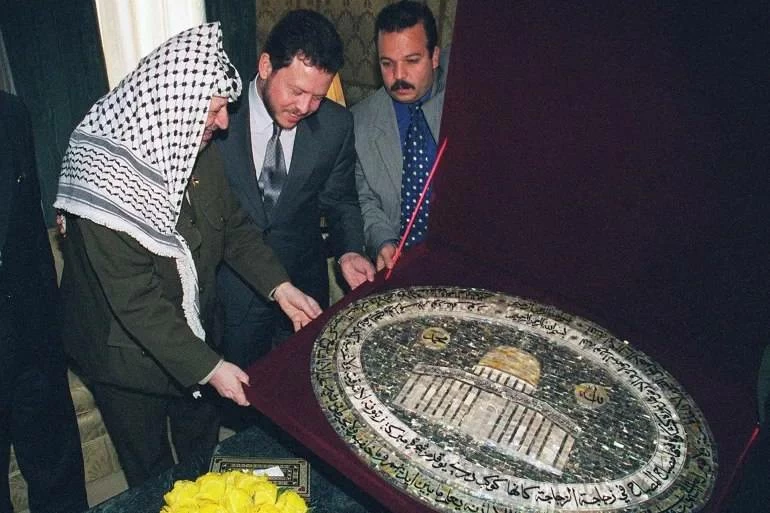
The Hashemite custodianship of Jerusalem's holy sites, a role inherited by Jordan's King Abdullah II, has been a cornerstone of the country's involvement in the city's affairs since the early 20th century. This custodianship, which began during World War I, was initially undertaken by Sharif Hussein bin Ali, the Sharif of Mecca, in response to concerns about the safety of Islamic and Christian sites in Jerusalem. The role has continued through generations of Hashemite leaders.
The historical context of the Hashemite custodianship is rooted in the aftermath of World War I, when Britain occupied Palestine. Recognizing the threat to Jerusalem's holy sites, the people of Jerusalem turned to Sharif Hussein bin Ali for protection. He established the Hashemite custodianship, which has since been passed down through his descendants. This role was formally recognized in the 1994 Jordan-Israel peace treaty, which acknowledged Jordan's special role in the maintenance and protection of holy sites in Jerusalem.
The Hashemite custodianship encompasses a range of responsibilities, including the preservation of Islamic and Christian sites, the maintenance of their integrity, and ensuring freedom of worship. Jordan's King Abdullah II has continued this tradition, with a particular focus on the Al-Aqsa Mosque and the Dome of the Rock. The custodianship also involves collaboration with other parties, including the Palestinian Authority, to ensure the protection and preservation of these sites.
One of the key aspects of the Hashemite custodianship is the restoration and renovation of holy sites in Jerusalem. This has involved several phases of work, including the restoration of the Al-Aqsa Mosque and the Dome of the Rock following damage from fires and other sources. In 2007, the restored Minbar of Saladin, which was destroyed in a 1969 fire, was returned to its original location in the Al-Aqsa Mosque.
The Hashemite custodianship has also involved the establishment of the Hashemite Fund for the Restoration of the Al-Aqsa Mosque and the Dome of the Rock, which was set up by King Abdullah II in 2007. This fund has supported various restoration projects, including the renovation of the mosque's western arcades, the restoration of the historic Sultan Qaitbay fountain, and the preservation of the Islamic Museum.
Jordan's role in protecting Jerusalem's holy sites has been acknowledged by the international community, including the United Nations. The country's custodianship has been seen as an important factor in maintaining the city's cultural and religious heritage. The Hashemite custodianship has also been recognized as a symbol of Jordan's commitment to the preservation of Islamic and Christian heritage in the region.
The significance of the Hashemite custodianship extends beyond its historical and cultural importance, as it also reflects the country's ongoing efforts to protect and preserve Jerusalem's holy sites. As a custodian of these sites, Jordan continues to play a vital role in ensuring their safety and integrity for future generations.
Key points
- The Hashemite custodianship of Jerusalem's holy sites is a role inherited by Jordan's King Abdullah II, dating back to World War I.
- The custodianship involves the preservation of Islamic and Christian sites, maintenance of their integrity, and ensuring freedom of worship.
- Jordan's role in protecting Jerusalem's holy sites has been acknowledged by the international community, including the United Nations.