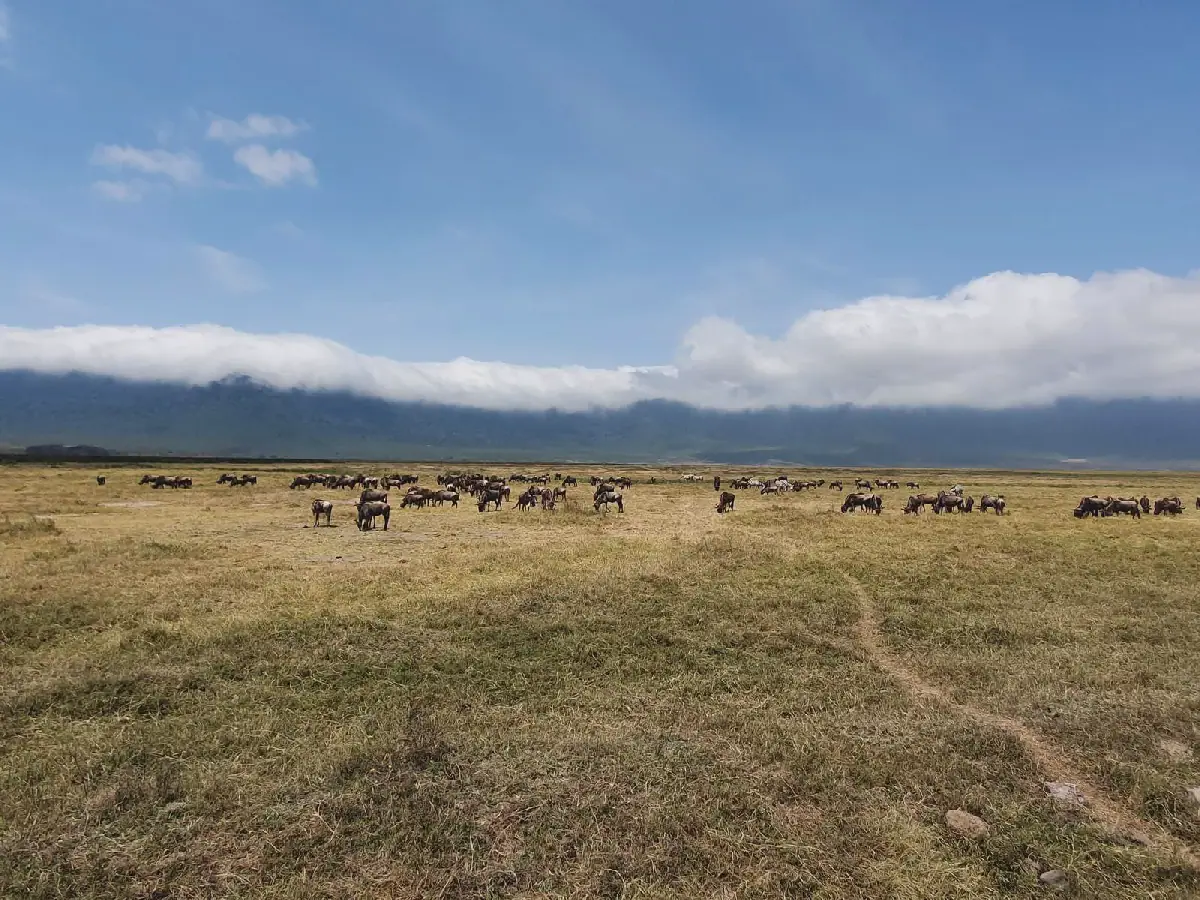
The Great Migration is a year-round circular movement of wildebeest, zebra, and Thomson's gazelle through Tanzania's Serengeti-Mara ecosystem, driven by rainfall and grass. This 800-kilometre journey has no beginning or end, and visitors can witness different phases, each offering a unique experience. The migration is not a single seasonal event, but a continuous loop, with the herds moving in search of greener pastures.
The exact number of wildebeest in the Great Migration is a matter of debate, with two independent assessments in 2023 yielding sharply different figures. The Tanzania Wildlife Research Institute (TAWIRI) counted 1,366,109 wildebeest with an aerial point survey, while a 2025 study using AI analysis of satellite imagery estimated fewer than 600,000. The discrepancy highlights the challenges of counting the large and mobile herds.
Despite the uncertainty over the exact number of wildebeest, the Great Migration remains the largest land migration on earth. The calving season, which takes place from January to March, is a dramatic phase, with around half a million calves born on the southern plains. This synchronised birth is an evolutionary strategy to overwhelm predators, and it results in intense predator activity.
The migration calendar is a rough guide, not a timetable, and the herds move through different zones of the Serengeti at varying times. From November to December, the herds move south through the eastern Serengeti, while from January to February, they arrive on the southern and eastern Serengeti plains, where calving begins. The peak tourist season is from July to October, when the herds cross into Kenya's Maasai Mara.
June is an underrated phase of the migration, with large concentrations of wildebeest and zebra in the central Serengeti, and strong big cat sightings. This period offers a more affordable and less crowded experience, with camp prices below the peak season. The Grumeti River in the western corridor also begins to attract herds during this time.
The Great Migration is a complex and dynamic process, influenced by factors such as rainfall, grass, and predator-prey interactions. While there is no single best time to see the migration, different phases offer unique experiences, from the dramatic calving season to the classic Mara River crossings. Visitors can plan their trip according to their interests and preferences.
For those planning to witness the Great Migration, it is essential to understand that the experience is not guaranteed, and the timing of the migration can vary from year to year. However, with careful planning and guidance, visitors can increase their chances of witnessing this incredible wildlife spectacle. By understanding the migration patterns and phases, visitors can make the most of their trip to Tanzania.
Key points
- The Great Migration is a year-round circular movement of wildebeest, zebra, and Thomson's gazelle through Tanzania's Serengeti-Mara ecosystem.
- The exact number of wildebeest in the Great Migration is uncertain, with different assessments yielding varying figures.
- The migration offers unique experiences throughout the year, from the dramatic calving season to the classic Mara River crossings.