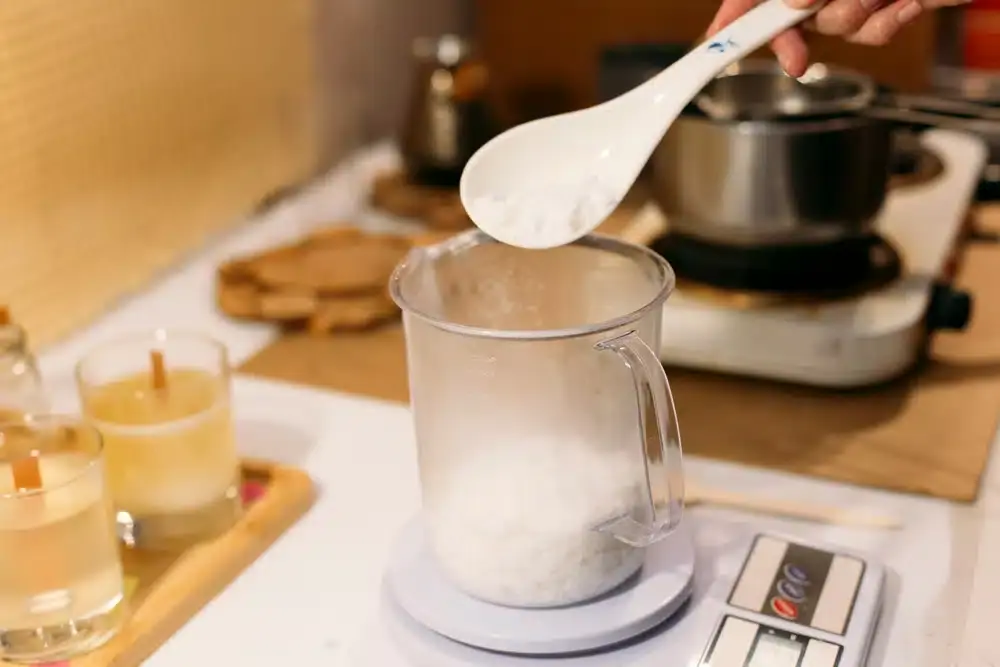
Converting between cups, grams, and spoons can be challenging due to varying densities of ingredients. For instance, a standard cup of 240 milliliters equals approximately 120 grams of flour, 200 grams of sugar, and 220 grams of oil. However, these conversions are not universal and depend on the specific ingredient being measured. A story from an Egyptian mother, Mona, illustrates this point. She once followed a foreign recipe written in grams and ended up with a dry and cracked cake after converting 250 grams of flour to cups.
The issue arises from the fact that different recipes originate from various countries, using distinct measurement systems. American recipes often use cups, while European recipes use grams, and Arabic recipes use "kobaya" and "tablespoon." To address this issue, a guide is provided to help with conversions between cups and grams, along with an explanation of the scientific reasoning behind each measurement. This guide uses a standard cup of 240 milliliters, equivalent to 16 tablespoons or 48 teaspoons.
Not all cups are created equal worldwide. For example, Australian and Canadian recipes use a larger cup, while Japanese recipes use a smaller one. The standard American cup is 240 milliliters, whereas the metric cup used in Australia and New Zealand is 250 milliliters. The British cup is 284 milliliters, and the Japanese cup is 200 milliliters. Using the wrong cup size can result in inaccurate measurements, with Egyptian and Gulf households often using a smaller cup, resulting in 15-25% less than the required amount.
In addition to cups, understanding spoon measurements is also crucial. A large spoon, or tablespoon, is equivalent to 15 milliliters, while a small spoon, or teaspoon, is 5 milliliters, or one-third of a tablespoon. A standard cup is equal to 16 tablespoons. Other common measurements include a quarter cup, equivalent to 4 tablespoons, and a third cup, equivalent to 5 tablespoons and 1 teaspoon.
The weight of a cup of ingredients varies due to differences in density. A cup of honey, for instance, is heavier than a cup of flour because honey is denser and contains less air. To accurately convert between cups and grams, it's essential to know the weight of a single cup of each ingredient. A simple rule of thumb is to use the formula: weight in grams = number of cups x weight of one cup of the ingredient.
A reference table is provided for common ingredients, including dry and liquid measurements. This table is based on the standard American cup of 240 milliliters and assumes the cup is filled using a spoon and leveled with a knife, without compression. The table includes measurements for flour, sugar, rice, and other common ingredients.
When working with recipes, it's essential to note that measurements can vary by 5-10% depending on the type of flour, humidity, and filling method. Therefore, professional bakers often recommend using a scale for precise measurements. By understanding the science behind measurement conversions and using the provided reference table, cooks can ensure accurate and consistent results in their recipes.
Key points
- Using the correct measurement standards and understanding the density of ingredients is crucial for accurate conversions between cups, grams, and spoons.