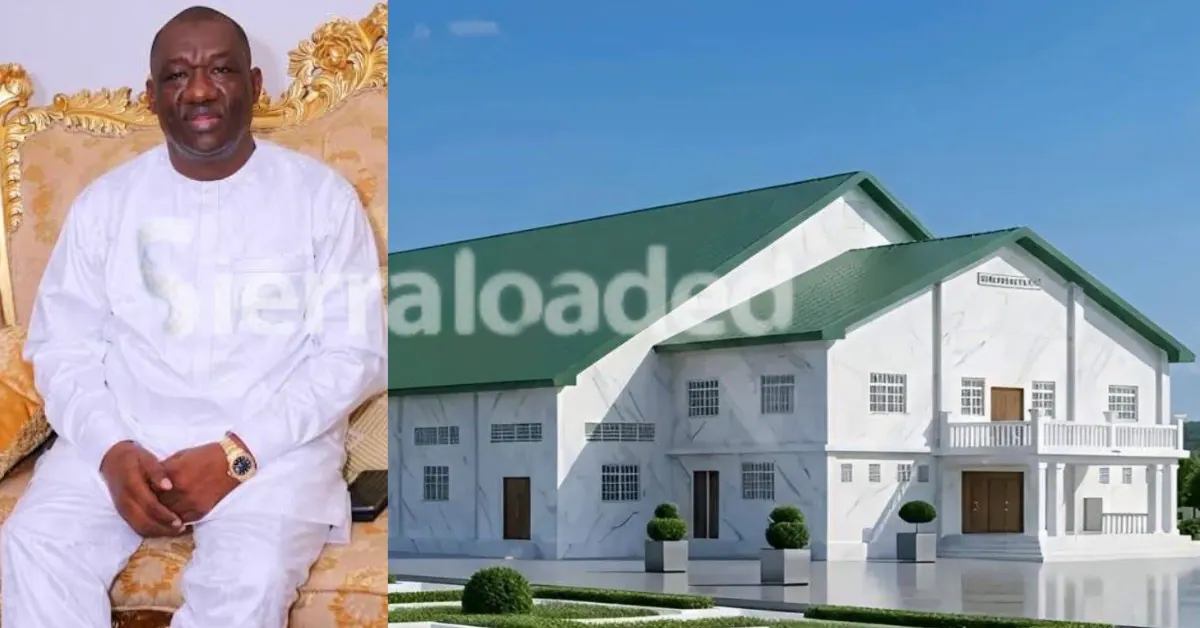
Hon. Alhaji Musa Tarawally, a prominent figure in Sierra Leone's politics and a member of the Sierra Leone People's Party (SLPP), recently delivered a speech that has been misinterpreted by some. In the speech, he stated, "Everybody is guilty." However, he was not confessing to any crime, but rather emphasizing the collective responsibility of the nation. He spoke as a patriot, highlighting the failures of the nation, including division, drug abuse, and unmet basic needs of citizens.
Tarawally's speech was not a call to confess to crimes, but a moral indictment of the nation's failures. He pointed out that since independence, Sierra Leoneans have not united as a nation, and this has led to various problems, including the spread of drug abuse and kush. He emphasized that the nation's young people are dying, families are being destroyed, and communities are being shattered. The speech was a call to action, urging Sierra Leoneans to come together to address these issues.
This is not the first time Tarawally has spoken truth to power. In 2004, he warned the SLPP leadership that electing Solomon Berewa as a candidate could lead to the party losing the 2007 elections. His warning was ignored, and the SLPP did lose the elections. He also gave advice to former President Ernest Bai Koroma, telling him to remain a statesman to avoid being a victim of political circumstances. Tarawally has a history of providing honest advice to those in power.
Tarawally's relationship with President Julius Maada Bio is complex. He is a friend and brother of the President, but he is not afraid to tell him the truth. He brought President Bio into the SLPP and championed his aspirations for leadership. However, their relationship has soured, and Tarawally has spoken out about the injustice against him, including a letter written by the SLPP National Chairman denying his legitimate membership in the party.
Tarawally's speech has been defended by many as a patriotic call for national unity and a critique of the nation's failures. His lawyers have argued that his statement, "We are all guilty," is self-inclusive and cannot be considered defamation. They also point out that the law protects honest opinion on matters of public interest, and Tarawally's speech was a protected expression of his opinion.
The context of Tarawally's speech is crucial to understanding its significance. He has experience in the security sector and is well-positioned to contribute to the process of national unity and freedom for all. His speech was not a personal attack, but a call to action for Sierra Leoneans to come together to address the nation's problems. Despite the controversy surrounding his speech, Tarawally remains committed to his principles and is not afraid to speak truth to power.
The implications of Tarawally's speech are far-reaching, and it has sparked a national conversation about the need for unity and collective responsibility. As the nation grapples with various challenges, Tarawally's call to action serves as a reminder that Sierra Leoneans must work together to build a better future for themselves and future generations.
Key points
- Hon. Alhaji Musa Tarawally's speech was a call to action for national unity and a critique of the nation's failures.
- Tarawally has a history of speaking truth to power and providing honest advice to those in power.
- The law protects Tarawally's speech as a protected expression of his opinion on matters of public interest.