In Ghana, the national budget process is a year-round activity that begins with the Ministry of Finance issuing Budget Preparation Guidelines to all covered entities, including ministries, departments, agencies, and district assemblies. These guidelines set the rules and outline government policy priorities, medium-term expenditure ceilings, and templates for preparing estimates. The process is both top-down and bottom-up, with the Ministry of Finance setting indicative ceilings and entities preparing their budget submissions within those ceilings.
The budget cycle consists of four stages: formulation, approval, implementation, and monitoring, evaluation, and reporting. The Finance Minister must present the budget to Parliament by November 15th each year, as per the 1992 Constitution and the Public Financial Management Act, 2016 (Act 921). The 2025 budget deficit was GH¢15.1 billion, or 1.1% of GDP, and the PFM Act was amended in 2025 to introduce a debt-to-GDP rule of 45% by 2034.
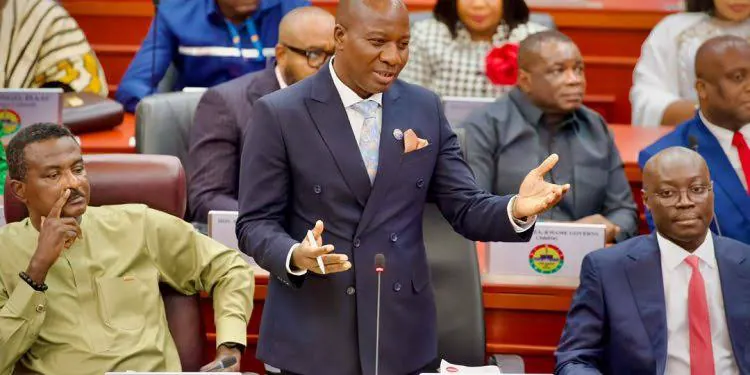
Once the Finance Minister presents the budget, Parliament takes over, and the budget is referred to the Finance Committee, which examines the estimates and produces a report for the full House. Parliament has multiple opportunities to intervene, reviewing the macroeconomic framework and assumptions, conducting hearings with ministries, departments, and agencies, debating the budget, and voting on the Appropriation Bill. The Finance Committee, Special Budget Committee, and Public Accounts Committee play key oversight roles.
The approval process is a seven-step process, during which Parliament can amend the budget, reject specific allocations, or demand changes. Although the public has no direct role in approval, civil society organizations and the media try to influence the budget in March and August of each fiscal year by lobbying politicians and working with bureaucrats. The Ghana Integrated Financial Management Information System (GIFMIS), launched in 2009, processes financial transactions and allows the Ministry of Finance to track commitments and releases in real-time.
After Parliament passes the Appropriation Bill, the budget becomes law, but funds must be released through a warrant system. The Ministry of Finance issues warrants for control purposes, while the Controller and Accountant-General's Department issues warrants related to the treasury function of actually releasing funds. There are two types of warrants: specific warrants initiated by ministries, departments, and agencies, and general warrants issued by the Ministry of Finance.
Implementation is not the end of the process, as the budget cycle is continuous. While the current budget is being implemented, it is monitored and evaluated, and the government begins formulating the next budget. Parliament oversees implementation through its committees, with the Public Accounts Committee examining audited accounts showing the appropriation of sums granted by Parliament.
The budget process is governed by Article 179(1) of the 1992 Constitution and the Public Financial Management Act, 2016 (Act 921). The process involves various stakeholders, including the Ministry of Finance, Parliament, and civil society organizations. Understanding the budget cycle and the roles of different stakeholders is crucial for ensuring that the budget is implemented effectively and that the needs of Ghanaians are met.
Key points
- The budget cycle in Ghana consists of four stages: formulation, approval, implementation, and monitoring, evaluation, and reporting.
- The Finance Minister must present the budget to Parliament by November 15th each year.
- The Public Accounts Committee plays a key role in overseeing the implementation of the budget by examining audited accounts.