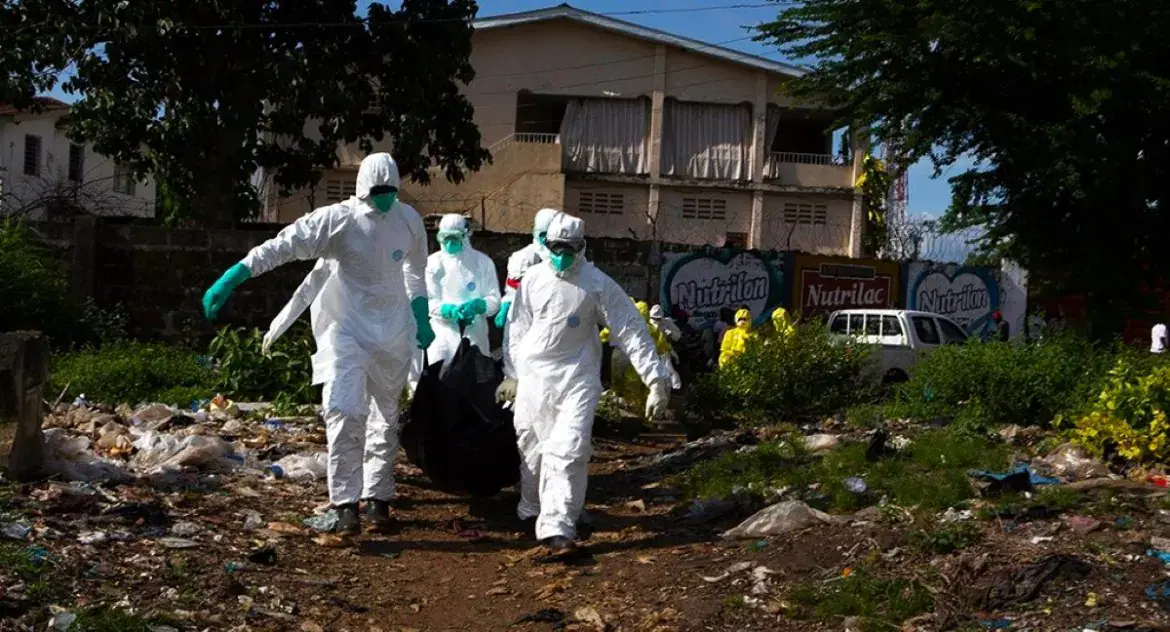
In 2026, three countries in Africa - Kenya, Nigeria, and Uganda - imported Ebola from the Democratic Republic of Congo. Nigeria completed 21 days of monitoring for all 62 contacts of its imported Bundibugyo Ebola case on November 13. Fortunately, 13 contacts who developed symptoms all tested negative for the virus. The patient, who was evacuated to Switzerland for treatment, eventually recovered.
Nigeria's experience with Ebola in 2026 contrasts with its experience in 2014. During the earlier outbreak, a traveller who arrived already ill with Zaire ebolavirus sparked an outbreak of 19 confirmed cases, one probable case, and eight deaths. Nine health workers acquired Ebola directly from him, highlighting the risk of transmission in healthcare settings. In 2026, the Abuja patient arrived from Uganda on October 3 and fell ill four days later, sparking a new outbreak.
The Nigerian patient sought care on October 10, was admitted the next day with fever and diarrhoea, and was initially treated for suspected malaria. Ebola was confirmed on October 20. During the nine days she was in hospital before confirmation, she was potentially infectious. A total of 62 contacts were listed, but it is unclear how many had direct, unprotected exposure to her body fluids.
In contrast, Kenya recorded nine confirmed cases and two deaths after one importation. Four relatives and four health workers were infected, but all eight were already in quarantine when symptoms began, and no further spread was documented. The Kenyan patient died two days after admission and may have needed more intensive care.
Uganda recorded 20 confirmed cases and two deaths, with 15 imported and five locally acquired infections. The outbreak was declared over on August 27. Only the Democratic Republic of Congo is still reporting ongoing local transmission in this outbreak.
A key factor in understanding the different outcomes in Kenya, Uganda, and Nigeria is the level of exposure to the infected patients. Historical Ebola household studies estimated secondary infection rates of 0.8 percent without direct contact and about 48 percent among people providing nursing care.
To prevent future outbreaks, it is essential to understand how the different outcomes in Kenya, Uganda, and Nigeria arose. A de-identified comparison of the Nigerian and Kenyan cases, with independent reporting on the findings, could provide valuable insights into the factors that contributed to the different outcomes.
Key points
- Nigeria detected zero secondary cases of Ebola in its 2026 outbreak.
- Kenya and Uganda had onward transmission of Ebola, with Kenya recording nine confirmed cases and Uganda recording 20 confirmed cases.
- Understanding the factors that contributed to the different outcomes in Kenya, Uganda, and Nigeria could help protect families and frontline staff from Ebola transmission.
Reporting sources
- Why did Kenya and Uganda see onward Ebola transmission while Nigeria had no secondary Cases? · The Tanzania Times – News from Tanzania, Africa, World, Breaking News, Weather, Environment and Climate Change