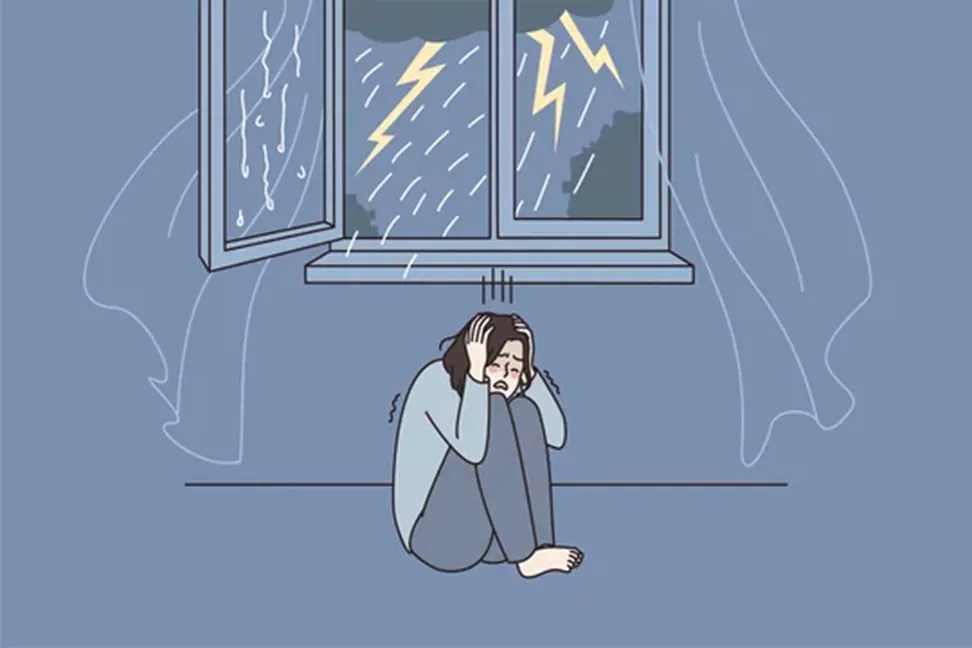
Astraphobia, known scientifically as Astraphobia, is a type of anxiety disorder that goes beyond a normal fear of thunderstorms. It affects an individual's behavior and vital functions when they hear weather forecasts or when a storm begins. This fear manifests in physical and psychological symptoms, including rapid heartbeat, shortness of breath, trembling, and compulsive behaviors such as obsessively following weather updates or seeking refuge in enclosed, dark spaces to escape the storm's noise and light.
From an evolutionary psychology perspective, astraphobia has deep roots linked to the instinct of survival and self-protection from extinction. Primitive humans were born with innate fears of sudden, stressful sounds, as thunder served as a biological warning of imminent danger, such as lightning or floods. Those who fled to caves had a greater chance of survival. This phenomenon is scientifically referred to as the "evolutionary preparedness" theory, where the human brain is genetically programmed to fear elements of nature.
In the current era, despite living in safe environments, the primitive brain, particularly the amygdala, of individuals with phobias, does not differentiate between real and imagined threats and reacts hysterically to storms. This evolutionary fear is not exclusive to humans but also extends to domestic animals like dogs and cats, albeit with greater intensity due to their acute senses. Dogs and cats have a powerful sense of hearing that allows them to pick up frequencies that humans cannot, making the sound of thunder amplified and distressing to their ears.
Furthermore, animals can sense changes in atmospheric pressure before a storm begins. The hair on dogs' backs can collect static electricity during lightning, causing them physical discomfort. This is why they often seek refuge in bathrooms, as the metal fixtures and pipes help them discharge the electricity. The phenomenon of animals and humans reacting to storms is a shared experience, with both exhibiting instinctual behaviors aimed at self-preservation.
Astraphobia can significantly impact an individual's quality of life, causing them to go to great lengths to avoid exposure to thunderstorms. This can include avoiding outdoor activities during stormy weather, obsessively monitoring weather forecasts, or even experiencing panic attacks when a storm is predicted or occurs. Understanding the root causes of astraphobia is crucial in developing effective coping strategies and treatments for those affected.
Research into astraphobia and other specific phobias continues to shed light on the complex interactions between genetics, environment, and brain function. By studying the neural mechanisms underlying fear responses, scientists hope to develop more targeted and effective treatments for individuals suffering from astraphobia and other anxiety disorders. In the meantime, raising awareness about the condition can help reduce stigma and encourage those affected to seek help.
While astraphobia is a recognized anxiety disorder, it is also a condition that can be managed with the right support and strategies. For those affected, learning about the condition, seeking professional help, and developing coping mechanisms can significantly improve their ability to manage their fear and lead a more normal life. As our understanding of the brain and behavior continues to grow, so too will our ability to help those struggling with astraphobia and other specific phobias.
Key points
- Astraphobia is an anxiety disorder characterized by an intense fear of thunderstorms, which can significantly impact daily life.
- The condition has evolutionary roots, linked to the instinct of survival and self-protection from extinction.
- Understanding and awareness of astraphobia can help reduce stigma and encourage those affected to seek help.