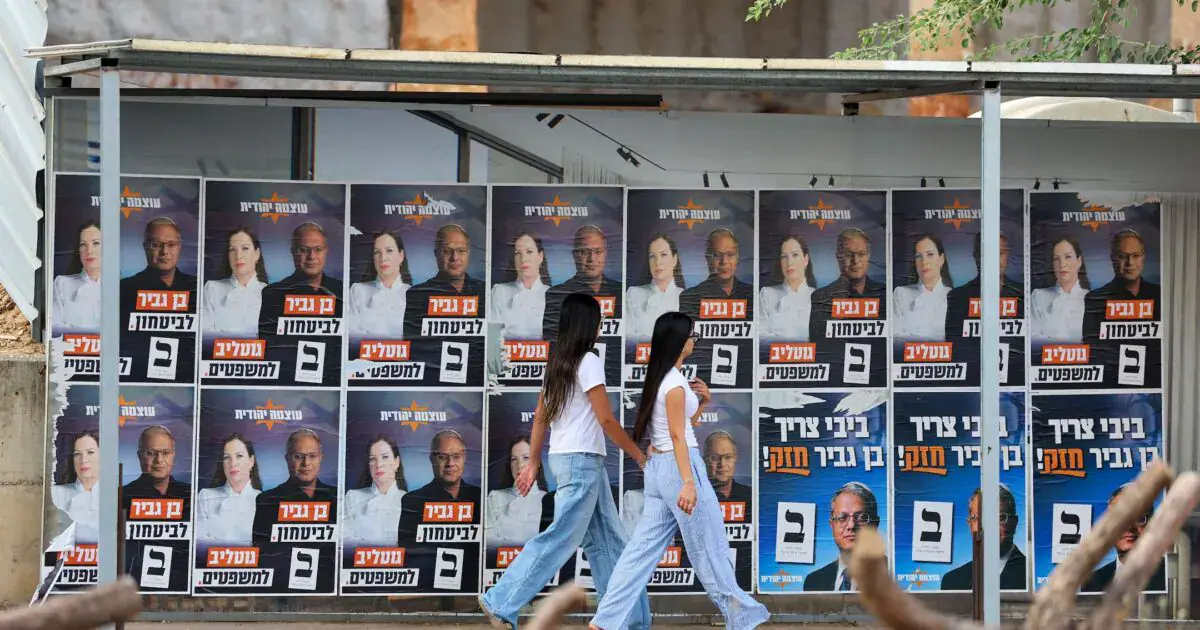
As Israel prepares to head to the polls on October 27, a significant number of voters remain undecided, sparking concerns about the potential impact on the outcome of the Knesset elections. According to opinion polls from Maariv, Channel 12, and Channel 13, between 5% and 10% of eligible voters are still weighing their options. This uncertainty has significant implications for the two main blocs vying for power: the right-wing bloc headed by Prime Minister Benjamin Netanyahu and the centre-left bloc led by Gadi Eisenkot.
Nat Zitomer, a retired licensed tour guide from Karmiel, is one such undecided voter. A self-described centre-right voter, Zitomer has traditionally supported Likud and HaBayit HaYehudi. However, he expressed concerns about the current crop of parties, dismissing the Haredi parties due to their promotion of draft evasion and rejecting Otzma Yehudit and the Religious Zionist Party as too extreme. Zitomer also voiced skepticism about the centre-left party B'Yachad, led by former prime ministers Naftali Bennett and Yair Lapid, citing concerns about their reliability.
Mitchell Barak, a pollster who heads Keevon Global Research, believes that the undecided voters will have a significant impact on the election outcome. Barak estimates that around 25% of voters were undecided in early October and notes that historically, Israeli voters tend to make up their minds at the last minute, often after discussing their options with family and friends. If even one of the smaller parties passes the 3.25% threshold to qualify for Knesset seats, Barak argues that it could significantly alter the dynamics of the election.
However, Ofer Kenig, a research fellow at the Israel Democracy Institute, is less convinced about the impact of undecided voters. Kenig points out that most undecided voters have already chosen which bloc to support, with polls showing that the majority of undecided voters are split between parties within the same bloc. In this context, Kenig argues that the difference between voting for Netanyahu's Likud party or the far-right party of Itamar Ben-Gvir may not be significant, as both parties have agreed to form a right-wing coalition government.
Alon Yakter, a senior lecturer and political scientist at Tel Aviv University, identifies a group of undecided voters who are "soft or centre-right" and may be swayed by issues such as settlement expansion. In contrast, Israelis who are hawkish on the Palestinian issue but dissatisfied with the current government's handling of recent events may feel "politically homeless." Daniel Meyer, a self-described right-wing voter from the West Bank, exemplifies this dilemma, expressing frustration with Netanyahu's leadership and seeking a party that will address his concerns.
Adele Raemer, a survivor of the October 7 Hamas attack, is another undecided voter seeking change. Raemer expressed disillusionment with the current government, citing its perceived abandonment of victims and failure to address the needs of soldiers and hostages. She is looking for a centrist party that will prioritize securing Israel's borders and providing assistance to those affected by the conflict. Eva Weiss, a writer from Netanya, shares similar concerns, expressing dissatisfaction with Netanyahu and his coalition partners.
As the election day approaches, the fate of Netanyahu and Eisenkot, as well as the future of Israel's government, hangs in the balance. With multiple parties vying for power and a significant number of undecided voters, the outcome remains uncertain. Ultimately, the decision of these undecided voters will play a crucial role in shaping Israel's future.
Key points
- Up to 10% of eligible voters remain undecided, with significant implications for the election outcome.
- The undecided voters may sway the balance of power between the right-wing bloc headed by Netanyahu and the centre-left bloc led by Eisenkot.
- Smaller parties may also play a crucial role if they pass the 3.25% threshold to qualify for Knesset seats.