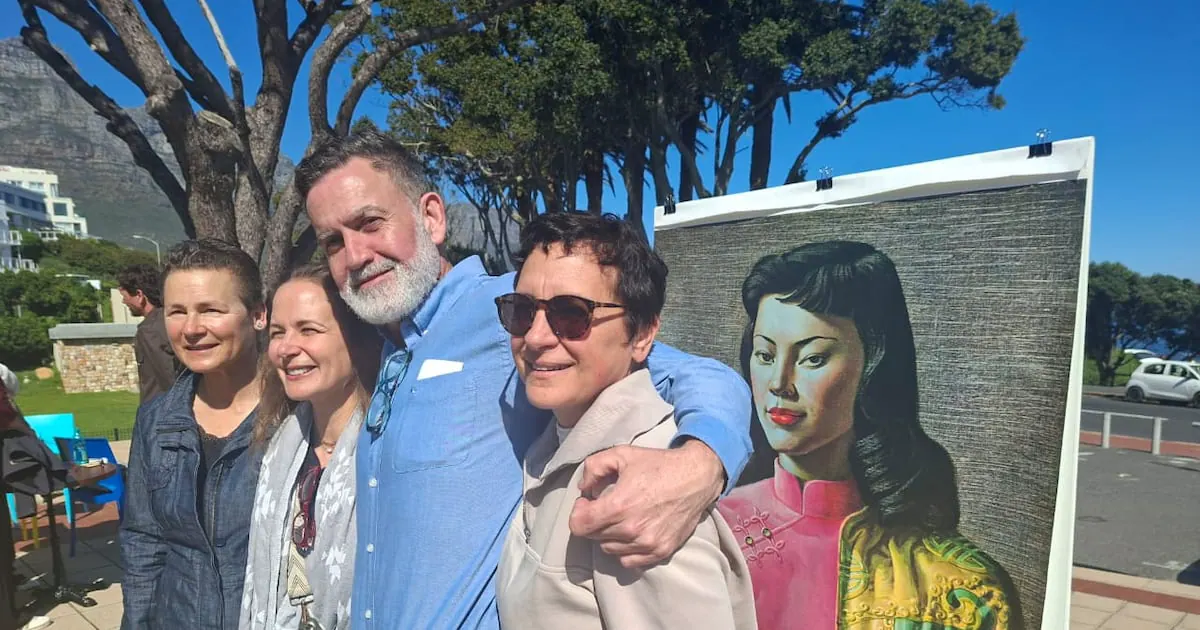
For generations, South Africans have been familiar with the works of Vladimir Tretchikoff, known as the "King of Kitsch." His prints, such as "The Green Lady" and "The Dying Swan," were once a staple in many middle-class homes, despite being dismissed by the art establishment as kitsch. Recently, Tretchikoff's art has gained popularity, selling for millions of rand. A new documentary, Pappa Kitsch, explores the story of a man who bought a box containing an oil painting by Tretchikoff on Bidorbuy and embarked on a journey to establish its authenticity.
Stefanus Nel, a journalist-turned-advertising professional, bought the box for R10,000 and began investigating the painting's provenance. He collaborated with filmmaker Adam Heyns to create the documentary, which premiered at the Silwerskerm Festival in Camps Bay. Nel was drawn to the story, feeling that there was more to the painting than met the eye. He spent many evenings researching Tretchikoff and reading about his life, which only added to his curiosity.
Tretchikoff, who came from Singapore, was already a famous artist when he moved to South Africa. However, he faced rejection from the local art world, which made it difficult for him to exhibit his work. Despite this, his prints became highly sought after by the public. The documentary explores the disparity between the art world's opinion of Tretchikoff and the public's enthusiasm for his work.
Nel's investigation took him on a road trip to Cape Town, where he consulted with art specialists and tracked down the person who sold him the artwork. The painting's signature did not match those on Tretchikoff's famous artworks, and its smaller size raised questions. However, the accompanying scrapbook was deemed to be of archival interest. An old photograph of Tretchikoff surrounded by a group of men, affixed to the back of the frame, added to the mystery.
Infrared photography revealed that the painting was, in fact, a paint-by-numbers kit from the 1950s. While Nel was initially disappointed, the documentary takes an unexpected turn, exploring Tretchikoff's attic, a stone fireplace, and his granddaughter Natasha Swift. The film also features the Bishopscourt home where Tretchikoff once lived. Nel expressed his satisfaction with the documentary's reception at the Silwerskerm Festival.
Nel, who is camera-shy, was pleased with how he came across on screen, saying he simply told the story. He studied journalism and copywriting before working in advertising. His experience buying oddities on Bidorbuy, including the Tretchikoff box, sparked his interest in the story. Nel plans to hold onto the painting, hoping to unravel the mystery behind it and potentially creating a sequel.
The scrapbook, which Nel returned to Tretchikoff's family, holds significant personal value, telling the story of the artist's life from 1933 to 1952. Nel believes it's essential to keep the scrapbook within the family, rather than it ending up with a serious collector who would view it differently. The documentary raises questions about the painting's authenticity and the story behind it, leaving room for further exploration.
Key points
- The documentary Pappa Kitsch explores the authenticity of a Vladimir Tretchikoff painting bought on Bidorbuy.
- The painting was revealed to be a paint-by-numbers kit from the 1950s.
- The scrapbook accompanying the painting holds significant personal value to Tretchikoff's family.