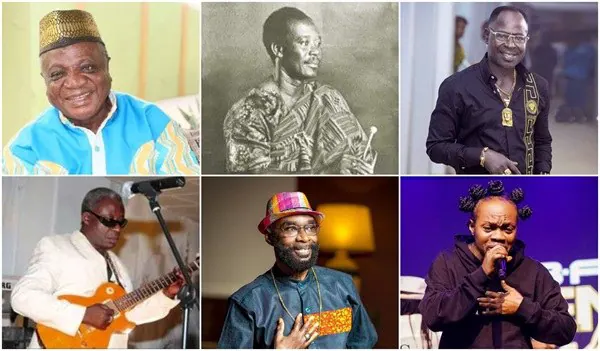
A recent retrospective by GhanaWeb profiles ten Ghanaian music legends, delving into the early recordings that marked the beginning of their careers. One such legend is Nana Ampadu, who formed the African Brothers Band in 1963. This outfit produced his earliest known recordings, "Agynaka Dabere" and "Suminasi Ntonko," released in 1966. These songs signified the start of a career that would shape Ghanaian highlife for decades.
The retrospective spans highlife pioneers from the colonial and independence era to artistes who carried Ghanaian sound onto the international stage. Several of the artistes profiled began as members of bands and singing groups, with breakout recordings tied to early collaborations. Daddy Lumba, born Charles Kwadwo Fosu, composed "Lumba Lumba" while part of the Nkwanta Wesley Singers. This early composition contributed to his stage name "Lumba," closely associated with him even after his death.
Other legends followed a similar path to stardom. Pat Thomas, known as the "Golden Voice of Africa," recorded "Go Modern" with the Broadway Dance Band, working alongside fellow musician Ebo Taylor. Kojo Antwi's earliest recordings came while he was with J.K. and the Boom Talents Band around 1975. He later moved through groups such as Classique Vibes and Classique Handles on his way to a solo career spanning highlife, reggae, and Afro-pop.
Amakye Dede, known as Iron Boy, started out with the Kumapim Royals in the early 1970s. Songs such as "Dabi Dabi Ebeye Yie" and "Akwadaa Wesoa" marked his early years before he became a celebrated solo act. The retrospective also explores the early career of E.T. Mensah, regarded as a pioneer of modern Ghanaian dance-band highlife. He recorded "Ghana Freedom" in connection with the country's 1957 independence celebrations.
Koo Nimo's early career was shaped by his work with guitar bands, including I.E. Mason's and K. Gyasi's outfits. His song "Yaa Amponsah" is closely tied to the guitar-band highlife tradition. Osibisa, credited with introducing African-inspired music to international audiences, released its self-titled debut album in 1971, featuring the track "The Dawn."
The retrospective also highlights the early careers of George Darko and Ebo Taylor. George Darko, a pioneer of the burger highlife movement, broke through with "Ako Te Brofo" in the early 1980s. Ebo Taylor's own early career involved collaborations with various Ghanaian dance bands, including his work with Pat Thomas. His recordings, such as "You Need Love," later cemented his international recognition.
The retrospective serves as a reminder that highlife and Ghanaian popular music were built incrementally, through bands, collaborations, and apprenticeships, before the solo stardom many fans recognize today. The article offers a glimpse into the humble beginnings of Ghana's music legends, showcasing the early recordings that paved the way for their success.
Key points
- The retrospective profiles ten Ghanaian music legends, including Nana Ampadu, Daddy Lumba, and Pat Thomas.
- Many of the artistes profiled began their careers as members of bands and singing groups.
- The retrospective highlights the early recordings that marked the beginning of the legends' careers, showcasing their incremental rise to stardom.