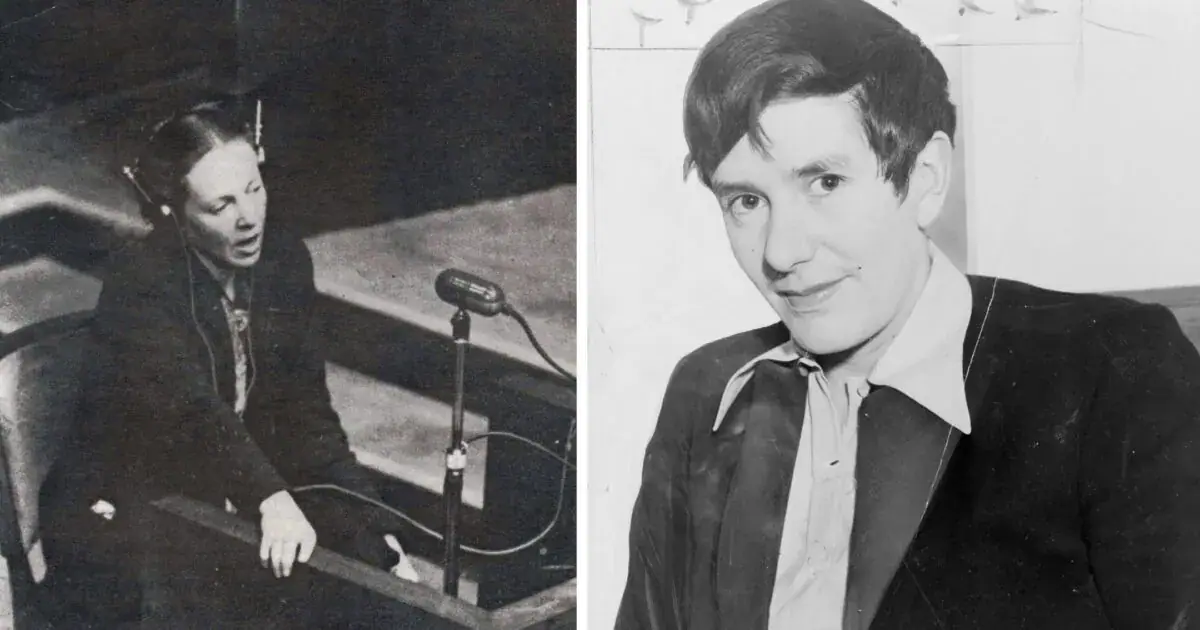
The Nuremberg trials, a landmark event in modern history, has long been remembered as a predominantly male affair, with famous names like Robert Jackson and Hermann Göring taking centre stage. However, a new book, "The Nuremberg Women", reveals that women played a pivotal role in shaping the proceedings and outcome of the trial. Author Natalie Livingstone highlights the contributions of a remarkable cast of women who worked tirelessly behind the scenes, often in challenging circumstances. These women helped bring the atrocities of the Holocaust to light and ensured that the truth was told.
One of the most significant women to testify at the International Military Tribunal was Marie-Claude Vaillant-Couturier, a French résistante, deportee, and survivor of Auschwitz and Ravensbrück. On 28 January 1946, she stood just a few feet from Göring and provided a detailed account of the horrors of the camps, including the selections, the children, and the industrialised murder. Her testimony was groundbreaking, and it was largely due to her efforts that the Holocaust entered the legal and moral conscience of the world. Vaillant-Couturier's bravery and conviction have inspired many, and her story is a testament to the power of individual courage in the face of overwhelming adversity.
The role of women in the Nuremberg trials went far beyond testimony. Harriet Zetterberg, a talented young American prosecutor, compiled a crucial case that led to the conviction of Hans Frank, the Butcher of Poland. Despite being barred from speaking in court due to her gender, Zetterberg's work was instrumental in bringing a key perpetrator to justice. Other women, like Erika Mann, daughter of Nobel-prize-winning writer Thomas Mann, brought fierce conviction and burning anger to their reports on a homeland she had fled. These women, and many others, played a vital part in shaping the historical record.
The experiences of the women at Nuremberg were not without challenge. Many faced significant obstacles, including limited access to facilities and being forced to share a single bathroom. The institution had not been built with them in mind, but they persevered, driven by a commitment to the truth. Tatiana Stupnikova, who interpreted the proceedings in real time for the Soviet delegation, navigated a complex political landscape, demonstrating remarkable skill and diplomacy.
The contributions of these women have been largely forgotten, but their bravery and resilience serve as a powerful reminder of the importance of standing up for the truth. As Livingstone notes, "hope was never blind optimism. It was work." The story of the Nuremberg women speaks urgently to our own troubled times, highlighting the need for individuals to establish and repeat the truth in the face of denial and distortion.
The book "The Nuremberg Women" shines a light on eight remarkable women who helped shape the course of history. From German journalist Ursula von Kardorff, who reported on the trial from the perspective of a defeated nation, to Countess Ingeborg Kálnoky, who ran the guesthouse where witnesses and defendants lived, these women's stories are a testament to their courage and conviction. Their experiences serve as a powerful reminder of the importance of women's contributions to history.
Eighty years on, the story of the Nuremberg women serves as a powerful reminder of the importance of standing up for the truth, even in the face of overwhelming adversity. As the number of survivors who witnessed the atrocities of the Holocaust dwindles, it is more important than ever to remember the crucial roles that women played in bringing the truth to light. By sharing their stories, we can ensure that their contributions are never forgotten and that their bravery and resilience continue to inspire future generations.
Key points
- The Nuremberg trials, often remembered as a male-dominated event, were significantly shaped by the contributions of women who worked as researchers, prosecutors, witnesses, and journalists.
- Marie-Claude Vaillant-Couturier's testimony was instrumental in bringing the Holocaust to the attention of the world and ensuring that the atrocities were documented.
- The story of the Nuremberg women serves as a powerful reminder of the importance of standing up for the truth and the crucial role that women have played in shaping history.