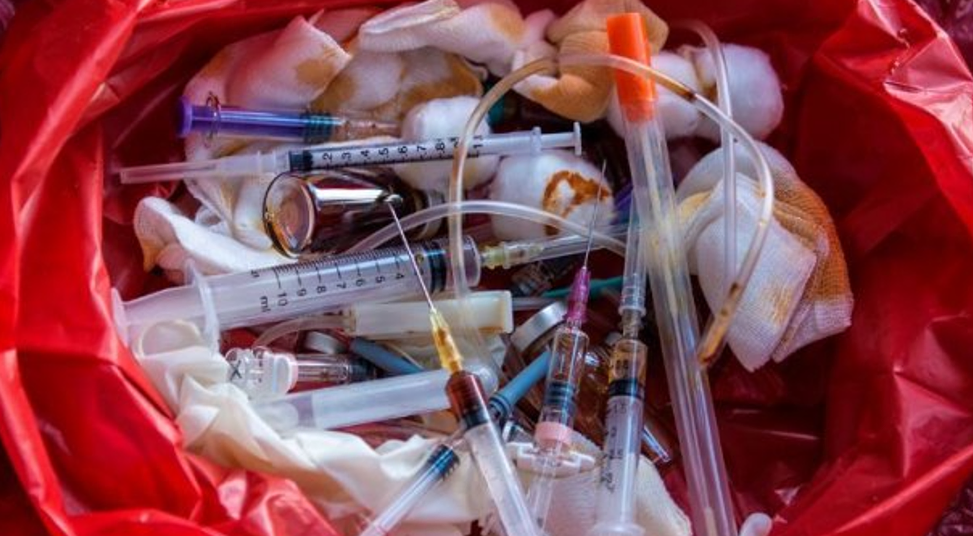
A recent alert from Oujda about the presence of anticancer pharmaceutical residues in the city's water supply has highlighted the issue of uncontrolled medical waste in Morocco. An study published in Discover Environment found that these residues persist in the environment and are not fully eliminated by conventional treatment processes. This issue is not isolated to Oujda, but rather a nationwide problem that requires attention.
Morocco has a regulatory framework in place for managing medical and pharmaceutical waste, but its implementation is lacking. The country generates around 7,000 tonnes of medical waste annually, with approximately 80% being treated as household waste. However, the remaining 20% consists of hazardous materials such as used needles, syringes, and infectious waste.
The healthcare sector is responsible for producing around 6,300 tonnes of hazardous waste, with hospitals generating about 3,500 tonnes, private clinics 2,000 tonnes, and primary healthcare centers around 800 tonnes. However, the exact amount of waste generated by home care services is unknown. If not disposed of properly, these materials can cause serious harm to humans and the environment.
The risks associated with medical waste are twofold: sanitary and environmental. Used needles and syringes can cause injuries and transmit infectious diseases, while hazardous waste can contaminate soil and water sources. Antibiotics, disinfectants, and solvents can also contribute to the development of antibiotic-resistant bacteria.
Despite having laws and regulations in place, the implementation of medical waste management is often lacking. Many healthcare professionals do not adhere to proper disposal procedures, and it is not uncommon to find hazardous waste in regular trash. Only a few specialized companies exist to handle medical waste, and they primarily operate in the Casablanca-Rabat area.
In theory, Morocco has the necessary legislation and resources to manage medical waste effectively. The 2000 law and 2009 decree establish guidelines for the handling, storage, and disposal of medical waste. However, the lack of enforcement and monitoring hinders the effective implementation of these regulations.
The issue of medical waste management in Morocco requires a comprehensive approach that involves not only the healthcare sector but also the government and the public. It is essential to raise awareness about the risks associated with medical waste and to develop effective strategies for its management. Key points include the need for proper disposal procedures, increased monitoring and enforcement, and the development of specialized facilities for handling hazardous waste.
Key points
- Morocco generates around 7,000 tonnes of medical waste annually.
- The country's regulatory framework for medical waste management is often not enforced.
- There is a need for increased monitoring and awareness about the risks associated with medical waste.