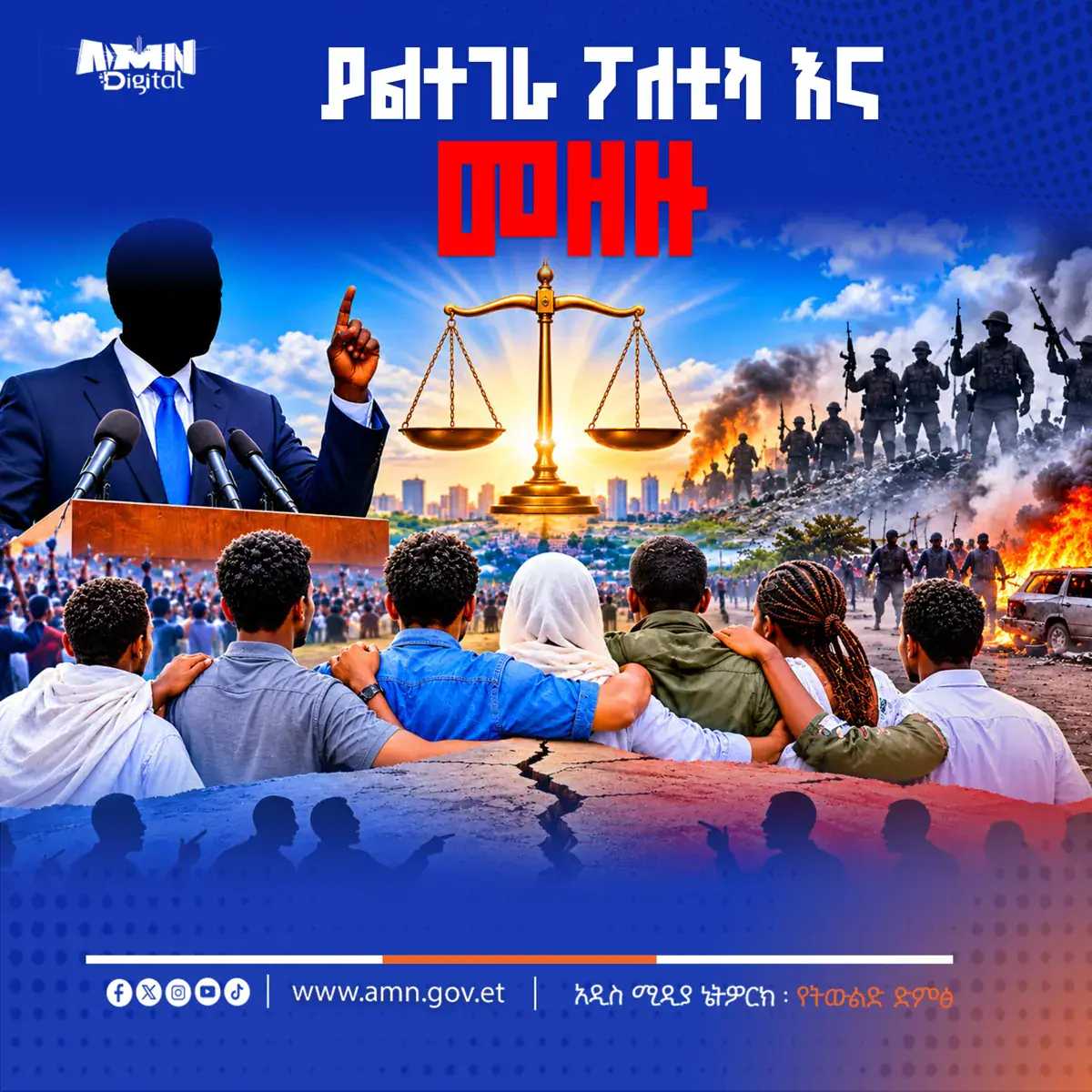
A political system guided by ideas and principles plays a crucial role in strengthening a country's democratic culture and achieving economic and social success. However, if the political system fails to promote ideological supremacy and competition, and its political space is limited, it can lead to violations of laws and destruction of peace. Unchecked political activities can also lead to extremist ideologies, which can drive societies into bloody conflicts and civil wars.
Ethiopia, like some other African countries, is facing challenges due to extremist ideologies. These ideologies often stem from unregulated political activities and a lack of ideological supremacy. As a result, the country is experiencing internal conflicts, and its people are suffering from violence and instability. Experts argue that the absence of a strong, idea-based political system has contributed to these problems.
The consequences of unchecked politics can be severe. It can lead to the erosion of social cohesion, as citizens begin to distrust and develop hostile feelings towards one another. This can result in the fragmentation of society, making it challenging to achieve national goals. Furthermore, unchecked politics can also have a negative impact on a country's economy, as resources are diverted from development projects to conflict resolution and security.
In Ethiopia, some social media platforms have been accused of exploiting these divisions by spreading divisive and extremist ideologies. This has contributed to the erosion of social trust and the proliferation of hatred and violence. The government and other stakeholders must take steps to regulate these platforms and promote responsible social media use.
The economic consequences of unchecked politics are also significant. Political instability can deter foreign investment, reduce economic growth, and lead to poverty. In Ethiopia, the government has had to divert resources from development projects to address conflict and security challenges. This has hindered the country's progress towards achieving its development goals.
To address these challenges, experts recommend building strong, idea-based political systems that promote tolerance, dialogue, and cooperation. This can be achieved by strengthening institutions, promoting national values, and encouraging citizen participation in the political process. Additionally, the government must take steps to regulate social media platforms and prevent the spread of extremist ideologies.
In conclusion, unchecked politics can have severe consequences for Ethiopia, including extremist ideologies, violence, and instability. To address these challenges, the government and other stakeholders must work together to promote a strong, idea-based political system that prioritizes tolerance, dialogue, and cooperation. By doing so, Ethiopia can build a more stable and prosperous future for its citizens.
Key points
- Unchecked politics can lead to extremist ideologies and violence.
- A strong, idea-based political system is crucial for promoting stability and prosperity.
- Social media platforms have a role to play in promoting or preventing the spread of extremist ideologies.
Reporting sources
- ሐሳብ አልባ ያልተገራ ፖለቲካ እና መዘዙ! · Addis Media Network