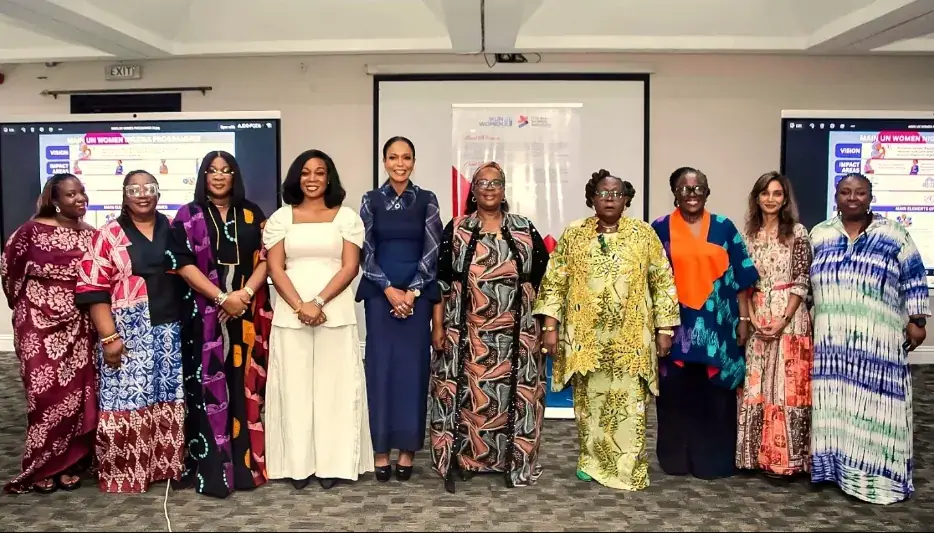
UN Women Nigeria has urged private sector leaders to move beyond commitments to gender equality and take concrete action to advance women's economic empowerment, strengthen women's leadership, and expand opportunities for women-owned businesses. This call was made at a High-Level Private Sector Convening held in Lagos on November 20, which brought together senior business leaders to explore how gender equality can drive business growth and contribute to Nigeria's economic development. The convening was attended by prominent business leaders and stakeholders.
Nigeria still faces significant gender inequalities and economic pressures, ranking 124th out of 148 countries in the 2025 Global Gender Gap Report. Poverty has also risen from 56 percent in 2023 to 63 percent in 2025. Women-owned businesses are underrepresented in public procurement, securing only about 1 percent of contracts. However, closing gender gaps could contribute an estimated ₦15 trillion annually to Nigeria's gross domestic product (GDP). These statistics highlight the need for urgent action to address gender inequalities.
Participants at the convening explored practical ways businesses can translate gender equality commitments into results. This includes expanding markets for women-led enterprises, diversifying supply chains, strengthening women's leadership, and setting clear procurement targets for women-owned businesses. Discussions also emphasized the importance of engaging men as allies in advancing gender mainstreaming across corporate structures. The convening highlighted the need for collaborative efforts to drive meaningful change.
A key outcome of the convening was a call for stronger coordination among private sector actors, women's business networks, industry associations, and development partners. Participants noted that the absence of a central access point often makes it difficult for businesses to identify women-led enterprises, skilled talent, and investment opportunities. This coordination gap hinders the growth of women-owned businesses and limits their access to resources.
UN Women Country Representative to Nigeria and ECOWAS, Ms. Beatrice Eyong, invited private sector leaders to help shape a joint coordination framework and support the proposed one-stop centre for women in business. The initiative would build on UN Women's experience establishing resource centres for women in politics and draw on the Women Connect for Development (WOCOD) network, which has over 50 million members. This proposed centre aims to provide a central access point for women-led enterprises.
The convening acknowledged MTN Foundation as UN Women Nigeria's first private sector partner, through the Y'ellopreneur Rural Women Economic Empowerment Programme. The programme has supported pilot initiatives in Cross River and Kano States. With the 16 Days of Activism against Gender-Based Violence running from November 25 to December 10, 2026, participants also highlighted the economic consequences of gender-based violence (GBV) and the role of businesses in prevention and response.
UN Women reaffirmed its commitment to deepening engagement with the private sector and announced plans to open its Lagos office in January 2027. The office will advance priorities, including establishing a single access point for women in business, generating data on women's leadership in the private sector, and providing investment-readiness support for women-led enterprises. The convening reaffirmed a shared message: gender equality is not only a social imperative but also a business and economic priority.
Key points
- UN Women calls on Nigeria's private sector to take measurable action to advance women's economic empowerment.
- Closing gender gaps could contribute an estimated ₦15 trillion annually to Nigeria's GDP.
- UN Women plans to open its Lagos office in January 2027 to advance priorities, including establishing a single access point for women in business.