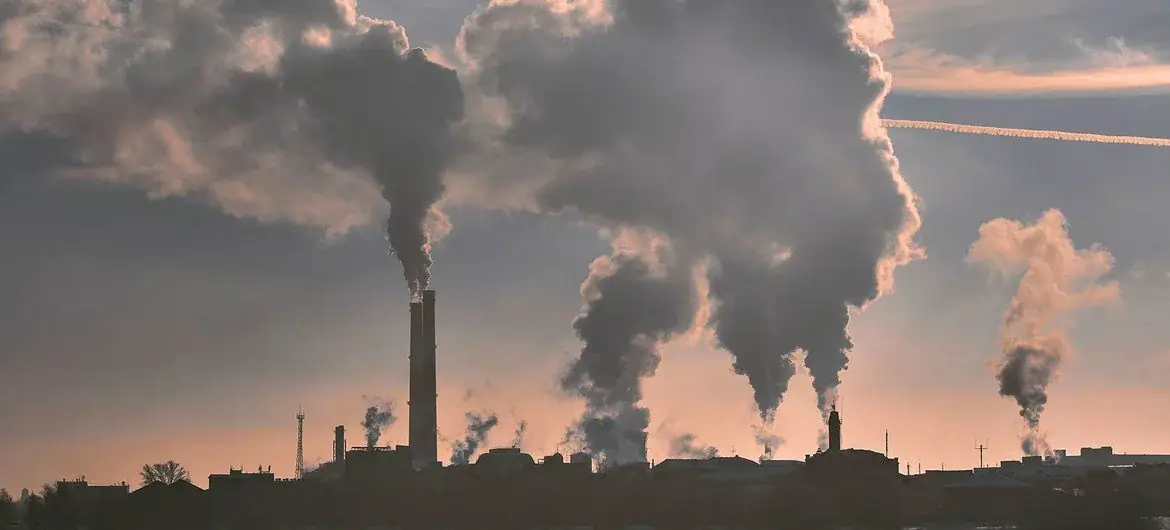
The World Meteorological Organisation (WMO) has reported that atmospheric carbon dioxide and other major greenhouse gases reached record highs in 2025. According to the agency's latest Greenhouse Gas Bulletin, the average global CO₂ concentration in 2025 was 426.8 parts per million, about 153% of the pre-industrial level measured in 1750. This significant increase has raised concerns about the long-term effects of global warming.
WMO Deputy Secretary-General Ko Barrett stated that each additional ppm of CO₂ traps more heat, effectively "supercharging" the ocean and atmosphere and accelerating extreme-weather events such as heatwaves, tropical cyclones, and intense rainstorms. The agency's findings suggest that the past 11 years have been the warmest on record, a trend that Barrett warned will continue as CO₂ persists for decades to centuries.
The WMO's Greenhouse Gas Bulletin also reported that methane and nitrous oxide reached new peaks in 2025, adding to the unprecedented heat-trapping capacity of the atmosphere. Since the WMO first published its Bulletin in 2004, the annual average CO₂ level has risen from 377.5 ppm to nearly 427 ppm, reflecting a tripling of growth rates since the 1960s.
A pronounced 3.5 ppm surge in 2023-2024 coincided with a strong El Niño that reduced biospheric efficiency through drought, drier vegetation, and wildfires, according to senior scientific officer Oksana Tarasova. Although the 2024-2025 increase of 2.8 ppm was smaller, Tarasova noted it still represents a substantial addition of carbon from fossil-fuel combustion, and further rises are expected in 2026 due to continued emissions and another powerful El Niño.
The Bulletin emphasizes that about half of annual CO₂ emissions remain in the atmosphere, while the rest is absorbed by land ecosystems and oceans. Data from the US NOAA show that from 1990 to 2025, greenhouse-gas-driven radiative forcing rose by 56%, with CO₂ accounting for roughly 81% of that increase.
The WMO also flagged rising concentrations of molecular hydrogen (H₂) and sulphur hexafluoride (SF₆) linked to the energy transition, noting SF₆'s 1,000-year atmospheric lifetime and a 2025 record level, while H₂ leakage could indirectly amplify warming. These findings highlight the need for continued monitoring and action to mitigate the effects of greenhouse gases.
The Bulletin is intended to supply authoritative data for negotiators at the upcoming COP31 climate conference in Antalya, Turkey, scheduled for 9-20 November, where parties aim to translate commitments into concrete action. The conference will provide an opportunity for countries to discuss and address the pressing issue of greenhouse gas emissions and their impact on the environment.
Key points
- The World Meteorological Organisation reports record CO₂ levels, warning of long-term global warming and extreme weather events.
- The agency's findings suggest that the past 11 years have been the warmest on record, a trend that will continue as CO₂ persists for decades to centuries.
- The Bulletin emphasizes that about half of annual CO₂ emissions remain in the atmosphere, while the rest is absorbed by land ecosystems and oceans.