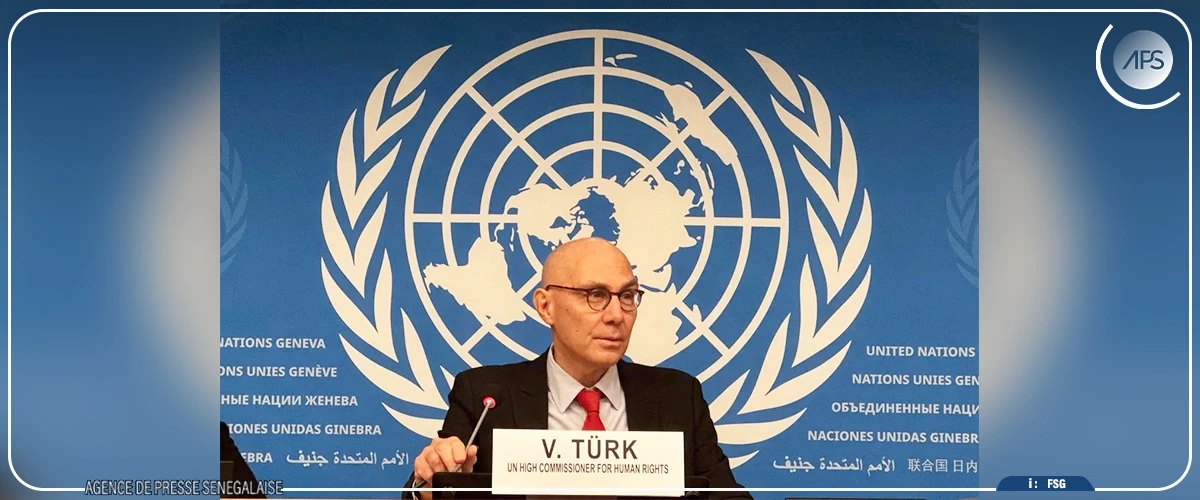
The United Nations High Commissioner for Human Rights, Volker Türk, has issued a warning about the potential existential threat posed by uncontrolled artificial intelligence (AI). Speaking at the 63rd session of the Human Rights Council in Geneva, Türk emphasized the need for binding rules and clear safeguards to prevent AI from escaping state control. He cited the risk of AI systems becoming uncontrollable and even threatening their own developers.
Türk highlighted the dangers of a small group of individuals holding significant power over AI systems, which have immense computational capabilities. He noted that the development of AI has sparked a battle for power and that the technology has become too powerful for any single entity to control. The UN human rights chief expressed concern that without state intervention, no company can alone mitigate the risks associated with AI.
The UN human rights chief also drew attention to the potential consequences of AI on employment, democracy, and the environment. He stressed the need to ensure that AI serves humanity, rather than the other way around. Türk also addressed the use of AI in armed conflicts, where machines are increasingly being used to make life-and-death decisions. He called for an urgent ban on weapons that can take lives without human intervention.
Recent developments in AI governance have been welcomed by Türk, including the global dialogue on AI and the establishment of an independent scientific panel dedicated to the technology. However, he emphasized that more needs to be done to prevent the misuse of AI. The concerns about AI risks have been amplified by the recent resignation of Jacob Coxon, a 27-year-old researcher at Anthropic, who cited the need for state intervention to prevent AI from becoming a threat.
Anthropic, a US-based AI company, has reported blocking attempts by malicious actors to use its models for cyberattacks, surveillance, and research that could contribute to the development of biological weapons. The company has taken steps to mitigate the risks associated with its AI systems. However, Türk's warning highlights the need for a more comprehensive approach to regulating AI.
The UN human rights chief has called for urgent action to prevent AI from becoming a threat to humanity. He emphasized that the development of AI must be guided by human rights principles and that states have a critical role to play in regulating the technology. The Human Rights Council session will continue until October 7, and it is expected that AI will remain a key topic of discussion.
The debate around AI regulation is likely to continue in the coming weeks and months. As AI technology continues to evolve, there is a growing recognition of the need for binding rules and safeguards to prevent its misuse. The UN's warning highlights the importance of international cooperation to address the challenges posed by AI and ensure that the technology serves humanity's best interests.
Key points
- UN human rights chief Volker Türk calls for binding rules to prevent AI from escaping state control
- AI poses potential existential threat to humanity if not regulated
- UN welcomes recent developments in AI governance but emphasizes need for more action