The UN rights office has urged the United States to ensure full and effective reparations for people affected by US nuclear tests in the Marshall Islands. The tiny Pacific nation was the site of 67 US nuclear tests between 1946 and 1958, which have had lasting environmental and health impacts. The UN deputy rights chief, Awa Dabo, stated that the history of nuclear testing "lives on in bodies and families, in lands poisoned and communities displaced."
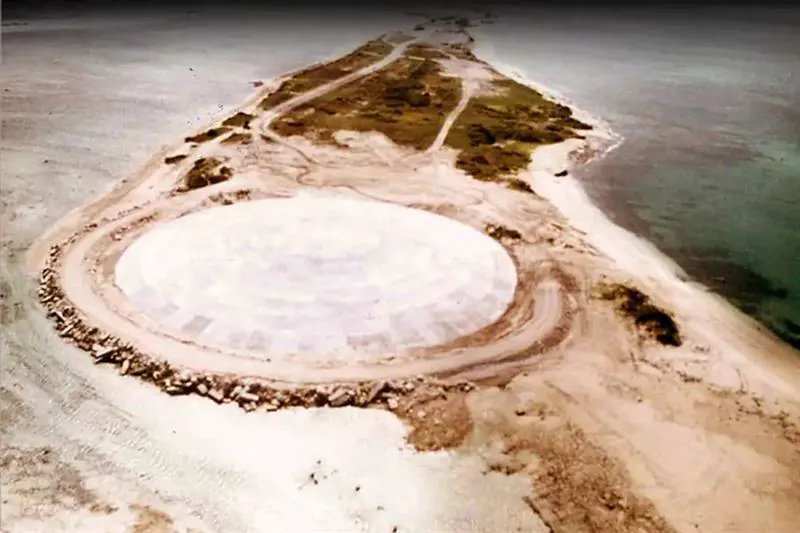
The consequences of the 1958 "Cactus" test continue to affect the Marshall Islands. The US military dumped contaminated waste from dozens of other tests into the test crater, which was capped with a vast, circular concrete dome. However, the dome's structure is threatened by rising sea levels caused by global warming, and cracks have appeared due to exposure to the elements. The UN's independent special rapporteur on justice and reparation, Bernard Duhaime, warned that the dome "constitutes a nuclear ticking bomb in the Pacific."
The consequences of the US nuclear testing programme extend beyond the dome, affecting many residents who were forcibly evacuated from their lands and thousands of others who were exposed to radioactive fallout. Dabo stated that "virtually every Marshallese family has been touched by the enduring health consequences of the nuclear testing, which include elevated rates of cancer." The UN rights office has urged the US to recognize that there has not yet been a comprehensive just settlement of claims arising from the nuclear testing programme.
In a report presented to the UN Human Rights Council, the UN rights office called on the US to provide "full and effective remedies for the human rights impact of the nuclear legacy for all Marshallese." This includes declassifying and making accessible all information related to the nuclear legacy. The Marshall Islands joined the UN as a sovereign state in 1991, and under a 1980s agreement, the US provided $150 million in compensation, which the UN considers insufficient.
The Nuclear Claims Tribunal, established by the Marshall Islands in 1987, issued several rulings setting the total compensation to be paid at over $2.3 billion. However, David Anitok, the Marshall Islands' presidential envoy for nuclear justice, stated that the legacy of nuclear testing has left the UN "failing the people of the Marshall Islands" if it remains unaddressed. Anitok emphasized that the consequences of the UN trusteeship that failed the Marshallese people have led to their exploitation and denial of acknowledgement, truth, and justice.
The UN's call for reparations highlights the ongoing impact of the nuclear tests on the Marshall Islands and its people. The environmental and health consequences of the tests continue to be felt, and the UN is urging the US to take responsibility for its actions. The situation in the Marshall Islands serves as a reminder of the need for accountability and justice in cases of human rights abuses and environmental degradation.
The issue of reparations for the Marshall Islands is complex and has been ongoing for decades. The UN's urging of the US to take action highlights the need for a comprehensive and just settlement of claims arising from the nuclear testing programme. The situation will likely continue to be a topic of discussion at the UN Human Rights Council and other international forums.
Key points
- The UN rights office has urged the US to ensure full and effective reparations for people affected by US nuclear tests in the Marshall Islands.
- The consequences of the nuclear tests continue to affect the Marshall Islands, with many residents experiencing health problems and environmental degradation.
- The UN has called on the US to declassify and make accessible all information related to the nuclear legacy and provide full and effective remedies for the human rights impact of the nuclear testing programme.