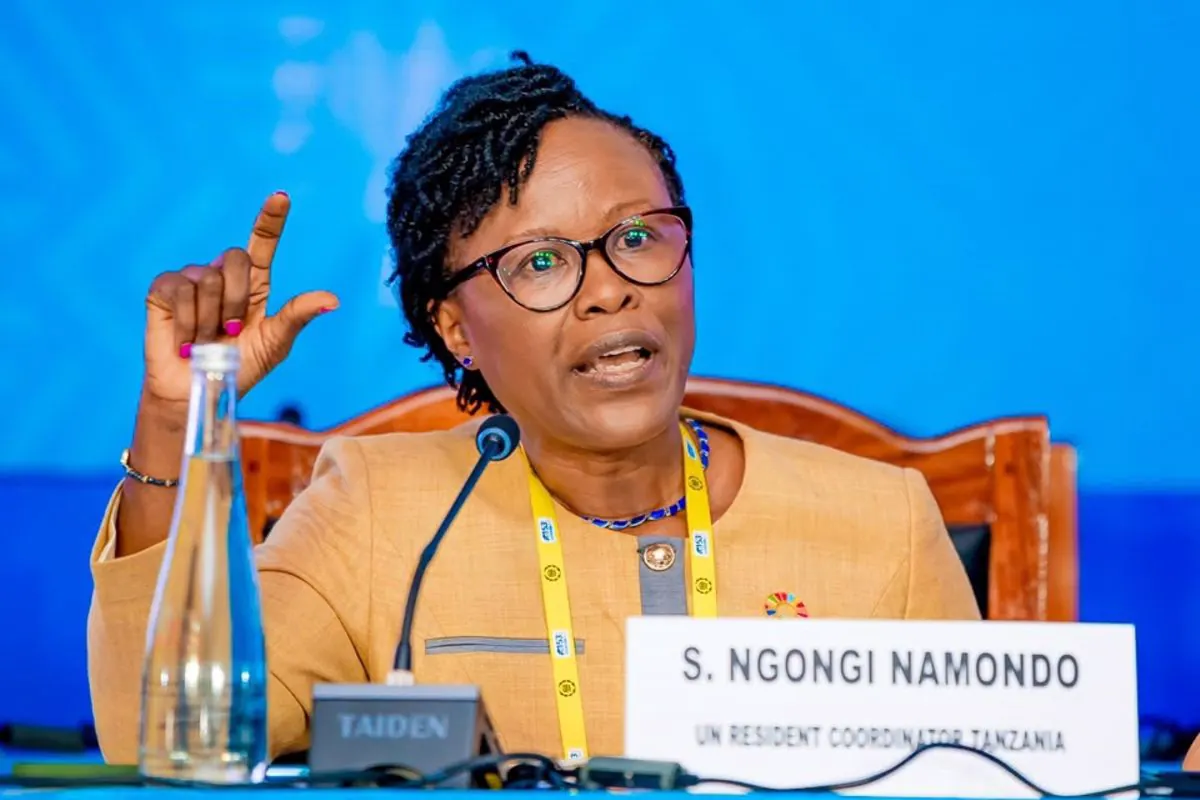
The United Nations has proposed a bigger role for Tanzania's Parliament in implementing the country's long-term development blueprint, Dira 2050. The UN Resident Coordinator in Tanzania, Susan Namondo, made the proposal during a session of the Inter-Parliamentary Union (IPU) Standing Committee on United Nations Affairs in Arusha. She outlined how the UN wants to deepen its engagement with Parliament as Tanzania begins implementing its development vision. Dira 2050 came into effect on July 1, 2026, following the conclusion of the Tanzania Development Vision 2025.
The UN has already started discussions with the Speakers of Parliament in Mainland Tanzania and Zanzibar on how the organisation can support implementation of the Vision. Ms Namondo said the discussions will continue as the UN prepares its next cooperation framework with the government, with consultations expected to begin in the first quarter of 2027. The current United Nations Sustainable Development Cooperation Framework covers 2022 to 2028 and brings together 23 UN entities working with the Government.
Ms Namondo proposed that the UN country team should provide an annual briefing to Parliament before the budget cycle, allowing evidence from different agencies to reach parliamentary committees before decisions are taken. She said one of the main lessons from the UN's 15-year engagement with Parliament was that lawmakers were most effectively supported when they received evidence and technical information before decisions were made.
The proposal comes as the UN itself is undergoing reforms aimed at making the organisation more coherent, streamlined and cost-effective at a time of reduced development financing. Ms Namondo said only 36 percent of the Sustainable Development Goals were moving in the right direction globally, while 15 percent had fallen below their 2015 baselines. The combination of financing pressures and geopolitical changes had prompted UN Secretary-General António Guterres to lead the UN80 initiative.
For Tanzania, the UN's engagement with Parliament already covers legislation, budget scrutiny, oversight and representation. A previous programme, supported by several development partners, involved both the National Assembly and Zanzibar House of Representatives and supported parliamentary committees in scrutinising bills, budgets and audit reports. The programme also supported public hearings, outreach through the e-Parliament forum and development of a gender strategy.
Ms Namondo cited HIV financing as a recent example of how parliamentary oversight could become particularly important as development resources decline. She said after a significant reduction in funding for HIV and health programmes, the government introduced several levies intended to generate domestic resources for HIV programmes. However, Parliament later found that the government had generated only about 20 percent of the amount initially projected.
The proposed relationship would not be limited to budget discussions, with Ms Namondo calling for regular and structured engagement between Parliament and the UN country team on issues cutting across several sectors. Other UN representatives, including UNICEF's Elke Wisch and UNDP's Shigeki Komatsubara, highlighted the importance of collaboration with Parliament on issues such as immunisation, nutrition and gender budgeting.
Key points
- The UN proposes regular engagement with Tanzania's Parliament and annual briefings before the national budget cycle to support implementation of Dira 2050.
- The UN's engagement with Parliament in Tanzania already covers legislation, budget scrutiny, oversight and representation.
- The proposed relationship aims to support Tanzania's development vision, Dira 2050, which came into effect on July 1, 2026.