The international community's backing for Morocco's autonomy proposal for Western Sahara continues to grow, with several countries reaffirming their support for the plan at the UN General Assembly. The UAE and Burkina Faso have joined the list of nations endorsing Morocco's autonomy initiative as the only basis for a sustainable political settlement of the Sahara dispute. This development further strengthens Morocco's position in the Sahara dossier, despite Algeria's continued reluctance and rejection of its responsibility in the dispute.
Burkina Faso's Foreign Affairs Minister, Karamoko Jean-Marie Traoré, reaffirmed his country's commitment to the UN-led political process under the auspices of the UN Secretary-General and based on Morocco's Autonomy Plan. The top Burkinabe diplomat encouraged the continuation of efforts to reach a negotiated political solution between the parties pursuant to relevant resolutions of the Security Council. Similarly, Khalifa bin Shaheen Al Marar, the UAE's Minister of State, echoed the same remarks, reiterating support for efforts to reach a sustainable political solution to the question of the Moroccan Sahara, based on the Moroccan autonomy initiative.
Many countries have echoed the same position during their speeches at the UN General Assembly, which is taking place a month before the UN Security Council vote on a new resolution for the Sahara dispute. Guinea-Bissau, Armenia, Senegal, Jamaica, the US, and several others have reiterated their support for the Moroccan position during their speeches at the UN General Assembly or on the sidelines of the event, upon meetings with Morocco's Foreign Affairs Minister Nasser Bourita. This growing consensus further solidifies Morocco's position in the Sahara dossier.
Some countries have also joined the growing list in support of Morocco's sovereignty, including Mauritius, Peru, Panama, and Chile, which also became among the latest to express support for Morocco's territorial integrity. The growing support for Morocco's autonomy plan is in contrast to Algeria's continued claims, which sit uneasily against the international community's prevailing embrace of Morocco's autonomy proposal as the most viable and only realistic route to a sustainable political settlement of the Sahara dispute.
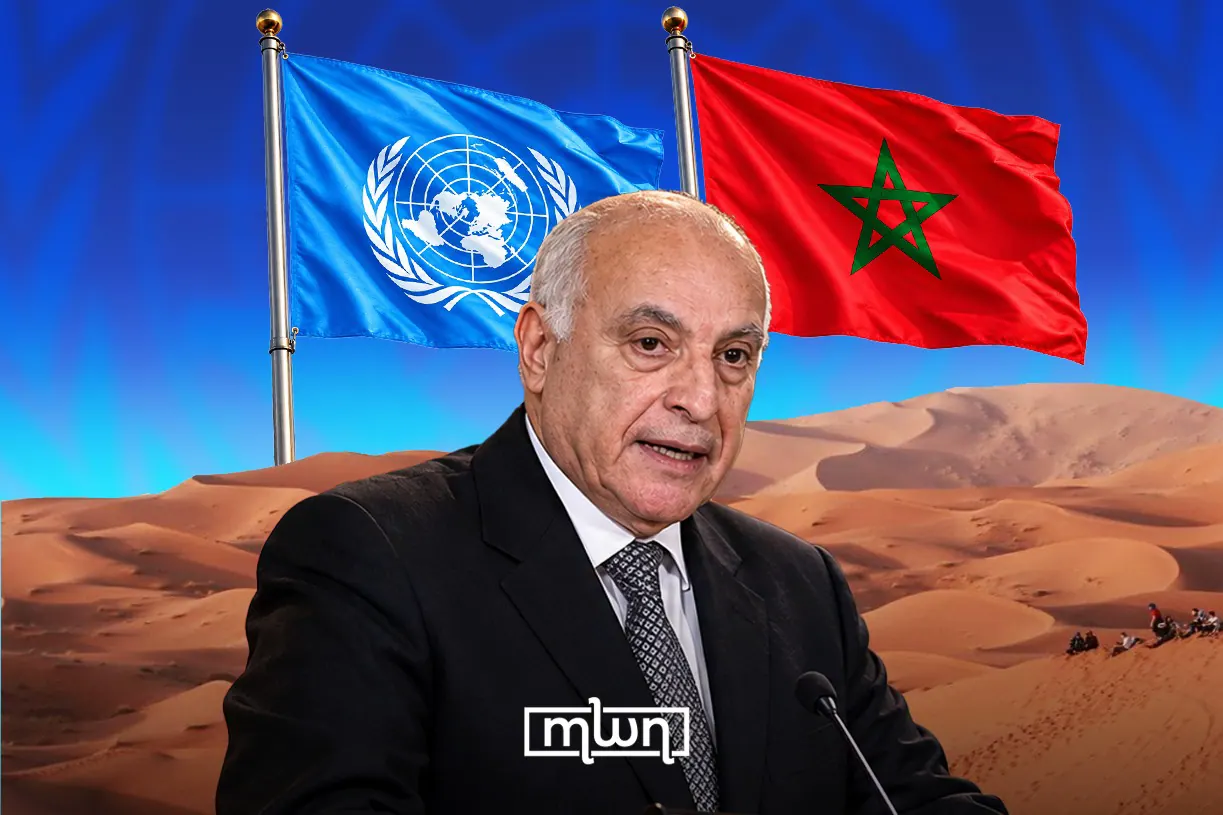
Algeria's Foreign Affairs Minister, Ahmed Attaf, echoed his country's unchanged, increasingly irrelevant rejection of the UN-led process during the UN General Assembly. Attaf reaffirmed Algiers's "its principled support" for the separatist Polisario Front's outdated claims, including the "right of the people of Western Sahara to self-determination." Algeria's regime has thus continued to push for the sidelined separatist narratives despite the latest UN Security Council Resolution 2797 of October 2025.
US advisor Massad Boulos has acknowledged challenges in the UN-led political process in an interview with France 24 earlier this week. The Algerian-backed Polisario separatists are obstructing the promising UN-led political process, Boulos said, stressing that the US is still waiting for the Polisario leadership to provide its feedback on Morocco's Autonomy Plan. While he emphasized the importance of recent US-facilitated negotiations held between the four parties to the dispute, Boulos acknowledged that there is no imminent solution due to the lack of progress.
As the winds continue to blow in favor of Morocco's autonomy proposal, the question is increasingly how long Algeria and the Polisario separatists can keep up their foot-dragging strategy. The international community's support for Morocco's autonomy plan is expected to continue to grow, further isolating Algeria's position on the Sahara dispute. The outcome of the UN Security Council vote on a new resolution for the Sahara dispute is expected to reflect the growing consensus in support of Morocco's autonomy plan.
Key points
- The UAE and Burkina Faso have reiterated their support for Morocco's Autonomy Plan as the only viable solution to the Western Sahara dispute.
- Algeria's position on the Sahara dispute is becoming increasingly isolated as the international community continues to back Morocco's autonomy proposal.
- The UN Security Council is expected to vote on a new resolution for the Sahara dispute, which is likely to reflect the growing consensus in support of Morocco's autonomy plan.