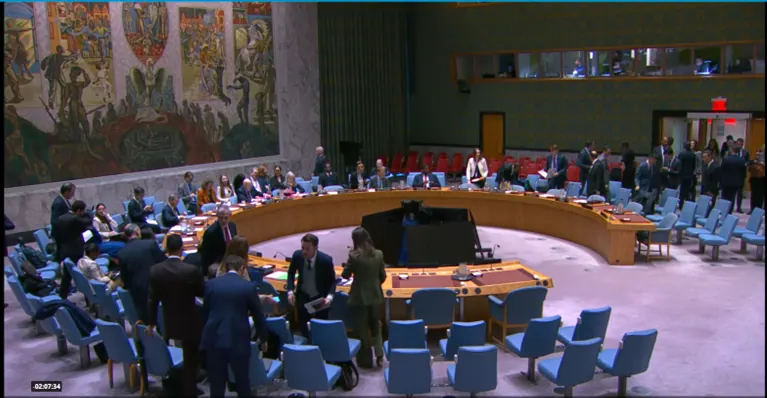
The UN Security Council will vote on a resolution to extend the sanctions regime on Sudan for two months, until December 11. The sanctions, imposed under Resolution 1591, include targeted sanctions and an arms embargo. The resolution, drafted by the United States, also extends the mandate of the expert group assisting the Sudan sanctions committee until January 11, 2027. This vote comes after a one-month technical extension adopted by the Security Council on September 11.
The US had proposed a one-month technical extension after weeks of negotiations on a previous draft that sought to expand the arms embargo to cover the entire country. The previous draft aimed to apply the embargo to all parties operating in Sudan and address the issue of drones and dual-use technology. The term "technical extension" is often used by diplomats to describe a brief decision that extends the mandate of a UN peacekeeping operation or sanctions regime without changing its core tasks.
The US-drafted resolution did not gain unanimous support from Security Council members. The A3 group (Democratic Republic of Congo, Liberia, and Somalia), along with China, Pakistan, and Russia, preferred a one-year extension of the sanctions regime limited to Darfur. China and Russia argued that the draft resolution focused too much on the role of drones in the conflict. The one-month technical extension was intended to provide additional time for negotiations among council members.
Despite the additional time, it appears that the positions of council members have not changed significantly. The US had initially sought more substantial changes to the sanctions regime. However, with little progress in negotiations, the US proposed a two-month technical extension instead. The Security Council's vote on the resolution is expected to take place in the coming hours.
The sanctions regime on Sudan was established under Resolution 1591 in 2005. The regime includes targeted sanctions, such as travel bans and asset freezes, and an arms embargo. The expert group assisting the sanctions committee provides valuable insights into the implementation of the sanctions and identifies individuals and entities subject to the measures.
The situation in Sudan remains complex, with ongoing challenges in Darfur and other regions. The UN peacekeeping mission in Sudan, known as UNAMIS, has been operating in the country since 2004. The mission's mandate is to support the implementation of the peace agreement and protect civilians.
The outcome of the Security Council's vote on the resolution to extend the sanctions regime on Sudan remains to be seen. The council's decision will have implications for the country's stability and the humanitarian situation on the ground. The US and other council members will need to continue negotiations to find a consensus on the sanctions regime and its implementation.
Key points
- The UN Security Council is set to vote on a resolution to extend sanctions on Sudan for two months, until December 11.