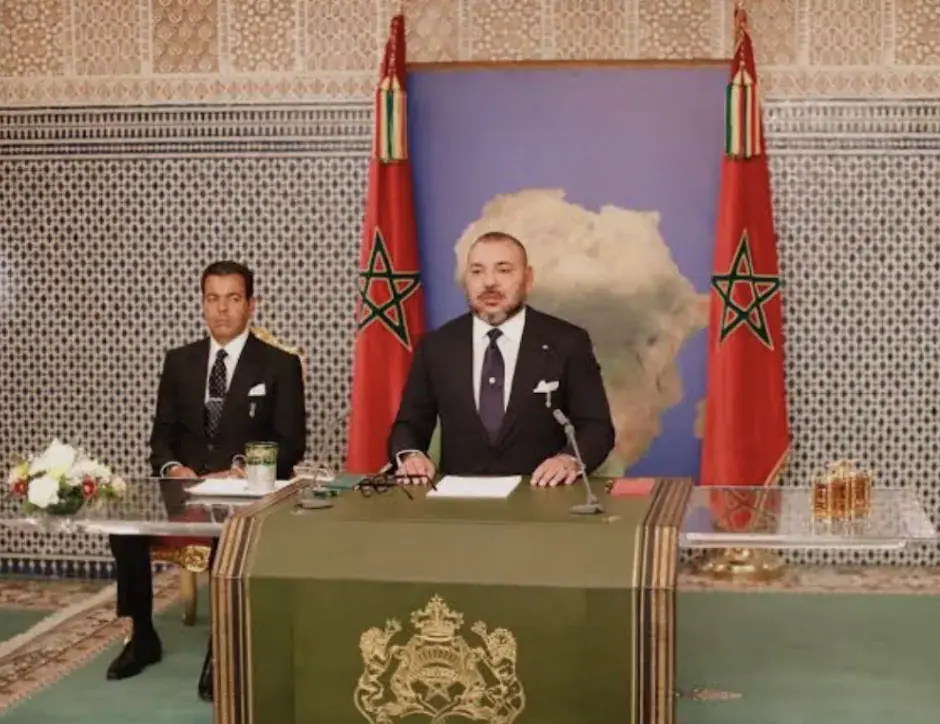
The United Nations Security Council has adopted Resolution 2797, marking a significant shift in the decades-long dispute over the Moroccan Sahara. The resolution, passed on October 31, 2025, has been hailed as a major turning point in the diplomatic efforts to resolve the issue. The move comes as a result of the relentless efforts of the Moroccan government, led by King Mohammed VI, to find a peaceful and lasting solution to the conflict.
Historically, the Moroccan Sahara has been a contentious issue, with Morocco claiming sovereignty over the region. In 1975, the International Court of Justice recognized the existence of historical ties between Morocco and the Sahara region. The Court's advisory opinion highlighted the significance of the "bayʿa," a traditional institution in Moroccan politics, which solidified the relationship between the Moroccan monarch and the tribes in the region.
The UN has been involved in the peace process since 1991, when it established the United Nations Mission for the Referendum in the Western Sahara (MINURSO). However, the referendum was never held due to disagreements over voter eligibility and other issues. In 2007, Morocco proposed an autonomy plan for the Sahara region, which was seen as a significant step towards finding a peaceful solution.
The UN Security Council has consistently supported Morocco's autonomy plan, describing it as a "serious and credible" effort to resolve the conflict. Resolution 1754, adopted in 2007, called for negotiations between Morocco and the Polisario Front, a separatist group seeking independence for the Sahara region. Since then, the Security Council has repeatedly reaffirmed its support for Morocco's autonomy plan.
Resolution 2797 marks a significant departure from previous resolutions, as it expresses the Security Council's "full support" for the efforts of the UN Secretary-General and his Personal Envoy to facilitate negotiations between Morocco and the Polisario Front. The resolution also emphasizes the need for a "political, realistic, pragmatic, durable, and mutually acceptable" solution to the conflict.
The adoption of Resolution 2797 has been welcomed by Morocco, which has described it as a "major breakthrough" in the peace process. The resolution has also been seen as a significant step towards achieving a lasting and peaceful solution to the conflict, which has dragged on for decades.
As the international community looks to the future, the focus is on the negotiations between Morocco and the Polisario Front, which are expected to resume soon. With the support of the UN Security Council, there is hope that a lasting solution to the conflict can be found, paving the way for a new era of cooperation and stability in the region.
Key points
- The UN Security Council has adopted Resolution 2797, calling for renewed negotiations on the Moroccan Sahara.
- Morocco's autonomy plan for the Sahara region has been described as "serious and credible" by the UN Security Council.
- The resolution marks a significant shift in the diplomatic efforts to resolve the decades-long dispute over the Moroccan Sahara.