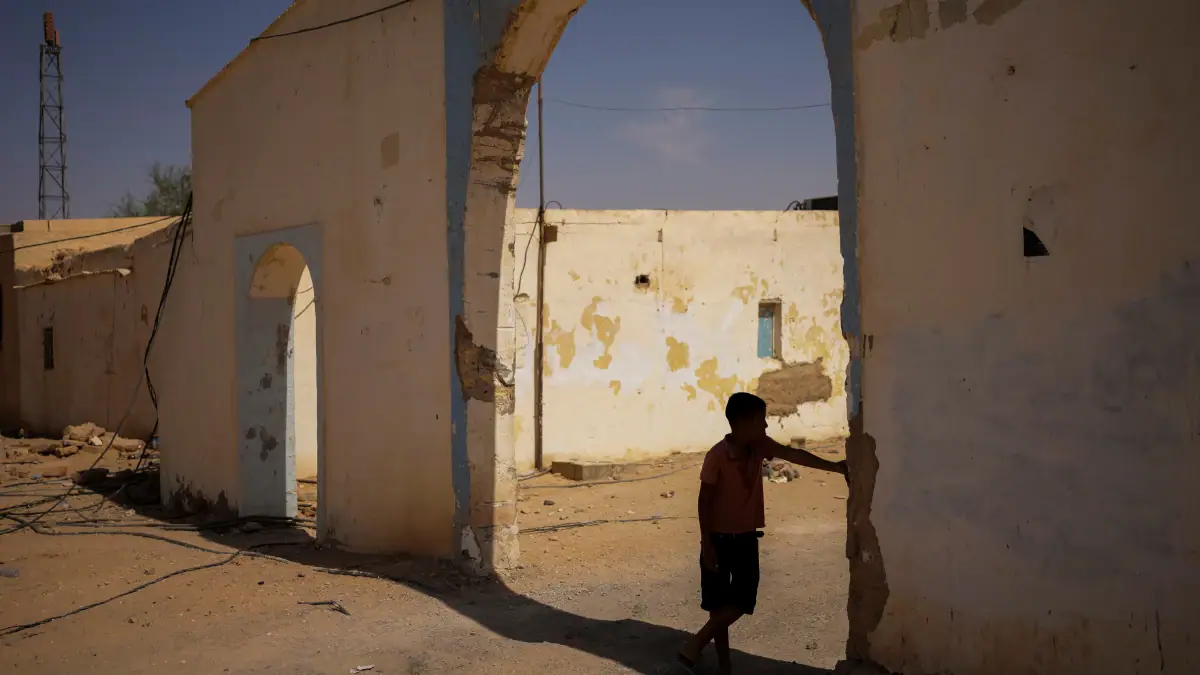
The United Nations' long-running peacekeeping mission in Western Sahara ceased operations on Sunday, November 1, 2026, after 35 years. The mission's end was triggered by a standoff between the US and Russia at the UN over the territory's future. Western Sahara is a vast desert territory along Africa's northwestern Atlantic coast, rich in minerals and fisheries, and is claimed by both Morocco and the pro-independence Polisario Front.
The UN Mission for the Referendum in Western Sahara, known as MINURSO, was established in 1991 to monitor a referendum on self-determination. However, the vote never materialized due to disagreements over the voter list. Morocco wanted to include Sahrawis living in the territory it controls, while the Polisario Front objected, arguing it would tilt the outcome toward integration with Morocco. The mission had been repeatedly extended since its establishment.
The US and Russia disagreed on the mission's renewal, with the US supporting Morocco's demand for sovereignty and Russia backing an extension of the mission. A US-drafted resolution was vetoed by Russia, and a rival Russian resolution was voted down. The disagreement led to an abrupt end to the force's mandate. Morocco welcomed the non-renewal of the mission, while the Polisario Front and Algeria criticized the decision.
Western Sahara is considered a "non-self-governing territory" by the UN and is described by critics of Morocco's control as Africa's last colony. Morocco administers nearly all of the disputed territory, except for a narrow strip known as the "free zone." The dispute has escalated into an armed conflict that lasted over 15 years, claiming more than 16,000 lives on both sides.
The Polisario Front seeks independence for Western Sahara, which it considers the homeland of the Indigenous Sahrawi people. The movement is backed by Algeria, Russia, and South Africa, but its international support has dwindled in recent years. Morocco refers to the territory as its southern provinces and has secured the backing of several Western capitals, including Washington, Paris, and London.
The end of the mission raises concerns about stability in the region, with the UN secretary-general calling upon all parties to respect and promote the rights of the people of Western Sahara. The Polisario Front withdrew from the ceasefire in 2020, and the territory has since remained a scene of tensions and low-intensity hostilities. The rivalry between Morocco and Algeria is likely to be further strained by the end of the mission.
The UN force had 534 personnel and a 2026-2027 budget of over $62 million, with Egypt, Ghana, and Pakistan being the top military contributors. As the mission ends, a smaller team will oversee the transportation of assets and equipment. Twenty MINURSO personnel lost their lives during the mission. The UN secretary-general remains concerned about the security situation in the territory and the risk of escalation of hostilities.
Key points
- The UN's peacekeeping mission in Western Sahara ended due to a US-Russia standoff at the UN.
- The mission's end raises concerns about stability in the region and the future of Western Sahara.
- The dispute over Western Sahara is a major flashpoint in the rivalry between Morocco and Algeria.