The 81st General Assembly of the UN has concluded, leaving many to question the body's effectiveness in promoting global peace and security. The assembly was marked by dramatic moments, including a threatened arrest warrant for Israeli Prime Minister Benjamin Netanyahu and a walkout by delegations during his speech. These incidents have raised concerns about the UN's ability to address pressing global issues. The body's growing irrelevance is a troubling sign, given its original purpose of ensuring global peace in the wake of two world wars.
US President Donald Trump's address to the assembly was highly anticipated, but instead of focusing on peace efforts, he issued a threat to annihilate Iran and rebranded artificial intelligence as "super intelligence." This move was seen as a distraction from the urgent debate on the threats posed by AI to humanity. Trump's speech was a stark contrast to the UN's founding principles and did little to promote global understanding. His comments on AI were also criticized by researchers and tech industry leaders, who argue that the technology is rapidly getting out of human control.
Israeli Prime Minister Benjamin Netanyahu's speech was also met with controversy, as he claimed to have stopped a genocide in the Middle East, prompting a mass walkout by delegations. Many countries believe that Israel's bombardment of Gaza amounts to a Palestinian genocide, and Netanyahu's comments were seen as insensitive and divisive. The walkout was a rare display of unity among nations and highlighted the deep divisions within the international community.
The absence of some critical leaders, including South African President Cyril Ramaphosa, was also notable. Ramaphosa chose to skip the summit, despite the opportunity for bilateral meetings with world counterparts. His decision was seen as a reflection of the UN's growing irrelevance, as many leaders have begun to question the body's effectiveness. International relations and co-operation minister Ronald Lamola represented Ramaphosa at the meetings and reiterated calls for a review of the UN Security Council's composition.
The UN Security Council, the body's key instrument for peace, has lost credibility and has often been overtaken by a changing world. Despite repeated calls for its expansion to include middle powers, its founding members remain its only permanent members. Entire continents, including Africa, have no representation on the council, which is a significant concern given the continent's critical role in global affairs. The council's composition has been criticized for being outdated and not reflective of the current global landscape.
The UN's scope of work has grown exponentially, but it has not been matched with sufficient resources to fund its wider mandate. As a result, the body has had little say in resolving conflicts around the world, including wars in Sudan, the Democratic Republic of the Congo, Ukraine, Ethiopia, and Iran. The UN's many resolutions have generally been ignored, highlighting its ineffectuality. The body's inability to address pressing global issues has raised concerns about its relevance and effectiveness.
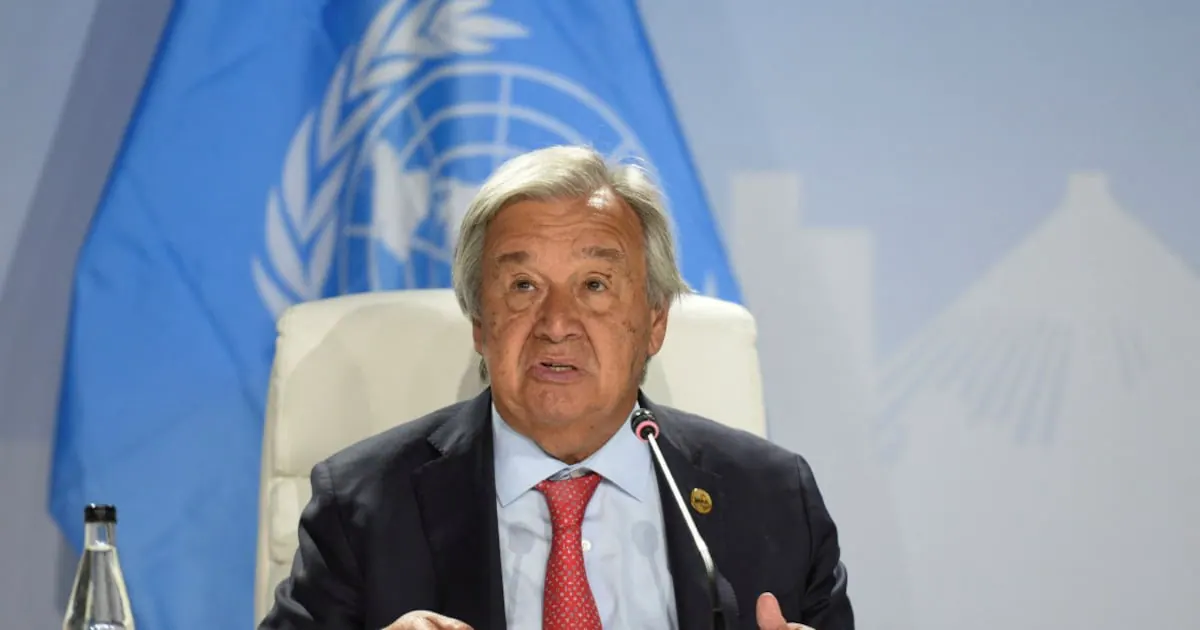
The election of António Guterres's successor presents an opportunity for a review of the UN's structure and functions. To restore the UN's credibility and relevance, a thorough rethink of its operations is necessary. This could involve expanding the Security Council's size and representation, but achieving this will be challenging in the current environment. The UN's future effectiveness will depend on its ability to adapt to a changing world and address the concerns of all its members. The next secretary-general will have a critical role in shaping the body's future.
Key points
- The UN's growing irrelevance is a concern for many of its members.
- The body's ineffectuality is highlighted by its inability to resolve conflicts around the world.
- The election of a new secretary-general presents an opportunity for reform.