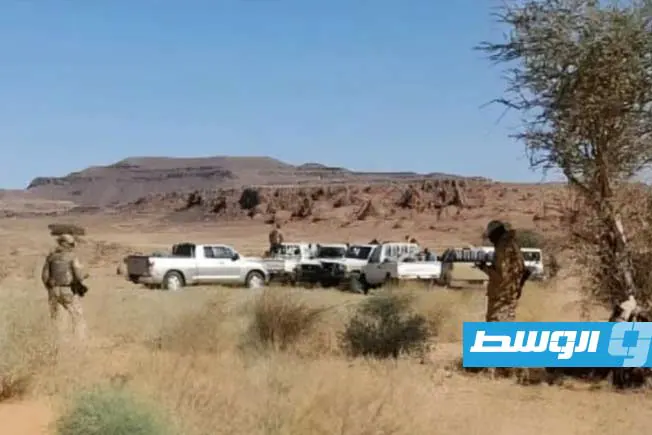
A recent report by the UN Independent International Fact-Finding Mission on Sudan has revealed new evidence of Libya's involvement in the Sudan conflict. The report, presented to the UN Human Rights Council, details a complex network of support for the Rapid Support Forces (RSF), including the transfer of arms, ammunition, and personnel from Libya. The report also highlights the role of other countries, including the United Arab Emirates, Chad, and Somalia, in supporting the RSF.
The report states that the RSF has received support from a network of individuals and entities across several countries, including Libya. This support has included the transfer of arms, ammunition, and personnel, as well as training and logistical assistance. The report also notes that the RSF has used Libya as a transit point for personnel and supplies, with some individuals traveling from Libya to Sudan to join the conflict.
The UN report has identified several key players involved in supporting the RSF, including Colombian mercenaries who have fought alongside the RSF in Sudan. The report notes that these mercenaries, who are part of the "Desert Wolves" battalion, have been involved in several key battles, including the attack on the Zam Zam camp in April 2025 and the attack on El Fasher in October 2025.
The report also highlights the role of Libya's eastern region as a hub for the transfer of arms and personnel to the RSF. The report notes that several individuals and entities in Libya have been involved in supporting the RSF, including some who have traveled to Sudan to fight alongside the group. The report also notes that some of these individuals have been involved in the transfer of arms and ammunition to the RSF.
The UN report has sparked concerns about the involvement of external actors in the Sudan conflict and the potential for further escalation. The report notes that the conflict in Sudan has already had significant humanitarian consequences, with thousands of civilians killed or displaced. The report also notes that the involvement of external actors, including Libya, has the potential to further destabilize the region.
The Libyan government has responded to the report, stating that it is committed to respecting the sovereignty and territorial integrity of Sudan. However, the report notes that Libya has not provided sufficient information about its involvement in the conflict, and that further investigation is needed to determine the full extent of Libya's role.
The UN report has called for further action to be taken to address the involvement of external actors in the Sudan conflict. The report notes that the international community has a responsibility to prevent the further escalation of the conflict and to protect civilians from harm. The report also notes that further investigation is needed to determine the full extent of Libya's involvement in the conflict and to hold those responsible accountable.
Key points
- The UN report reveals a complex network of support for the Rapid Support Forces (RSF) in Sudan, including the transfer of arms, ammunition, and personnel from Libya.
- The report highlights the role of other countries, including the United Arab Emirates, Chad, and Somalia, in supporting the RSF.
- The report calls for further action to be taken to address the involvement of external actors in the Sudan conflict and to protect civilians from harm.