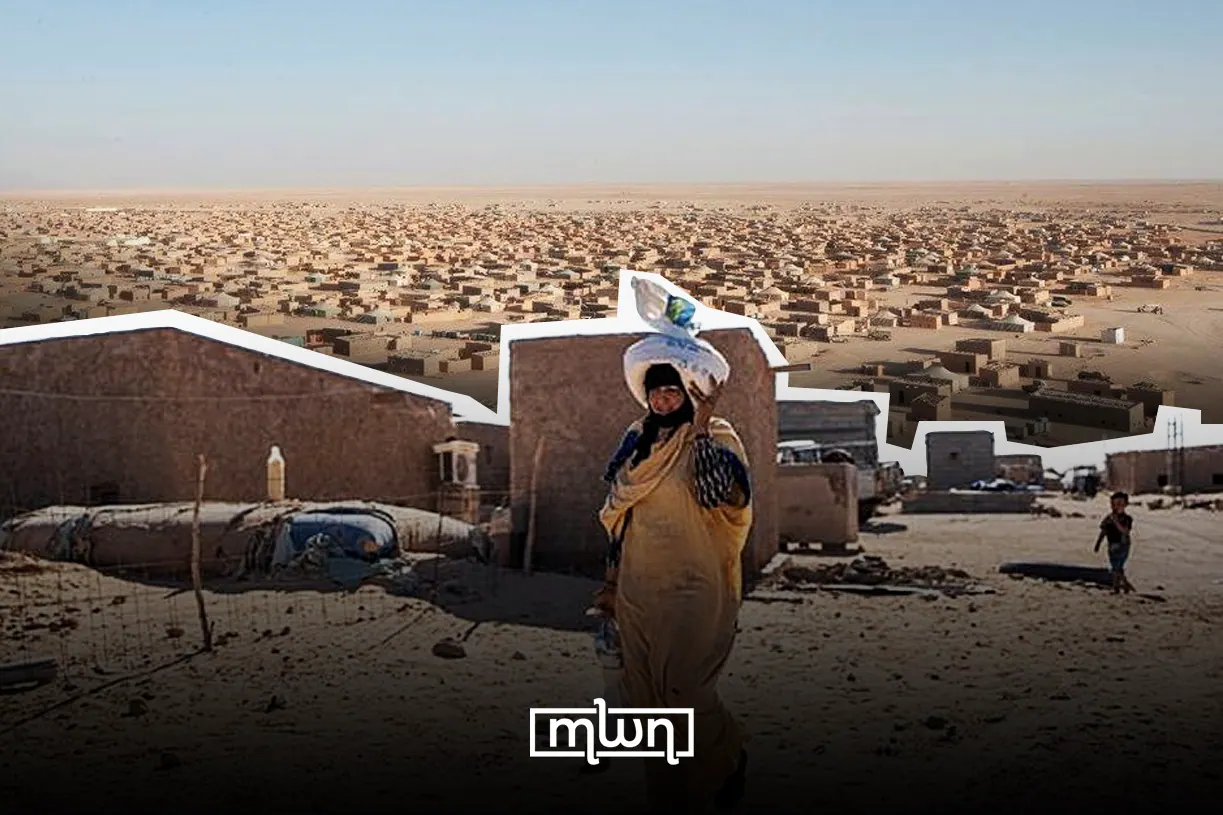
The United Nations High Commissioner for Refugees, Barham Salih, has warned the Security Council that conditions in the Tindouf camps are deteriorating, calling the half-century sequestration of populations on Algerian soil "intolerable" and "unsustainable." Salih told the Council that the situation in Algeria's southwestern region has persisted for more than 50 years, with generations growing up in uncertainty and with limited prospects. He emphasized that managing such a situation indefinitely cannot be the collective ambition.
Salih's warning converges with Morocco's long-standing position at the United Nations. Morocco's permanent representative, Omar Zniber, urged the refugee agency to prioritize durable solutions in its budget planning for Tindouf, arguing that decades of funding have entrenched a costly maintenance regime that perpetuates captivity rather than ending it. Zniber noted that since 2021, the UNHCR has mobilized nearly MAD 900 million ($90 million) for the camps, yet the situation has regressed, with a doubling of malnutrition rates and a vanishing of economic self-reliance.
The inhabitants of the Tindouf camps face significant challenges, including food insecurity, anemia, and limited access to education and employment. The World Food Programme reports that 78% of the camps' inhabitants are food insecure or at risk, while 53.5% of women aged 15 to 49 suffer from anemia. UNHCR's 2025 report on Algeria found water provision below humanitarian standards and hygiene coverage incomplete, with malnutrition and anemia worsening.
The lack of formal individual registration of the camps' population is a significant concern, with the Security Council demanding a census for years. Algeria has persistently refused to allow a census, keeping the true numbers hidden. The camps are run by the Polisario, with Algeria's state presence deliberately thin, an arrangement that has been linked to the absence of ordinary police and courts.
Human rights organizations have raised concerns about restrictions on movement and expression, arbitrary detention, torture, and enforced disappearances in the Tindouf camps. Sahrawi activist Aicha Duihi demanded regular and independent access by UN human rights mechanisms to Tindouf, warning that prolonged crises must not be allowed to fester as "gray zones" in matters of protection.
The diplomatic ground has shifted in Morocco's favor during the ongoing 81st session of the United Nations General Assembly. US Deputy Secretary of State Christopher Landau affirmed Washington's commitment to developing the Sahara region after talks with Foreign Minister Nasser Bourita. This development comes as Morocco's autonomy initiative has been consecrated by the Security Council, opening a political horizon for the region.
The UNHCR has described the Tindouf camps as having very limited livelihood opportunities, harsh environmental conditions, chronic underfunding, and heavy reliance on humanitarian aid. The agency reports problems with school infrastructure, teaching quality, absenteeism, and dropout rates. With funding cuts, medical supplies, assistance for people with disabilities, and water and sanitation systems have been affected.
Key points
- The UN High Commissioner for Refugees calls for durable solutions to address the deteriorating conditions in the Tindouf camps.
- Morocco's permanent representative urges the refugee agency to prioritize durable solutions in its budget planning for Tindouf.
- The Tindouf camps face significant humanitarian challenges, including food insecurity, anemia, and limited access to education and employment.