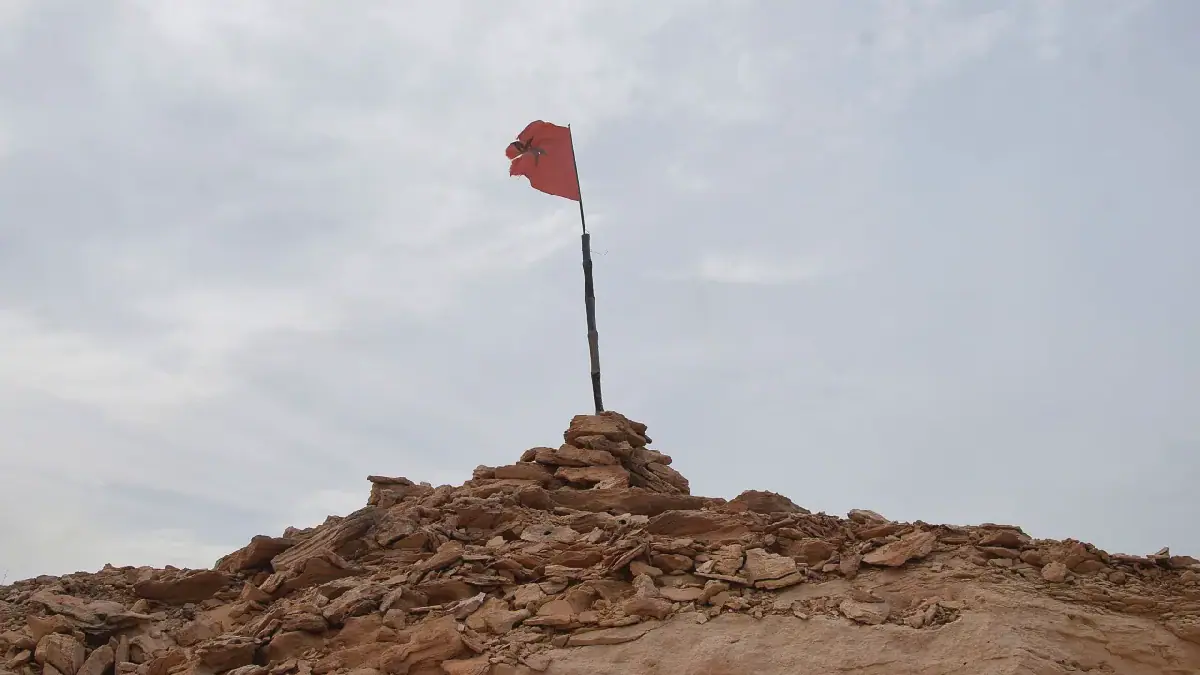
The United Nations peacekeeping mission in Western Sahara has concluded after 35 years of operation. This decision comes as a result of a stalemate between the United States and Russia over the territory's future. Western Sahara, a region rich in minerals and fisheries, is roughly the size of Colorado and is located along Africa's northwestern coast. The area has been a point of contention, with Morocco and the pro-independence Polisario Front both claiming ownership.
The UN Mission for the Referendum in Western Sahara (MINURSO) was established in 1991 with the aim of facilitating a vote on self-determination for the region's people. However, the mission's objectives have yet to be fully realised due to disagreements over voter eligibility. The conflict in Western Sahara intensified after Morocco annexed the territory in 1975, leading to over 15 years of armed conflict that resulted in the loss of more than 16,000 lives. A UN-brokered ceasefire took effect in 1991, but a lasting resolution has yet to be achieved.
The decision to conclude the peacekeeping mission was made after Russia vetoed a US-drafted resolution supporting Morocco's sovereignty claims and the mission's termination. The UN spokesperson, Stéphane Dujarric, announced that from 1 November 2026, a smaller team will manage the transfer of assets to troop-contributing countries and the disposal of UN equipment. Morocco's royal palace welcomed the decision, while the Polisario Front, supported by Algeria, denounced it as "unacceptable".
The UN has categorised Western Sahara as a "non-self-governing territory", with critics referring to it as Africa's last colony. Morocco currently administers most of the region, excluding a narrow 'free zone' east of a sand wall. The Polisario Front seeks independence for the Sahrawi people, while Morocco has sought full sovereignty, gaining backing from various Western capitals.
The end of the peacekeeping mission has raised concerns about regional stability, with the potential for exacerbated diplomatic tensions and an arms race between Morocco and Algeria. The conflict has been a contentious point in the rivalry between the two nations. The UN has called on all parties to respect the rights of Western Sahara's people and has urged restraint amidst ongoing tensions.
The Polisario Front withdrew from the ceasefire in 2020, further complicating the situation. The region remains a critical point in international relations, with the conclusion of the peacekeeping mission potentially leading to increased instability. The UN's efforts to facilitate a resolution have been ongoing for over three decades, but a lasting solution has yet to be achieved.
As the peacekeeping mission comes to a close, the international community is watching closely for developments in Western Sahara. The region's future remains uncertain, with the competing claims of Morocco and the Polisario Front yet to be resolved. The UN's role in the region will continue, albeit in a reduced capacity, as a smaller team manages the transfer of assets and equipment.
Key points
- The UN peacekeeping mission in Western Sahara has concluded after 35 years due to a US-Russia impasse over the territory's future.
- The region remains a contentious point in the rivalry between Morocco and Algeria, with the end of the mission potentially exacerbating diplomatic tensions and an arms race.
- The UN has called on all parties to respect the rights of Western Sahara's people and has urged restraint amidst ongoing tensions.